

Kiro
Kiro is AWS's AI IDE and CLI. AWS also said Amazon Q Developer is being renamed Kiro. This catalog still has a separate Amazon Q Developer card because the Q URLs remain live. Treat them as one incoming brand with two URLs, not two labs.
Pricing on kiro.dev/pricing is Free and Pro $20 / user / month. The CLI install on kiro.dev/cli is curl https://cli.kiro.dev/install | bash.
Key Features
- IDE + CLI + web: VS Code / Code OSS fork, plus a first-party CLI and a web surface.
- Specs first: The site still sells spec-driven development: requirements, design, then tasks.
- Two paid meters: Free vs Pro $20.
- Q rename: Same company, incoming name. Confirm console labels before you train a team on "Q" only.
Use Cases
- AWS shops that want the first-party IDE rather than Copilot.
- CLI users who will install
cli.kiro.devinstead of another Node agent. - Readers coming from the Q page who need the new brand.
Limitation: we did not re-verify every Q add-on (Java/.NET transforms) on kiro.dev. Property-based testing and parallel-agent marketing should be read on the live site, not copied from the preview post.
Pricing
kiro.dev/pricing on 2026-08-17:
| Plan | Price | Notes from that page |
|---|---|---|
| Free | $0 | Limited requests. |
| Pro | $20 / user / month | Paid IDE / CLI seat. |
The Amazon Q page still lists $19 Pro on aws.amazon.com. Confirm both if you are buying today.
Getting Started
- Open kiro.dev and install the IDE.
- For terminal use:
curl https://cli.kiro.dev/install | bash. - Sign in with the AWS identity the product asks for.
- If your console still says Amazon Q, follow that label until the rename finishes.
Frequently Asked Questions
Is Kiro still preview?
Not on the 2026-08-17 site. It is sold as generally available.
Is it the same as Amazon Q Developer?
AWS announced that Q Developer is being renamed Kiro. Keep both entries until the Q URLs die.
Is Pro $19 or $20?
Kiro's own page says $20. Q's page still said $19 when we refreshed that card.
Alternatives
- Amazon Q Developer: The still-live AWS URL and $19 table.
- GitHub Copilot: GitHub-native suite.
- Cursor: Non-AWS AI IDE at $20 / $40.
Tips
- Quote kiro.dev for the new brand, aws.amazon.com/q for the old URL.
- Do not paste preview-only waitlist copy into a 2026 card.
- Confirm CLI install. It is a curl installer, not
npm i -g.
Conclusion
Kiro is the live AWS AI IDE at $0 / $20, and the announced new name for Amazon Q Developer. Start at kiro.dev/pricing or the CLI page, and keep the Q card until AWS kills that URL.
Comments
No comments yet. Be the first to comment!
Related Tools


Related Insights

Skills + Hooks + Plugins: How Anthropic Redefined AI Coding Tool Extensibility
An in-depth analysis of Claude Code's trinity architecture of Skills, Hooks, and Plugins. Explore why this design is more advanced than GitHub Copilot and Cursor, and how it redefines AI coding tool extensibility through open standards.
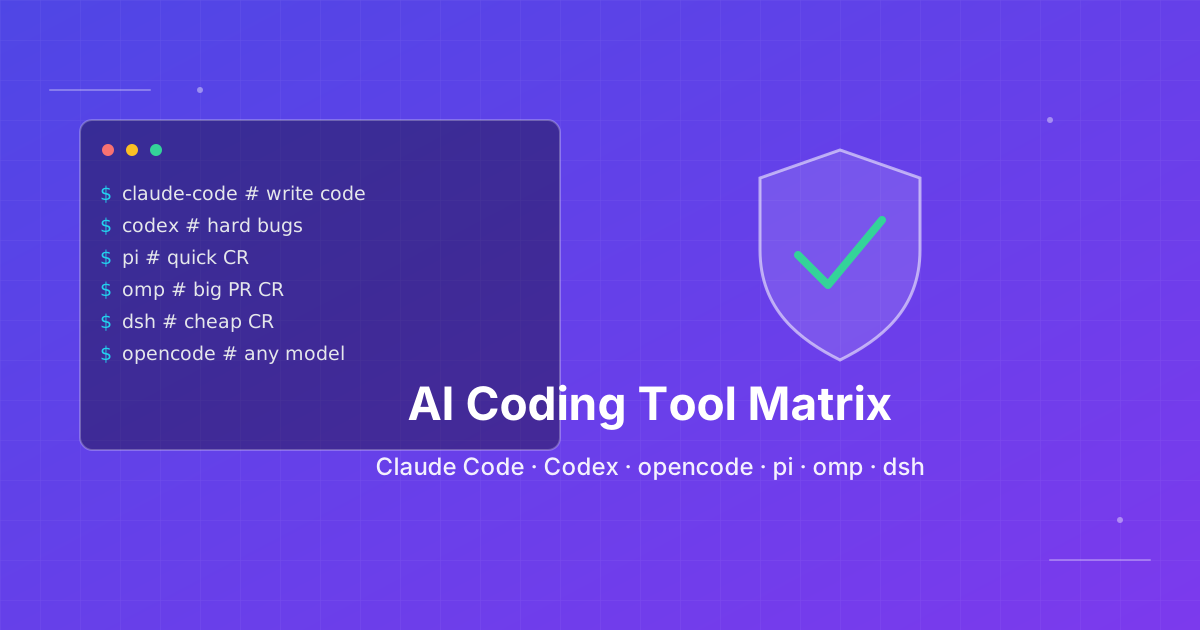
Seven AI Coding CLIs, Six Months: No Matter How Strong the Model, Work Needs Supervision
Claude Code, Codex, opencode, pi, omp and DeepSeek Harness all have personalities. After six months of deep use I run a division of labor: pi for the fastest cheapest reviews, omp for complex PRs, DeepSeek Harness on V4 Flash for high-frequency low-cost review, and Claude Code, Qoder and Cursor for writing. No matter how strong the model, work needs supervision — ideally from an independent third party.
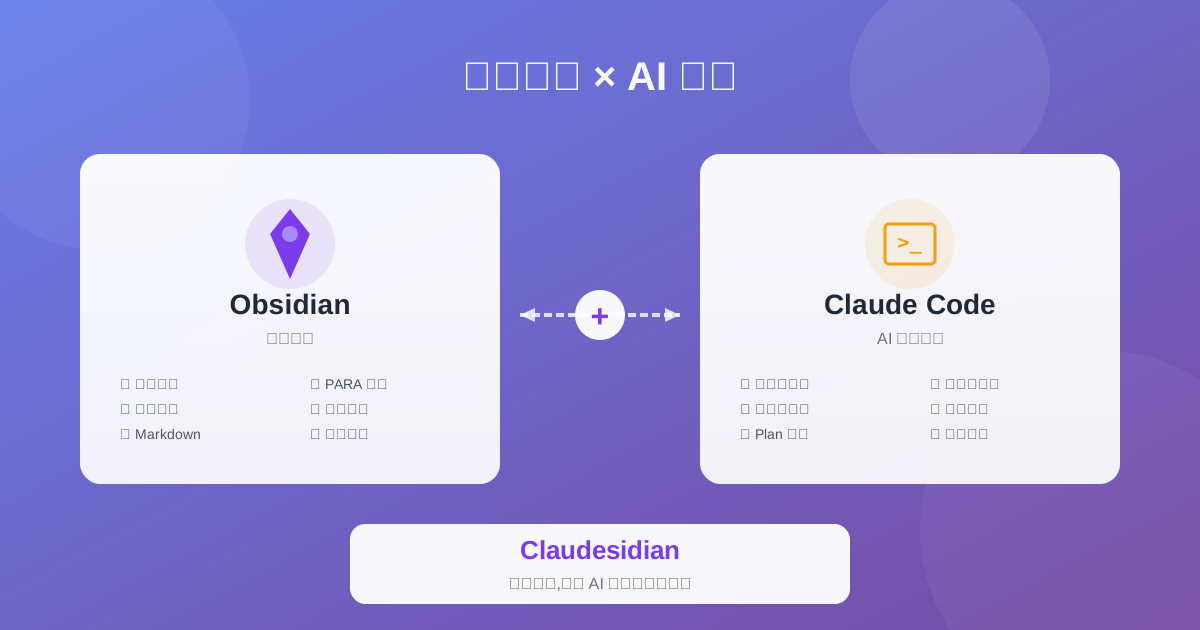
Claudesidian: Transform Obsidian into an AI-Powered Second Brain
Discover Claudesidian, an open-source project that perfectly integrates Obsidian with Claude Code. Built-in PARA method, custom commands, and automated workflows for a complete idea-to-implementation solution.