
Google: Gemini 4 Carbon
Gemini 4 Carbon is Google's frontier model announced on October 28, 2026 for long-horizon engineering and cybersecurity defense. Google says it improves on Gemini 4 Argon across coding, agentic tasks, web development, multimodal understanding, and defensive security work. Launch access is deliberately narrow: a subset of cyber defenders and additional trusted Fairwind Program partners receive it first, rather than every developer getting an immediate API route.
What Google announced
- Long-running engineering work: Google describes Carbon as built for sustained agentic workflows, including difficult multi-step debugging and patching work across large codebases and low-level systems.
- Security-defense focus: The announcement highlights vulnerability finding, exploit validation, and remediation. These are powerful dual-use areas, so access begins with trusted defenders.
- Safety work alongside capability: Google says Carbon uses its multi-layered safety stack, including misuse defenses and prompt-injection resilience. Those claims describe Google's evaluations, not a guarantee that an integration is safe.
- Introductory price: Google lists $2 per million input tokens and $10 per million output tokens, with cached input 95% below the input price. It says prices become $4 and $20 after the introductory period.
Practical workflow
Start with a defensive, reversible engineering task: have Carbon analyze a non-production test repository, propose a patch, run the existing test suite, and require a human to review the diff before any merge. Measure task completion, invalid findings, retries, patch quality, and total token cost against Gemini 4 Argon or the team's current model. Do not grant production credentials or autonomous deployment privileges simply because the model is positioned for security.
Availability and limits
Carbon is not broadly available at announcement. Google says it will phase access from the initial defender cohort to trusted partners, then later to developers, businesses, and consumers. Check the official announcement and live Gemini documentation before designing an integration or committing a budget.
Google's benchmark figures, including scores for SEC-bench Pro, ExploitGym, CWE-bench, WebDev Arena, and prompt-injection testing, are launch claims and should be treated as directional evidence. A model can still misunderstand repository context, produce an unsafe patch, follow malicious text in an issue, or falsely report a vulnerability. Keep least-privilege tools, isolated test environments, review gates, and an audit trail around any agentic workflow.
FAQ
Can every developer use Gemini 4 Carbon now?
No. Google says early access starts with selected cyber defenders and trusted Fairwind Program partners.
What does it cost?
The announcement lists introductory prices of $2 per 1M input tokens and $10 per 1M output tokens, then says $4 and $20 apply after the introductory period. Verify the current rate before use.
What should a team test first?
Use a non-sensitive repository with deterministic tests and require approval for every patch.
Alternatives
- Gemini 4 Argon: Google's earlier Gemini 4 frontier release with a similar staged-access posture.
- GPT-6.1 Terra: an alternative for teams evaluating visual reasoning and computer-use workflows.
Conclusion
Gemini 4 Carbon is a consequential frontier-model release for teams considering long-running coding and defensive-security agents. Its public claims are promising, but limited access and the risks of autonomous security work make small, permission-bounded evaluations the sensible next step.
Sources
Comments
No comments yet. Be the first to comment!
Related Tools

Related Insights
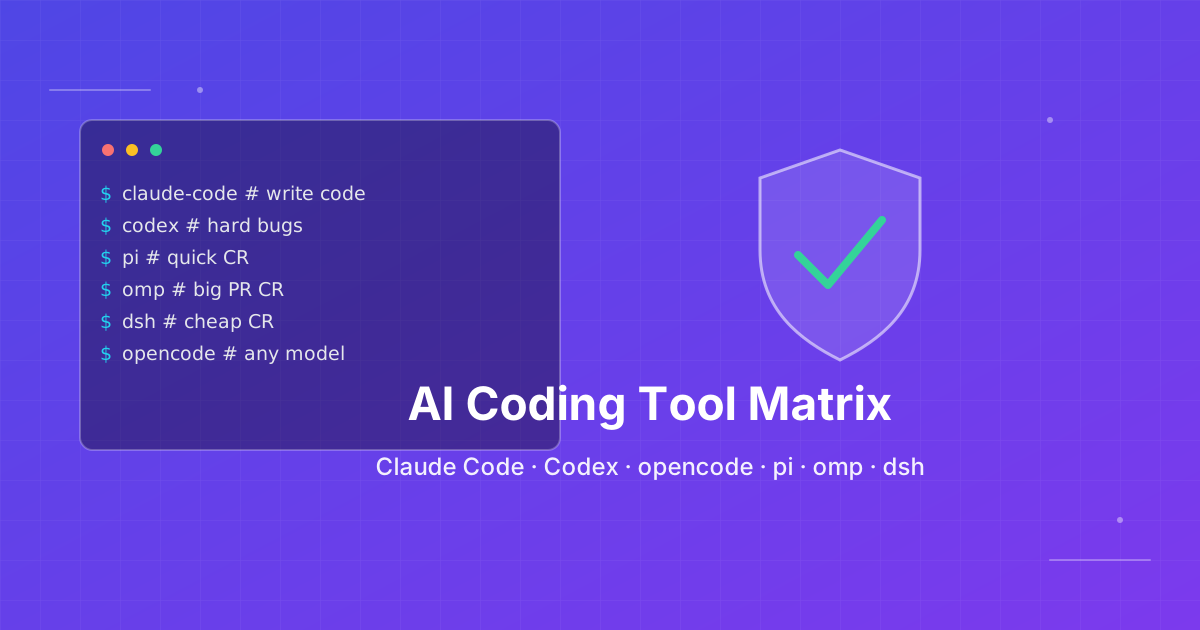
How to pick an AI coding CLI for your repo
Match Claude Code, Codex CLI, OpenCode, Pi, omp, DeepSeek Harness, and Grok Build to the work you actually run. Docs rechecked 2026-10-06.

Skills + Hooks + Plugins: How Anthropic Redefined AI Coding Tool Extensibility
An in-depth analysis of Claude Code's trinity architecture of Skills, Hooks, and Plugins. Explore why this design is more advanced than GitHub Copilot and Cursor, and how it redefines AI coding tool extensibility through open standards.

Claudesidian: Transform Obsidian into an AI-Powered Second Brain
Discover Claudesidian, an open-source project that perfectly integrates Obsidian with Claude Code. Built-in PARA method, custom commands, and automated workflows for a complete idea-to-implementation solution.