
KnotQ
KnotQ is a planning workspace that turns markdown documents into a live schedule. It still says Free on iOS, Android, macOS, Windows, and Linux.
Compare Obsidian if you wanted a local Markdown knowledge base, n8n if you wanted automation instead of a daily queue, and Zapier if you wanted a broader app connector.
Key Features
- Schemes as documents: Headings, checkboxes, and nested items stay in one Markdown plan.
- Any line becomes a calendar item: Start + end is an event, end only is an assignment, start only is a reminder.
- Daily Queue: Today's short list; unfinished items roll into tomorrow.
- One week view: Plans from every scheme plus Google Calendar.
- Still free on six platforms: Optional sync is mentioned; no public paid table.
Use Cases
- Markdown-native planners who want the document to become the calendar.
- Solo founders who do not want a separate reminder, task, and calendar stack.
Confirm the homepage if a paid plan appears later.
Pricing
First-party page on 2026-08-18.
| Piece | Price | Notes |
|---|---|---|
| KnotQ | Free | First-party still prints Free on iOS, Android, macOS, Windows, and Linux. |
| Paid seat | Not printed | Confirm the live official page. |
If a leftover blog still sells a KnotQ Pro table, treat the homepage as the correction.
Getting Started
- Open knotq.com and download the client for your platform.
- Write a scheme as a Markdown document with headings and checkboxes.
- Add a start and/or end to any line to make an event, assignment, or reminder.
- Work the Daily Queue; unfinished items roll forward.
Frequently Asked Questions
Is KnotQ still free?
Does it still include Google Calendar?
Yes. First-party still prints a week view with Google Calendar.
Is there a paid plan?
Alternatives
- Obsidian: Local Markdown knowledge base with plugins.
- n8n: Workflow automation if the job is routing, not a daily queue.
- Zapier: Broader app connector if you need thousands of integrations.
Tips
- Keep one project per scheme so the week view stays readable.
- Use end-only lines for deadline work.
- Confirm the homepage before you paste a paid seat into a 2026 deck.
Conclusion
Start at knotq.com, then decide whether Obsidian already covers the notes side of the job.
Comments
No comments yet. Be the first to comment!
Related Tools


Related Insights
Complete Guide to Claude Skills - 10 Essential Skills Explained
Deep dive into Claude Skills extension mechanism, detailed introduction to ten core skills and Obsidian integration to help you build an efficient AI workflow
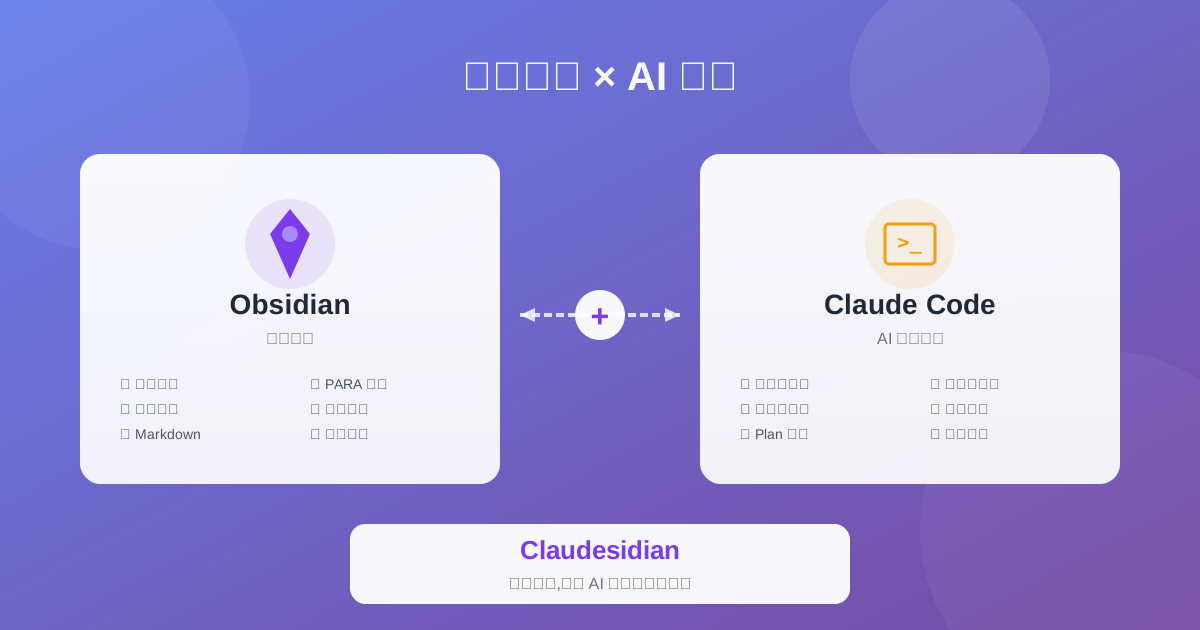
Claudesidian: Transform Obsidian into an AI-Powered Second Brain
Discover Claudesidian, an open-source project that perfectly integrates Obsidian with Claude Code. Built-in PARA method, custom commands, and automated workflows for a complete idea-to-implementation solution.
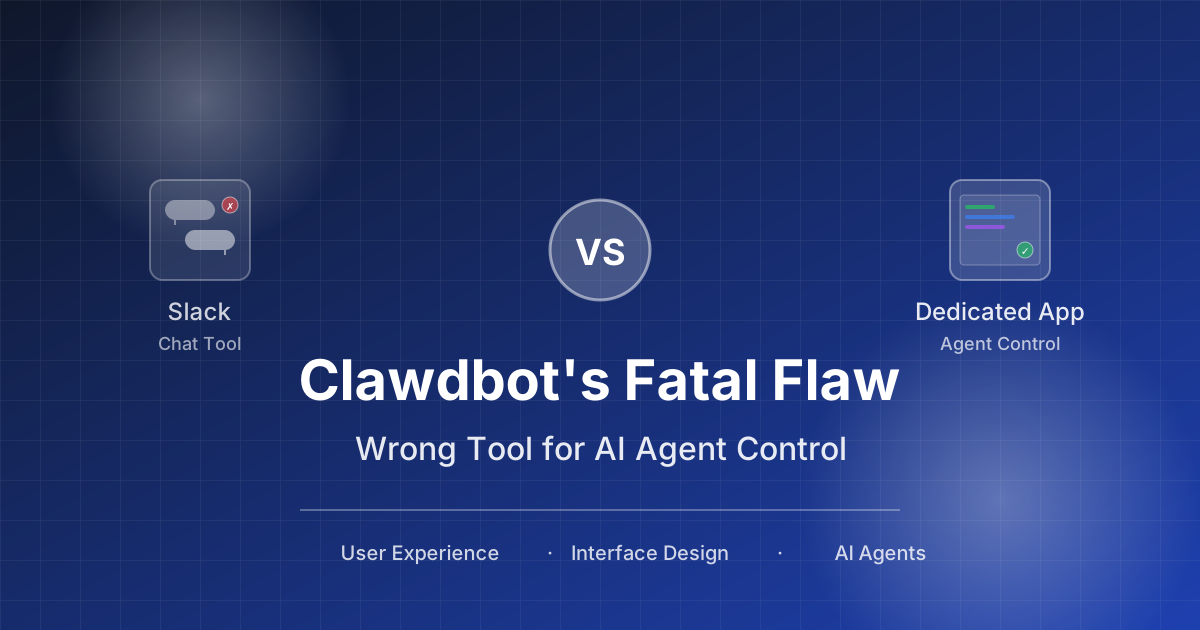
Stop Cramming AI Assistants into Chat Boxes: Clawdbot Picked the Wrong Battlefield
Clawdbot is convenient, but putting it inside Slack or Discord was the wrong design choice from day one. Chat tools are not for operating tasks, and AI isn't for chatting.