

Kitesurf
Kitesurf is Cloudflare's agent-first browser that runs in V8 isolates on Workers. developers.cloudflare.com/browser-run/kitesurf says Kitesurf is in beta and available for free, behind per-account limits. blog.cloudflare.com/kitesurf still claims 3.1x-7.0x less CPU than Chromium on their task set, CDP compatibility, and that they will open source it when ready. github.com/cloudflare/kitesurf returned 404 from this network. Do not list a public GitHub star count.
Compare Cloudflare Computer if you wanted a Durable Object filesystem, and Playwright if you needed a real Chromium driver.
Key Features
- Workers isolate, not a Chromium fleet: The blog and playground describe a stateless session for the length of a task.
- CDP and MCP: The playground still shows a
wss://kitesurf.cloudflare.app/devtools/browserendpoint and annpx chrome-devtools-mcpexample. - Not pixel-perfect: Docs have a "what Kitesurf cannot do yet" section. Confirm that list before you promise form-heavy or auth-heavy sites.
- Source later: Open source is a promise, not a repo we could clone.
Use Cases
- Agents that need a cheap HTML/screenshot pass on Cloudflare's edge.
- Teams already on Browser Run who can flip
browser=kitesurfin beta. - People who need full Chromium: stay on Playwright or Browser Run Chromium.
Limitation: 3-7x CPU/memory is Cloudflare's published comparison, not a number we re-ran. There is no public per-session dollar table beyond "free in beta."
Pricing
Browser Run / Kitesurf docs on 2026-08-17.
| Path | Price | Notes |
|---|---|---|
| Kitesurf beta | $0 listed | Free in beta, per-account limits. Confirm when beta ends. |
| GitHub | Not public | cloudflare/kitesurf 404. |
If a leftover blog still lists a GitHub star count or a paid Kitesurf SKU, treat the 404 and the beta sentence as the source.
Getting Started
- Open the playground.
- Read When to use Kitesurf.
- Point a CDP client at the playground or Browser Run endpoint only after you accept beta limits.
- Confirm Playwright if the page needs Chromium fidelity.
Frequently Asked Questions
Is the source on GitHub?
Not at the URL in our old catalog. The blog still says they will open source it later.
Is it free forever?
Docs say free while in beta.
Same as Playwright?
No. Playwright drives Chromium. Kitesurf is a lighter Workers browser with weaker fidelity.
Alternatives
- Playwright: Real Chromium automation.
- Cloudflare Computer: Agent disk, not a browser.
Tips
- Quote "free in beta," not a fake seat price.
- Do not paste a GitHub star number.
- Confirm the cannot-do list before a demo on a hard site.
Conclusion
Kitesurf is a beta Workers browser with a playground and a 404 GitHub URL, not an open-source Chromium replacement. Start at kitesurf.cloudflare.app, then decide whether Playwright already covers the page you need.
Comments
No comments yet. Be the first to comment!
Related Tools


Related Insights

Anthropic Subagent: The Multi-Agent Architecture Revolution
Deep dive into Anthropic multi-agent architecture design. Learn how Subagents break through context window limitations, achieve 90% performance improvements, and real-world applications in Claude Code.
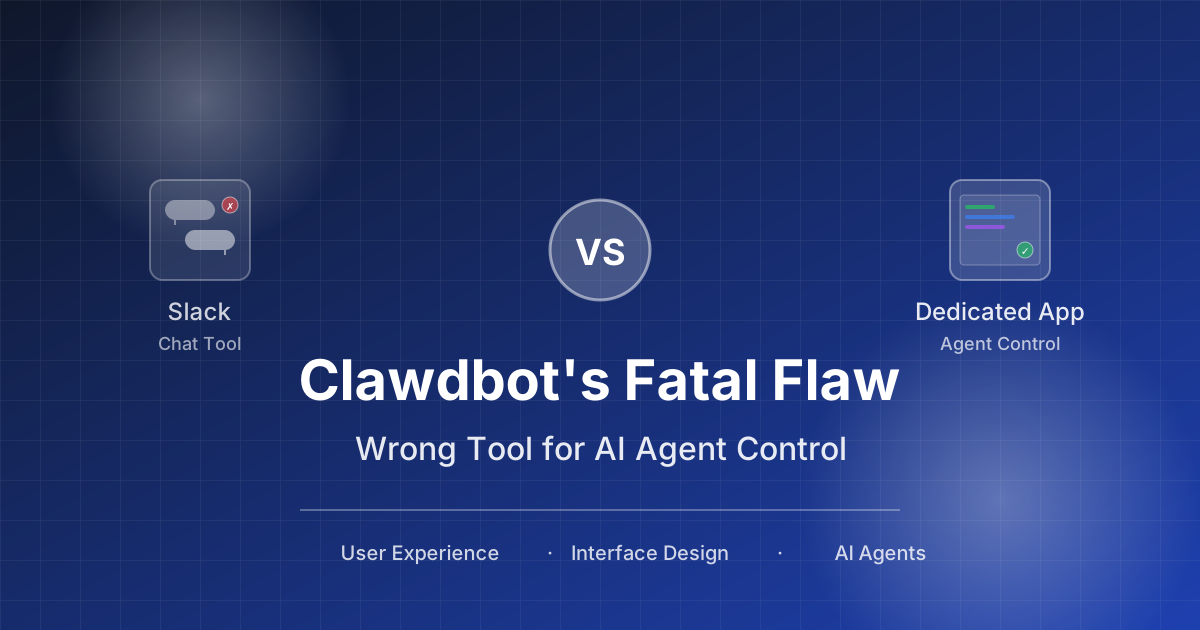
Stop Cramming AI Assistants into Chat Boxes: Clawdbot Picked the Wrong Battlefield
Clawdbot is convenient, but putting it inside Slack or Discord was the wrong design choice from day one. Chat tools are not for operating tasks, and AI isn't for chatting.

Grok Bot and Hermes Bot: one person finally gets a think tank and a secretariat
Grok Bot now ships with Cursor Pro+. Hermes Bot runs on a VPS. They are not smarter chat boxes. The think tank advises, the secretariat executes, and you still make the call.