

Vibe Squad is a local multi-model harness. You talk to Chrono, the coordinator. Chrono turns a goal into a Markdown task, picks a specialist and a model, runs the worker in an isolated git worktree, and asks a different model family to review when the risk warrants it. The GitHub repo mtarcure/claude-vibe-squad is MIT, created 2026-05-02, at v1.1.5 in the README. The API listed 76 stars on 2026-09-06. There is no separate product site.
Behavior is Markdown you can edit: modes, specialist briefs, capability cards, and skills. Code only launches processes, isolates worktrees, checks identity, publishes atomically, and guards Git integration. README claims 71 role-based specialists across Codex, Claude, Gemini, Grok, and Kimi. macOS for now. You need tmux, fswatch, jq, curl, Python 3.13, uv, and authenticated native CLIs.
Compare Skills For Real Engineers if you want grilling without a tmux control room, or Multica if you want a board that assigns agents like teammates.
Key Features
- Chrono as the only conversation: one coordinator, two modes. Project covers software, research, content, ops, and learning (scope, plan, build, verify, review, deliver, remember). Bounty is authorized offensive-security work with a scope gate and reproduced evidence before a finding is closed.
- Task file is the contract: specialist, model,
read_scope,write_scope, and done criteria live in YAML frontmatter on a Markdown task. - Rival-family review: a different model family checks the work so no model signs off on its own reasoning.
- Memory in a private vault: lessons write to
$HOME/Obsidian-Chrono(orCHRONO_VAULT_ROOT), outside the public repo. - No required daemon:
bin/squad upopens a tmux control room. An optional launchd daemon only adds a status-bar segment and an HTTP MCP bridge.
Limitation: worktrees are not a sandbox. A worker runs on your host with your permissions. write_scope is enforced when changes are integrated, not while the worker acts. --safe only skips the first-run warning and pre-flight doctor. Bounty rules are policy for Chrono, not a launch interlock. Treat this as an autonomy tool, not containment.
Use Cases
- Split a landing page across models: one specialist builds, another tests in the browser, Chrono integrates after checks.
- Cited research brief: research specialist on one family, review on another.
- Authorized bounty: only with a declared scope allowlist. The end-of-run verifier checks declarations and evidence hashes; it does not judge the evidence.
Pricing
MIT licensed and free. You pay the five native CLIs you authenticate. Hardware is your Mac. Optional daemon is free.
Getting Started
mkdir -p "$HOME/Obsidian-Chrono"
printf '%s\n' '{"vault_id":"my-private-vault","schema_version":1}' > "$HOME/Obsidian-Chrono/.chrono-vault"
export CHRONO_VAULT_ROOT="$HOME/Obsidian-Chrono"
git clone https://github.com/mtarcure/claude-vibe-squad.git
cd claude-vibe-squad
uv sync
git config core.hooksPath .githooks
bin/squad doctor
bin/squad up
Set core.hooksPath yourself. Clones do not get .git/hooks. Until you do, the private-memory leak guard does not run on commit.
First-party resource: docs/getting-started.md.
Frequently Asked Questions
Is this a Claude Code plugin?
No. It launches native CLIs inside tmux. Claude Code is one of five families.
Does --safe sandbox the worker?
No. Same permissions either way.
Linux or Windows?
README says macOS for now.
Alternatives
- Skills For Real Engineers: grilling, wayfinder, and TDD skills inside the agent you already run.
- Multica: issue board that assigns coding agents as teammates.
- Claude Code: single-agent CLI without the specialist swarm.
Tips
- Run
bin/squad doctorbefore the firstup. Missing CLIs fail late. - Keep the vault private. The leak guard only helps after
core.hooksPathis set. - Do not treat
read_scopeas an action-time read barrier.
Conclusion
Vibe Squad is for people who want several model families in one tmux session, with Markdown as the contract. It is not a security boundary. Start with Project mode on a throwaway repo before you enable broader autonomy.
Comments
No comments yet. Be the first to comment!
Related Tools


Related Insights
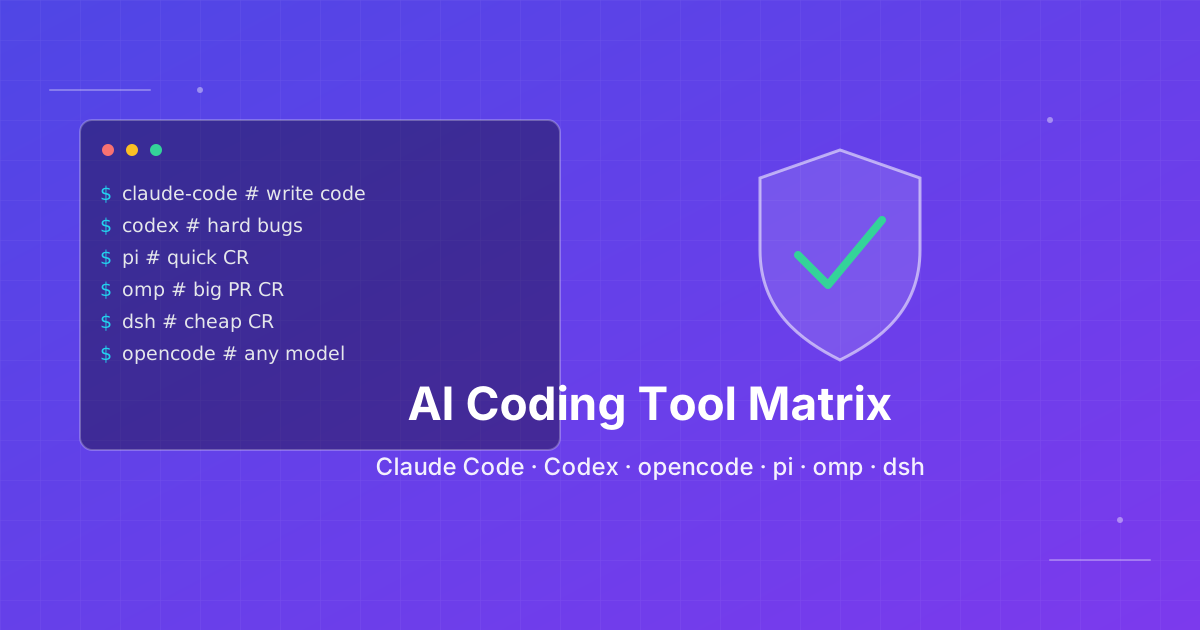
How to pick an AI coding CLI for your repo
Match Claude Code, Codex CLI, OpenCode, Pi, omp, DeepSeek Harness, and Grok Build to the work you actually run. Docs rechecked 2026-10-06.

Skills + Hooks + Plugins: How Anthropic Redefined AI Coding Tool Extensibility
An in-depth analysis of Claude Code's trinity architecture of Skills, Hooks, and Plugins. Explore why this design is more advanced than GitHub Copilot and Cursor, and how it redefines AI coding tool extensibility through open standards.
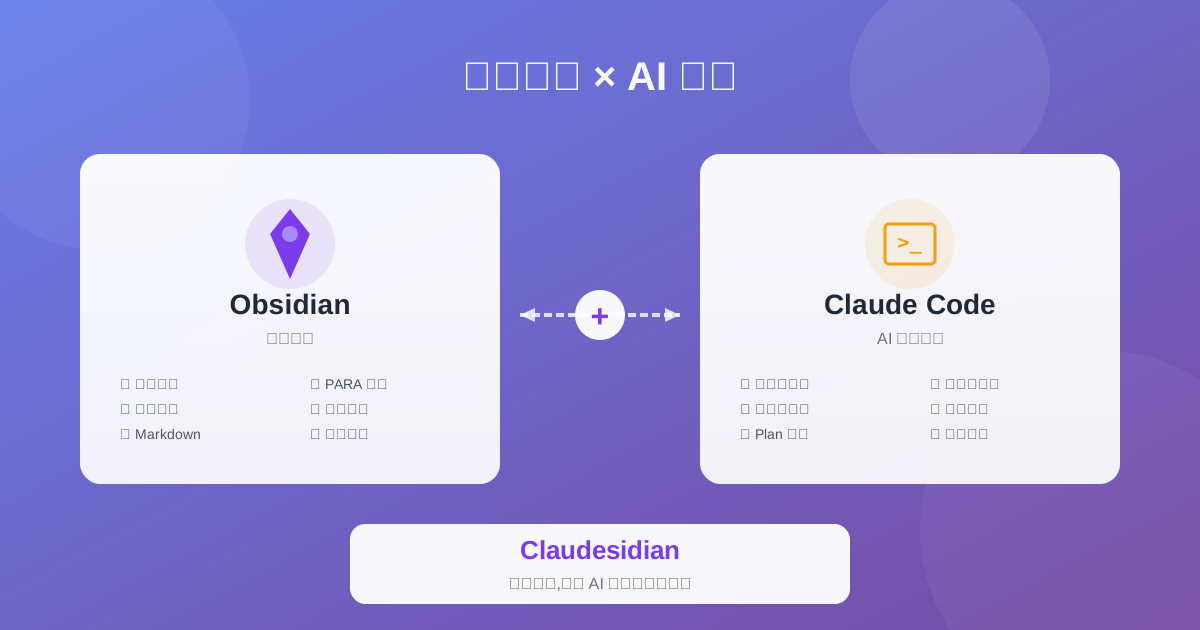
Claudesidian: Transform Obsidian into an AI-Powered Second Brain
Discover Claudesidian, an open-source project that perfectly integrates Obsidian with Claude Code. Built-in PARA method, custom commands, and automated workflows for a complete idea-to-implementation solution.