

Multica is an open-source workspace for mixed human and agent teams. You file an issue, assign a coding agent the way you would a colleague, and the agent claims the work on a runtime you control, comments as it goes, and hands a result back for review. The GitHub repo multica-ai/multica was created January 13, 2026. The product site is multica.ai. Changelog on 2026-09-04 was at v0.4.40.
It does not ship a model. It drives CLIs you already installed: Claude Code, Codex, Cursor, Copilot, OpenCode, OpenClaw, and others (26 named on the homepage). Code execution stays on your laptop or your cloud box. The platform coordinates issue state and events.
If you only need one terminal agent, start with Claude Code or OpenCode. If you want a Python crew library instead of a board, compare CrewAI.
Key Features
- Agents as assignees: humans and agents share the same dropdown, activity feed, comments, and status changes.
- Full run lifecycle: enqueue, claim, start, complete or fail, with WebSocket progress. Blockers are supposed to surface instead of dying silently.
- Skills: reusable playbooks (deploy, migrate, review) that any agent on the team can run.
- Runtimes dashboard: local daemons and cloud boxes, online/offline, usage charts. First run scans for the 26 supported CLIs.
- Squads and Autopilots: a leader can route work; cron/webhook Autopilots run standups and audits.
- Channels: Slack and Lark are first-party; DingTalk, WeCom, and Telegram are marked community-maintained in the docs.
Limitation: Multica is the manager, not the worker. If no supported CLI is installed and signed in on the runtime, issues sit queued. Public hosting of a hosted service still needs a commercial license on top of the Apache-2.0-based Multica License. We did not find a public dollar price table on 2026-09-05.
Use Cases
- Teams running several coding CLIs who are tired of re-explaining context in separate terminal tabs.
- Leads who want review gates: work lands in review, not in
main, with an execution log per run. - Self-host shops that want the board on their own Postgres and Docker/Helm stack.
Pricing
Hosted cloud is at multica.ai (email code or Google). Changelog mentions a Pro plan and seat billing, but the public site did not list dollar amounts on 2026-09-05. Do not treat any third-party guess as official.
Self-host is documented (Docker Compose, Helm, or multica setup self-host). The LICENSE is Apache 2.0 plus extra conditions for hosted services, commercial embedding, and branding. Changelog v0.4.17 says free public hosting still needs a commercial license.
You still pay for whatever Claude, Codex, or other CLI the daemon spawns.
Getting Started
From the cloud quickstart:
- Sign in at multica.ai or install Desktop.
- Connect a computer. Desktop registers itself. On the web, run
curl -fsSL https://raw.githubusercontent.com/multica-ai/multica/main/scripts/install.sh | bashthenmultica setup. - Create an agent (blank, or Build with AI). Pick the runtime and CLI.
- Press
C, create an issue, set the agent as assignee. Watch the execution log.
Self-host: curl -fsSL https://raw.githubusercontent.com/multica-ai/multica/main/scripts/install.sh | bash -s -- --with-server then multica setup self-host. Needs Docker.
Frequently Asked Questions
Does it replace Claude Code?
No. It assigns work to Claude Code, Codex, Cursor, and the rest. Those CLIs still do the coding.
Where does my code go?
Official FAQ: execution is on your machine or your cloud. Code is not supposed to pass through Multica servers. The board only coordinates task state.
How many agents?
Open-source version has no artificial cap. Limits are hardware and per-agent concurrency.
Alternatives
- Claude Code: one agent in a terminal, no team board.
- CrewAI: multi-agent framework in Python, not an issue tracker.
- OpenCode: open-source coding CLI that Multica can drive as a runtime.
Tips
- Install and sign in at least one CLI before you file issues, or they queue forever.
- Treat Autopilot permissions as the creator's identity. Changelog v0.4.39 made that explicit.
- If you only wanted a notes second brain, that is Khoj, not this.
Conclusion
Multica is a board for humans plus coding agents, with the daemon on your hardware and 26 CLIs auto-detected. Start at multica.ai/docs or the GitHub repo.
Comments
No comments yet. Be the first to comment!
Related Tools


Related Insights
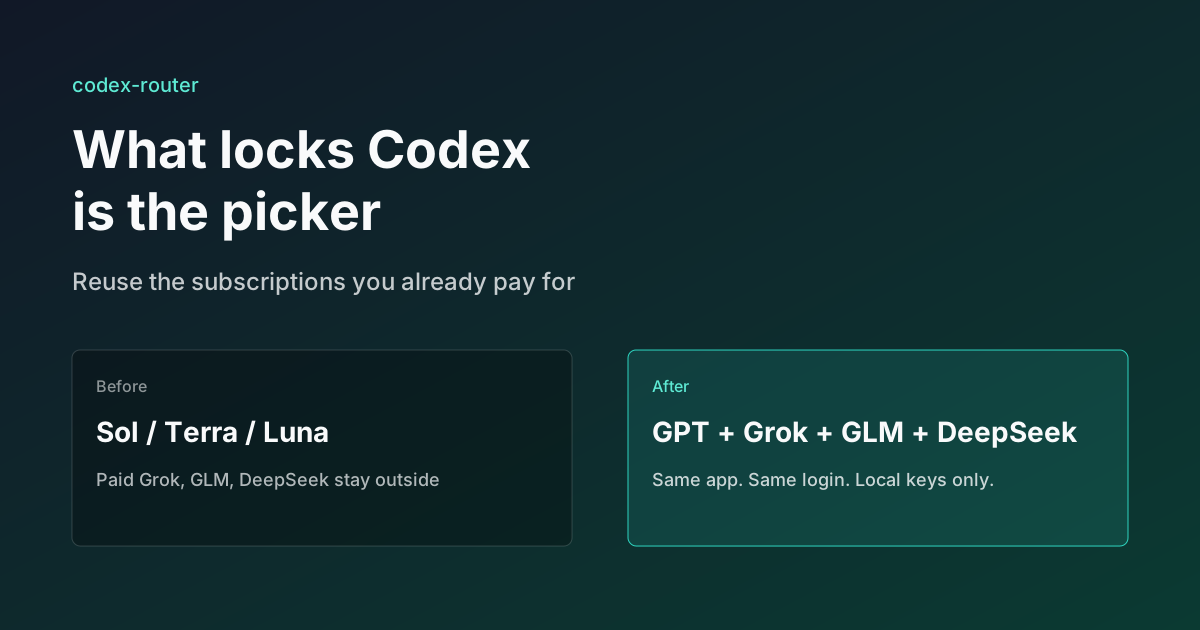
What Locks Codex Is the Picker, Not the Models
You already pay for OpenCode Go, Grok, and Z.ai, but the Codex picker still shows mostly GPT. The community project codex-router does not teach another install ritual. It puts subscriptions you already bought back into the selector, keeps keys on the machine, and leaves native GPT alone.
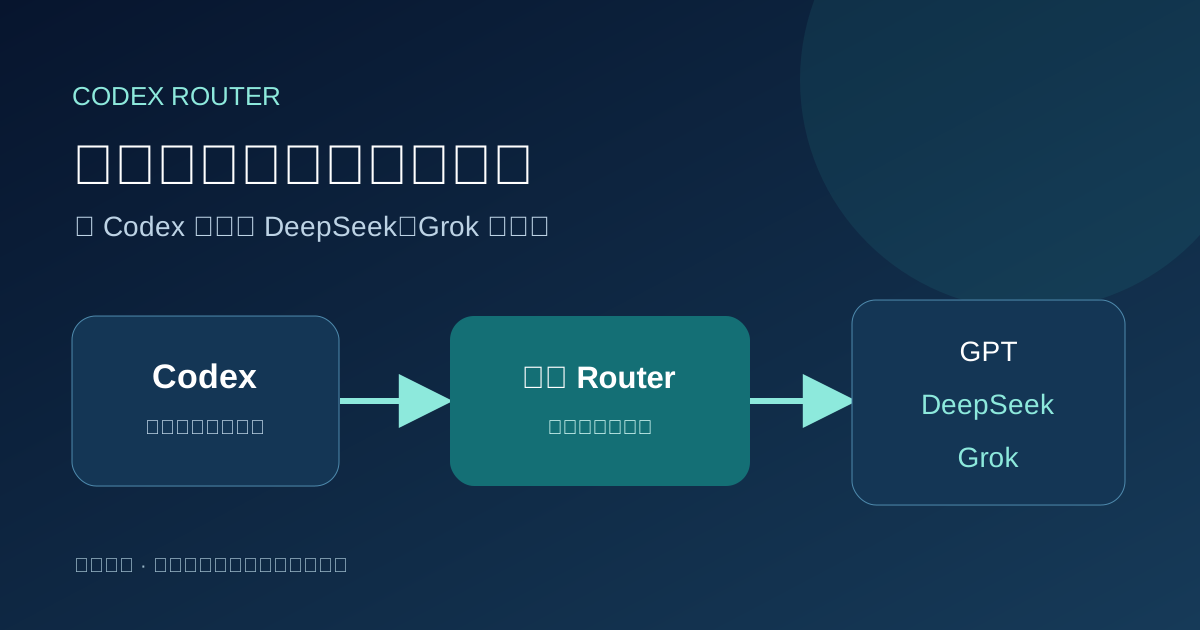
Running low on ChatGPT Codex quota? Switch to DeepSeek or Grok inside Codex
Codex Router lets you keep your Codex workspace while using DeepSeek, Grok, and other external models. A plain-English guide to routing, quotas, and network access.
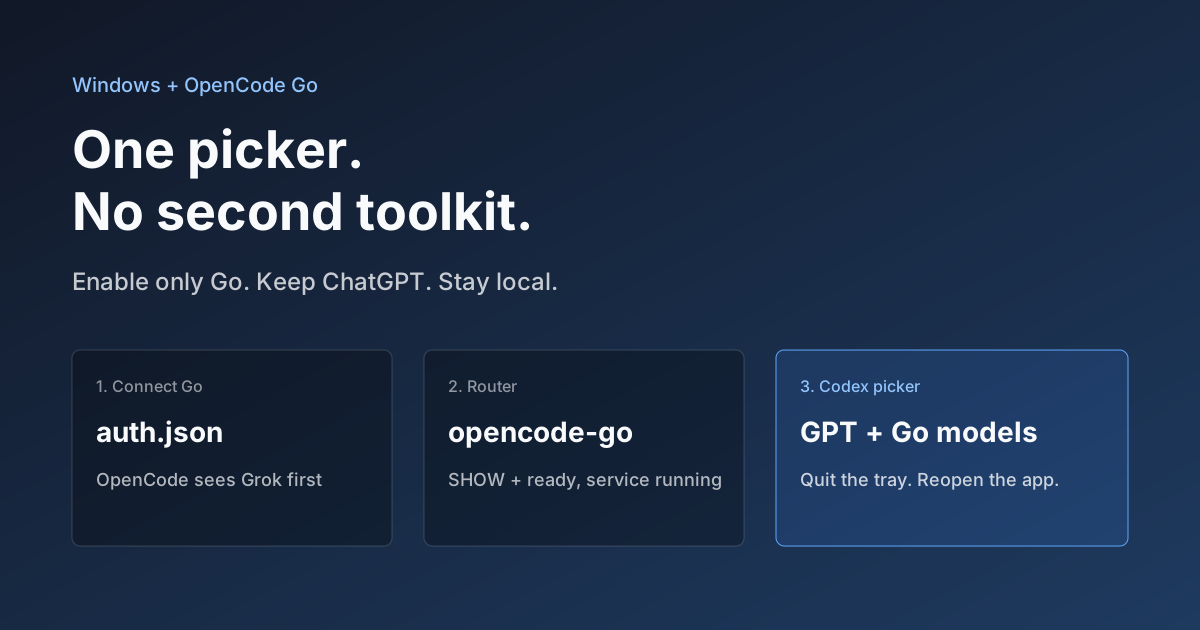
OpenCode Go in Codex on Windows: Setup, Troubleshooting, and Rollback
Connect OpenCode Go to Codex through the community codex-router project. Check prerequisites, authentication, real tool calls, and rollback.