

InsForge
InsForge is an Apache-2.0 backend platform built so a coding agent can ship a full-stack app without living in a human dashboard. Official docs call it the open-source backend for agentic coding: one project gets Postgres, authentication, S3-compatible storage, realtime, Deno edge functions, site deploys, and an OpenAI-compatible model gateway. Agents drive that surface through @insforge/cli or an MCP server. The GitHub repo was created 2025-07-29 and, as of 2026-08-16, listed about 12,728 stars.
Key Features
- Agent-first control plane:
npx @insforge/cli loginlinks a project from any terminal. MCP adds live schemas, logs, and project context inside Claude Code, Cursor, Windsurf, Codex, and other editors. - Postgres with pgvector: Typed REST and SDK endpoints, row-level security, git-tracked SQL migrations, backups, and semantic search in the same database.
- Auth and storage: Email, magic links, OTP, OAuth/OIDC, and JWT sessions, plus S3-compatible buckets with signed URLs and RLS. Self-hosted storage can use MinIO, RustFS, or your own S3 endpoint.
- Edge functions and compute: Deno TypeScript functions with HTTP, cron, and database triggers. Custom Compute runs long-lived containers for workers, scrapers, and inference loops. Site deploys target Vercel from the CLI or dashboard.
- Model gateway: Point an OpenAI SDK at
https://<project>.insforge.dev/v1. InsForge holds provider keys, routes through OpenRouter, and tracks per-project usage. Application code never sees Anthropic, OpenAI, or Mistral credentials. - Self-host or cloud: Docker Compose guides cover AWS, Azure, GCP, Hetzner, Coolify, and Dokploy. Cloud adds hosted compute credits, usage dashboards, and SOC2/SSO on Enterprise.
Use Cases
- Agent-built SaaS: Let Cursor or Claude Code create tables, auth, buckets, and functions, then review the plan instead of clicking through a console.
- RAG products: Store documents, embeddings, and app data in one Postgres instance with pgvector.
- Background agent work: Custom Compute keeps queue workers and long inference loops next to the same project as the API.
- Self-hosted teams: Run the Apache-2.0 stack on a VPS when data cannot leave your network.
Pricing
Official pricing on insforge.dev/pricing (accessed 2026-08-17):
| Plan | Price | Included |
|---|---|---|
| Free | $0 / month | 50,000 MAU, 500 MB database, 5 GB bandwidth, 1 GB files, 100,000 edge calls, 600 minutes of site builds, 120h custom compute on the default spec. Projects pause after 1 week of inactivity. |
| Pro | $25 / month, or $20 / month billed yearly at $240 | 100,000 MAU, 8 GB database, 250 GB bandwidth, 100 GB files, unlimited site builds, $10 InsForge Compute credits, $10 AI model credits. Overages are published (for example $0.125/GB database, $0.09/GB bandwidth). |
| Enterprise | Custom | SOC2, SSO, HIPAA as a paid add-on, unlimited projects, dedicated support. |
Nano compute starts around $5/month per project; Micro is listed at $10/month. Paid plans apply the $10 compute credit once per organization.
Getting Started
- Create a project at insforge.dev or follow a self-host guide.
- Run
npx @insforge/cli loginand link the project. Do not install the CLI globally; the agent skill file says always usenpx. - Fetch https://insforge.dev/skill.md if an agent is doing the setup. That is the canonical workflow.
- Add MCP if your editor supports it, then generate types and apply the first migration from the CLI.
- Point app code at the project URL and the model gateway only from trusted server routes.
Frequently Asked Questions
Is InsForge just another Supabase?
It shares Postgres, auth, storage, and functions, but the first-class operator is a coding agent. MCP and the CLI expose schemas, logs, and deploys as machine-readable tools. Official comparison pages contrast that with Supabase's human-first console.
Can I self-host?
Yes. The repo is Apache-2.0 and docs cover VPS, AWS EC2, Azure, GCP, Hetzner, Coolify, and Dokploy.
Does the model gateway replace OpenRouter?
No. The gateway is OpenAI-compatible and routes through OpenRouter while InsForge holds keys and quotas. You still pay model usage.
What is the main risk?
Free cloud projects pause after a week of inactivity, and compute is billed on top of the subscription. Treat the dashboard numbers as current only after you recheck the pricing page.
Alternatives
- Supabase: Human-first open-source Firebase alternative if your team lives in SQL and the dashboard.
- Dify: Visual agent workflows and RAG if you want a builder, not a backend platform.
- OpenRouter: Direct multi-model API access without InsForge's Postgres and auth stack.
Tips
- Start with CLI login, then add MCP. The docs say both can run side by side.
- Keep migrations in git. InsForge records timestamped SQL and applies it forward-only.
- Call the model gateway from the server, not the browser. The Swift and TypeScript docs treat those keys as trusted-server credentials.
Conclusion
InsForge is worth a look when you want an agent to operate Postgres, auth, storage, functions, and a model gateway as one backend, not when you only need a chat UI. Start on the free cloud tier or the self-hosted Compose stack, then read the official overview before you let an agent apply production migrations.
Comments
No comments yet. Be the first to comment!
Related Tools


Related Insights
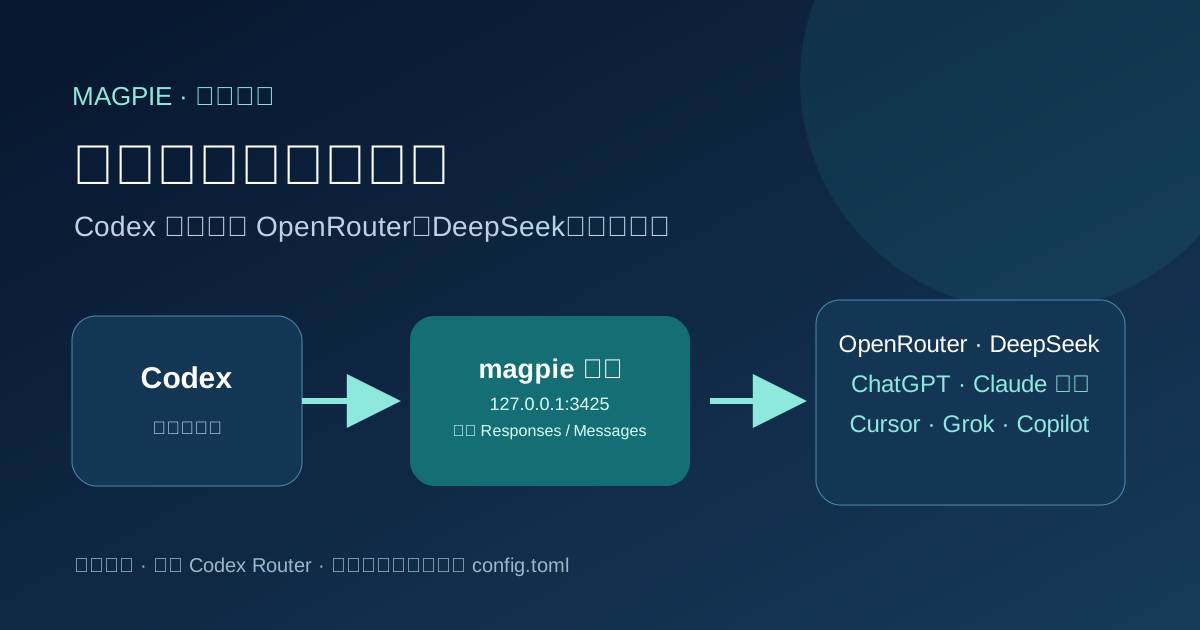
Codex on any model: magpie makes Codex Router unnecessary
magpie is a free, open-source menu bar app that runs a local gateway and puts OpenRouter, DeepSeek and your ChatGPT, Claude, Cursor, Grok and Copilot subscriptions right into Codex's own model picker, with one click and no Codex Router.
After I Connected Obsidian to OpenClaw, It Started Helping Me Make Decisions
Once Obsidian stopped being just a place to store notes and started working with OpenClaw, it began helping me organize context, connect information, and improve real decisions.
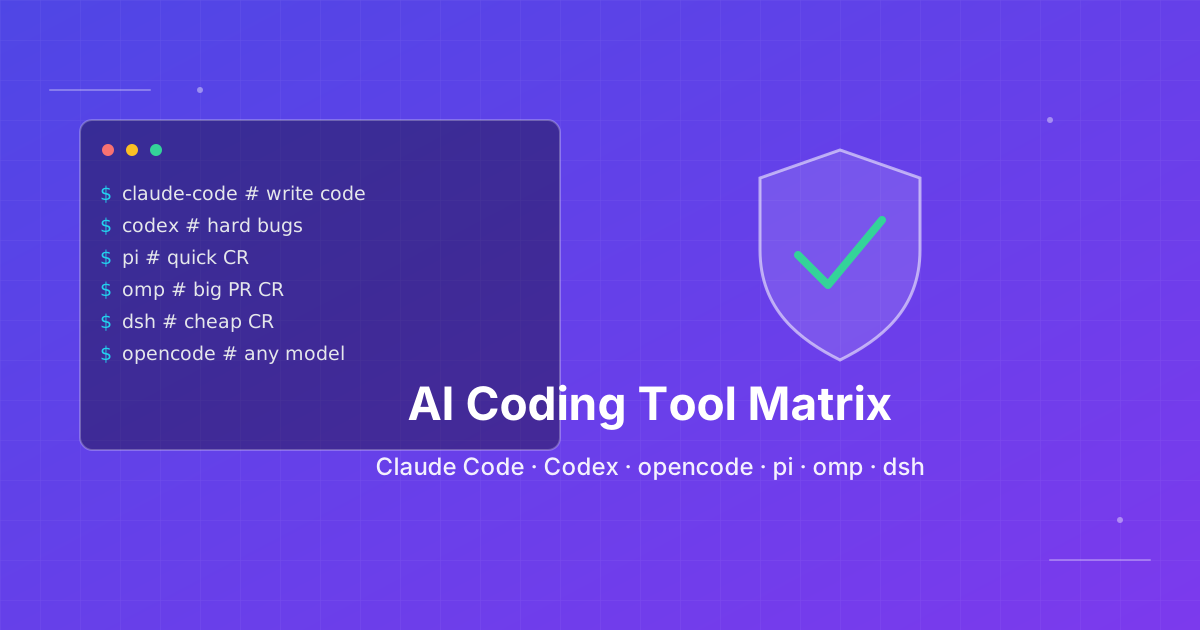
Seven AI Coding CLIs Compared: Tasks, Costs, and Independent Review
Compare Claude Code, Codex CLI, OpenCode, Pi, omp, DeepSeek Harness, and Grok Build with a repeatable task checklist and practical review workflow.