
OmniRoute
OmniRoute is a free, MIT-licensed AI gateway that sits between your coding agent and hundreds of model providers. Point Claude Code, Codex, Cursor, OpenCode, Cline, Copilot, or Antigravity at one local endpoint and the router handles provider translation, quota-aware fallback, and token compression. The public site and GitHub README describe 339 providers, 90+ free tiers, 1,200+ models, 19 routing strategies, MCP and A2A support, and a dashboard that comes up on port 20128. The repository was created on February 13, 2026, and has about 48.9K stars.
Key Features
- One endpoint, many protocols: Translates OpenAI, Claude, Gemini, and Responses API traffic so existing tools keep their native clients.
- Quota-aware auto-fallback: When a provider hits a limit, OmniRoute switches to the next eligible route in milliseconds.
- Free-tier aggregation: The dashboard's
/dashboard/free-tierspage publishes a live, pool-deduped estimate of documented free capacity (about 1.51B tokens per month at last audit). These figures move as providers change terms. - Token compression: Stacked RTK plus Caveman compression is claimed to save 15-95% of eligible tokens, around 89% on tool-heavy sessions.
- Local and paid providers together: Mix 90+ free tiers, 158 API-key providers, 20 OAuth coding-agent logins, and 11 local backends such as Ollama, LM Studio, and vLLM.
- Batteries included: Circuit breakers, MCP tools, A2A, memory, guardrails, evals, and a desktop/PWA client ship in one binary.
Use Cases
- Coding-agent users: Keep Claude Code or Codex running after one provider's quota is gone.
- Cost-sensitive teams: Drain documented free tiers first, then fall back to cheap paid models.
- Self-hosters: Run the gateway on localhost and keep API keys on your machine.
- Multi-tool shops: Give Cursor, Cline, Copilot, and OpenCode the same model catalog without per-app routing code.
Pricing
OmniRoute itself is free and open source under the MIT license. npm install -g omniroute starts the API and dashboard with no credit card. You pay only the upstream providers you actually use. Many listed free tiers are rate-limited or ToS-constrained; the project flags some of those pools so you can decide.
Getting Started
- Install with
npm install -g omniroute. - Run
omniroute. The dashboard should open athttp://localhost:20128/dashboardand the API at:20128. - In the dashboard, connect at least one free provider. No paid key is required to start.
- Point your coding tool's base URL at
http://localhost:20128/v1and use the dashboard key. - Confirm with
curl localhost:20128/v1/models.
Frequently Asked Questions
Is the 1.51B free-token number guaranteed?
No. OmniRoute publishes what the live catalog computes from documented free tiers, re-audited about every two weeks. Providers can shrink or remove a free tier at any time.
Does it store my prompts?
Treat it as self-hosted infrastructure: the process runs on your machine. Review the project's privacy and logging settings before pointing production traffic at it.
How is this different from OpenRouter?
OpenRouter is a hosted multi-model marketplace. OmniRoute is an open-source local gateway that can include OpenRouter as one of many upstreams, with explicit free-tier draining and agent-oriented fallback.
Alternatives
- OpenRouter: hosted catalog when you want someone else to operate the router.
- CheaperInference: a discount reseller of excess inference capacity, not a self-hosted gateway.
- Cloudflare AI Gateway: an edge gateway with caching and analytics, aimed at production APIs rather than free-tier stacking.
Tips & Best Practices
- Read the free-tier methodology: some pools are ToS-flagged. Do not assume every listed provider is allowed for your use case.
- Start with one coding agent: prove fallback on Claude Code or Codex before moving your whole stack.
- Watch compression on tool-heavy runs: token savings are largest there, but always compare output quality on a known task.
Comments
No comments yet. Be the first to comment!
Related Tools


Related Insights
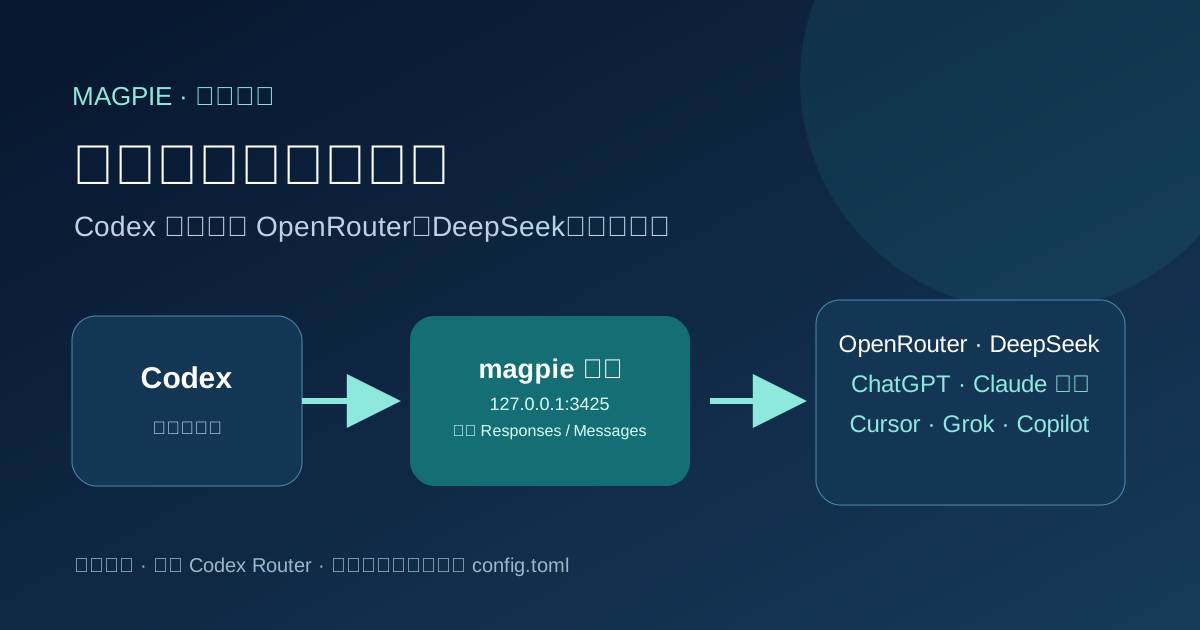
Codex on any model: magpie makes Codex Router unnecessary
magpie is a free, open-source menu bar app that runs a local gateway and puts OpenRouter, DeepSeek and your ChatGPT, Claude, Cursor, Grok and Copilot subscriptions right into Codex's own model picker, with one click and no Codex Router.
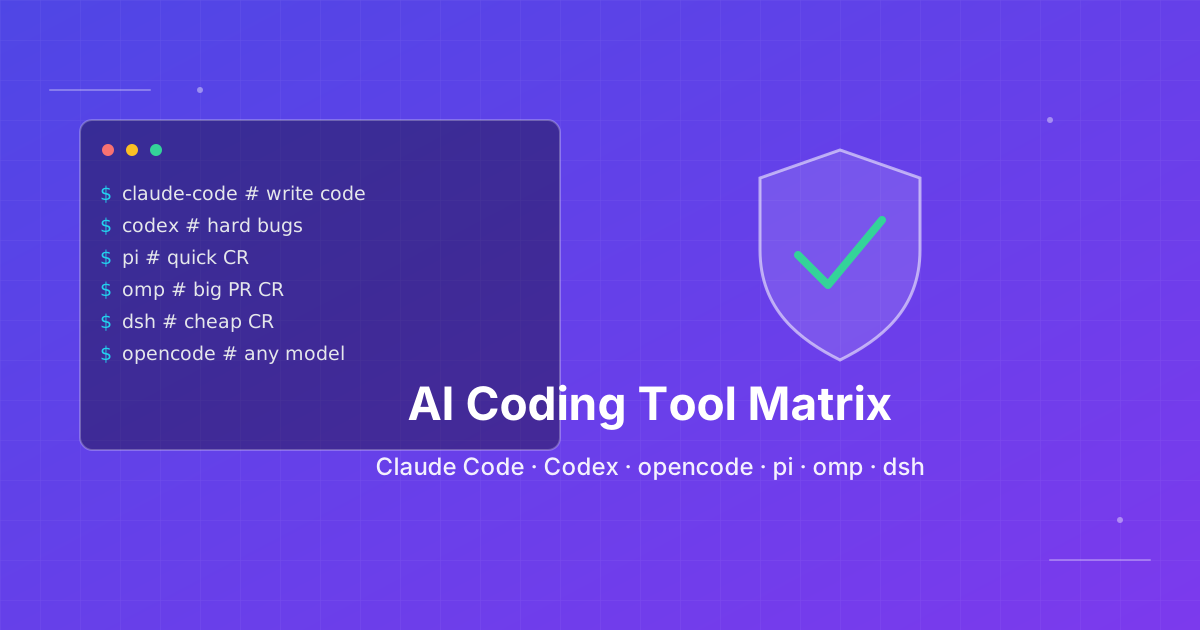
Seven AI Coding CLIs Compared: Tasks, Costs, and Independent Review
Compare Claude Code, Codex CLI, OpenCode, Pi, omp, DeepSeek Harness, and Grok Build with a repeatable task checklist and practical review workflow.

Anthropic Subagent: The Multi-Agent Architecture Revolution
Deep dive into Anthropic multi-agent architecture design. Learn how Subagents break through context window limitations, achieve 90% performance improvements, and real-world applications in Claude Code.