

Continue
Continue is an Apache-2.0 coding agent for VS Code and JetBrains. Official docs still describe it as the way to create, share, and run custom AI code agents: Agent, Chat, Edit, autocomplete, and a terminal CLI named cn. The GitHub repo continuedev/continue had about 35,505 stars on 2026-08-17 and was still receiving commits. The marketing site now leads with a hard fact: Continue was acquired by Cursor. The company says the open-source codebase remains freely available as a foundation for others.
Key Features
- Four IDE surfaces: Agent for multi-step tasks, Chat for questions, Edit for in-file changes, and Tab autocomplete.
- Bring your own model: Docs cover cloud providers plus local setups such as Ollama, including an offline guide.
- Config as YAML: Models, rules, prompts, MCP servers, and roles live in
config.yaml. - Continue CLI (
cn): Terminal-native assistance for the same agent workflow outside the editor. - Still open source after the acquisition: Apache-2.0 on GitHub. Treat cloud accounts and old subscriptions as a separate question from the public repo.
Use Cases
- Local or air-gapped coding: Pair Continue with Ollama when code cannot leave the machine.
- Custom agents in a familiar IDE: Keep VS Code or JetBrains and swap models without changing editors.
- Post-acquisition evaluation: Teams that already depend on Continue should re-read continue.dev before renewing a hosted plan.
Pricing
The public repo and IDE extensions remain Apache-2.0. Continue's homepage FAQ asks "What about my subscription?" after the Cursor deal, but the accordion copy is not exposed as static text. Do not assume the old free-hosted claim still applies. Confirm the current site and any Cursor migration note before you pay or cancel.
Getting Started
- Read the docs overview and install the VS Code or JetBrains extension, or the
cnCLI. - Point
config.yamlat a provider or a local model. - Start in Chat or Edit, then turn on Agent only after rules and MCP servers are set.
- If you used a Continue cloud login, open continue.dev and confirm what the acquisition did to your account.
Frequently Asked Questions
Did Cursor shut Continue down?
No. The homepage says Continue joined Cursor and that the open-source codebase remains available. Docs and GitHub were still live on 2026-08-17.
Is it still free?
The source is Apache-2.0. Hosted billing after the acquisition is not clearly published on the static homepage. Verify before you rely on a paid seat.
How does it compare to Cursor?
Cursor is the commercial AI editor that now owns Continue. Continue is the open extension you drop into VS Code or JetBrains.
Alternatives
- Cursor: Full AI editor if you want the acquirer's product.
- Cline: Another open agent-in-the-editor path.
- Claude Code: Anthropic's official CLI if you live in the terminal.
Tips
- Keep model keys and MCP config in YAML, not in chat history.
- Prefer local models for private repos until you know where hosted traffic goes after the deal.
- Confirm continue.dev on every major Cursor release. Acquisition pages change faster than docs.
Comments
No comments yet. Be the first to comment!
Related Tools


Related Insights

Skills + Hooks + Plugins: How Anthropic Redefined AI Coding Tool Extensibility
An in-depth analysis of Claude Code's trinity architecture of Skills, Hooks, and Plugins. Explore why this design is more advanced than GitHub Copilot and Cursor, and how it redefines AI coding tool extensibility through open standards.
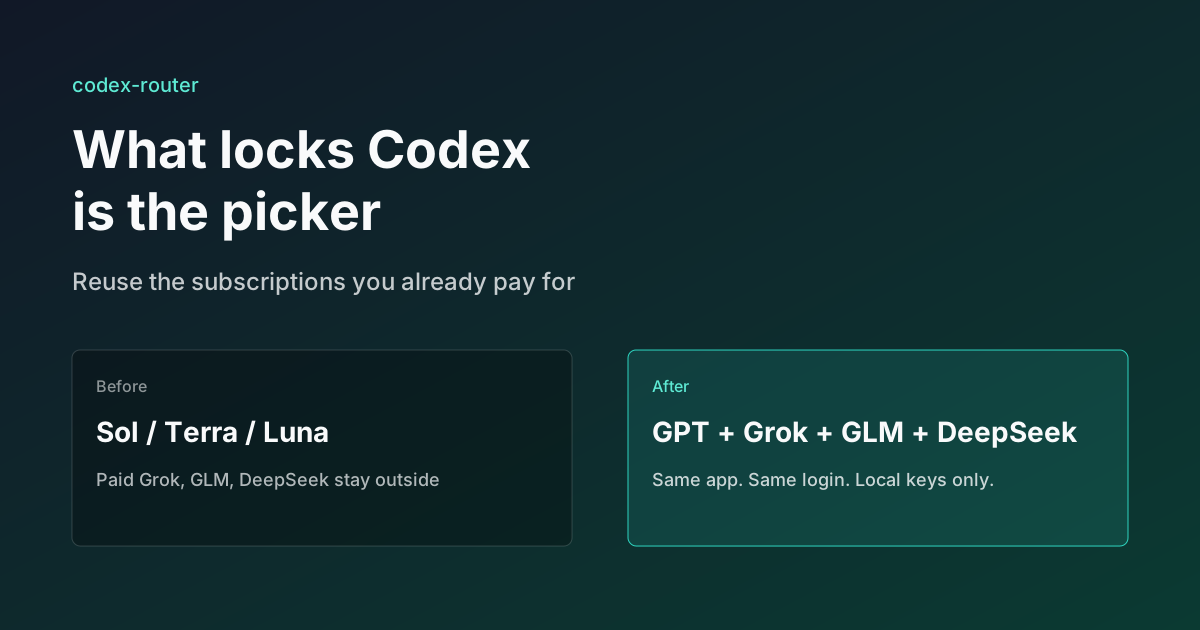
What Locks Codex Is the Picker, Not the Models
You already pay for OpenCode Go, Grok, and Z.ai, but the Codex picker still shows mostly GPT. The community project codex-router does not teach another install ritual. It puts subscriptions you already bought back into the selector, keeps keys on the machine, and leaves native GPT alone.
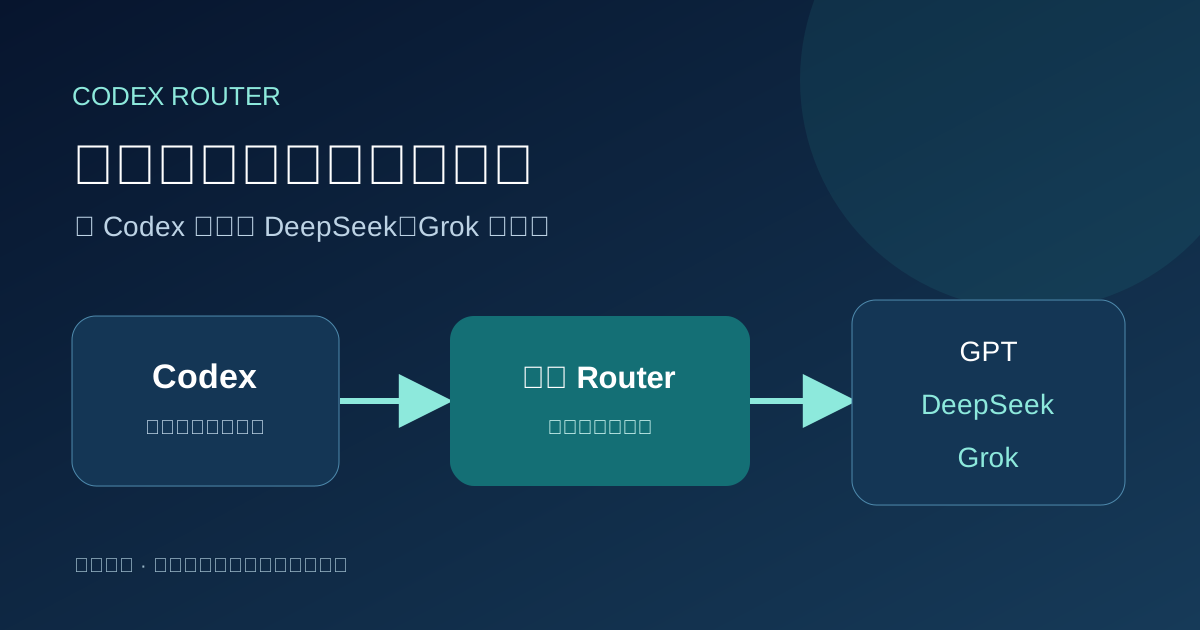
Running low on ChatGPT Codex quota? Switch to DeepSeek or Grok inside Codex
Codex Router lets you keep your Codex workspace while using DeepSeek, Grok, and other external models. A plain-English guide to routing, quotas, and network access.