
MiniMax Code is a terminal coding agent that reads a repo, edits files, and runs tests. The first-party CLI is mcode. The repo MiniMax-AI/minimax-code is TypeScript, created 2026-06-01. The root license is MIT; third_party/sandbox-runtime stays Apache-2.0. On 2026-09-19 GitHub listed 754 stars and 82 forks. 754 stars is a heat signal, not traffic. r/LocalLLaMA posted the open-source drop on 2026-09-19.
It sits next to Claude Code and OpenCode. Pair it with MiniMax M3 if you stay on MiniMax models.
Key Features
- Install paths: macOS/Linux/WSL
curl -fsSL https://filecdn.minimax.chat/public/install.sh | bash. Windows PowerShellirm https://filecdn.minimax.chat/public/install.ps1 | iex. npm@minimax-ai/codeneeds Node.js 22.19+, 24.2+, 25, or 26. - Sign-in or BYOK:
mcode login(China) ormcode login --region global. BYOK setsMCODE_PROVIDER_API_KEYandmcode provider addwithopenai-completions,openai-responses, oranthropic-messages. - Three entry points: interactive TUI
mcode [prompt], headlessmcode exec [prompt], ACPmcode acpfor editors. - Project memory:
mcode init .writesAGENTS.md. Resume withmcode --continueormcode --session. - Local state: Token Plan data lives in
~/.minimax-codeby default.
Limitation: the one-command installer does not support Alpine / musl Linux. Token Plan needs an account with credits. The MIT root license does not relicense bundled third-party code.
Use Cases
- Terminal agents that should use MiniMax or a local OpenAI-compatible server.
- CI / scripts via
mcode exec. - Skip if you wanted a GUI IDE. Use Cursor.
Pricing
| Piece | Price | Notes from first-party pages 2026-09-19 |
|---|---|---|
| Source / CLI | $0 to install | MIT default. About 754 stars. |
| Token Plan | MiniMax credits | Needs a signed-in account with available credits. |
| BYOK | Your provider bill | No MiniMax login. |
Getting Started
- Run the installer, reopen the terminal, then
mcode --version. mcode loginor add a BYOK provider.cdinto a repo andmcode "Find a failing test, fix it, and run the tests."mcode init .if you wantAGENTS.md.
First-party start: the quick start.
Frequently Asked Questions
Does open source mean every file is MIT?
No. First-party default is MIT. Sandbox Runtime stays Apache-2.0. See LICENSE-STATUS.md.
Can I point it at a local model?
Yes. mcode provider add with your base URL and --context-limit / --output-limit for local servers.
Why did the installer fail on Alpine?
The README says Alpine / musl is not supported by the one-command installer.
Alternatives
- Claude Code: Anthropic's terminal agent.
- OpenCode: open-source coding agent with multiple providers.
- Codex CLI: OpenAI's terminal agent.
Tips
/statusand/providerinside the TUI before a long run.- Keep secrets out of
~/.minimax-code. - Use
mcode execin CI so the TUI is not required.
Conclusion
MiniMax Code is a MIT-licensed mcode agent for people who want MiniMax or BYOK models in the terminal. Install it, log in or add a provider, then start in a real repo. It is not a GUI IDE, and the installer will not save Alpine boxes.
Comments
No comments yet. Be the first to comment!
Related Tools


Related Insights
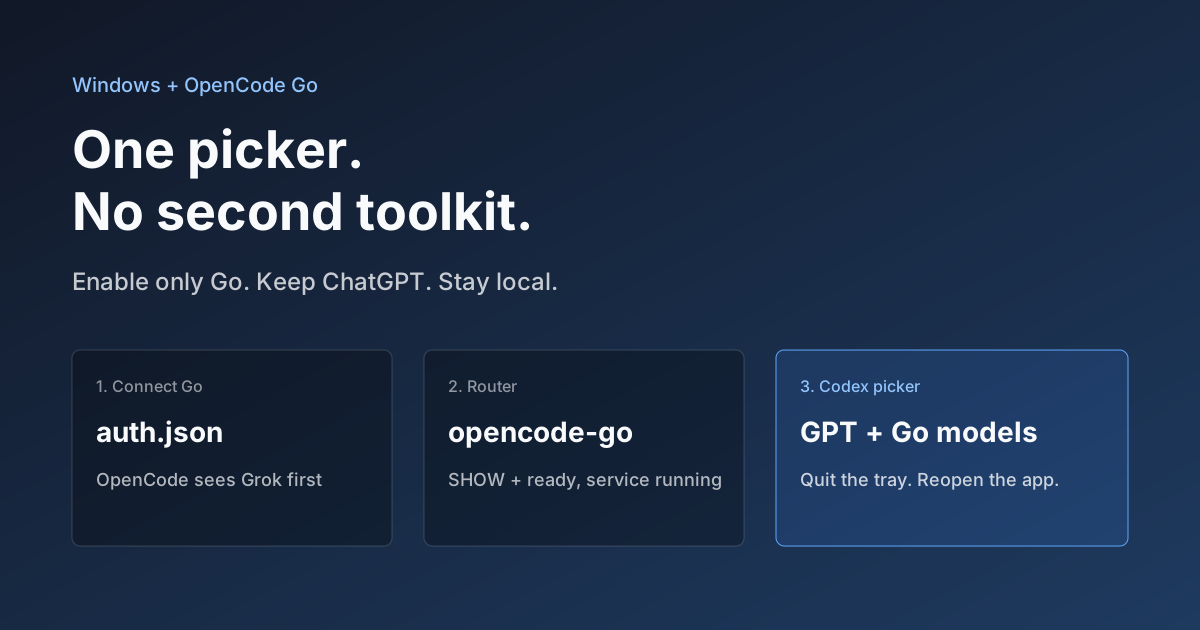
Hook OpenCode Go into Codex on Windows. Do Not Open a Second Toolkit.
A ChatGPT-signed Codex desktop app still shows mostly GPT in the picker. On Windows, enable only OpenCode Go and the Grok, GLM, Kimi, DeepSeek, and MiniMax models you already pay for appear in the same selector. Keys stay local. Native GPT stays put.
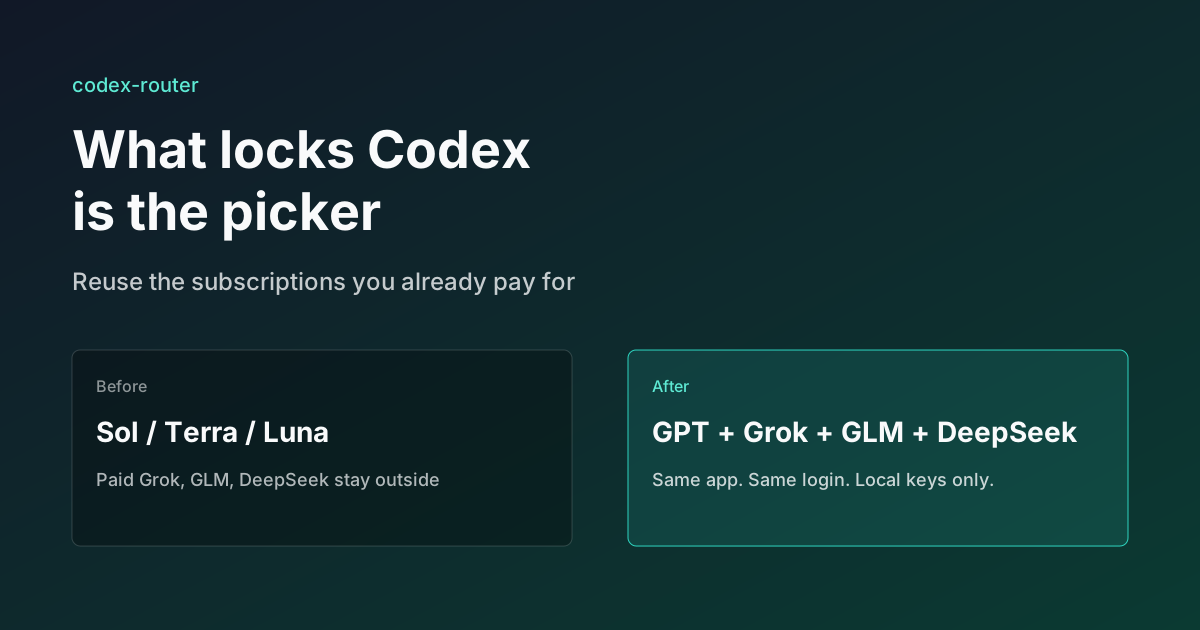
What Locks Codex Is the Picker, Not the Models
You already pay for OpenCode Go, Grok, and Z.ai, but the Codex picker still shows mostly GPT. The community project codex-router does not teach another install ritual. It puts subscriptions you already bought back into the selector, keeps keys on the machine, and leaves native GPT alone.

Skills + Hooks + Plugins: How Anthropic Redefined AI Coding Tool Extensibility
An in-depth analysis of Claude Code's trinity architecture of Skills, Hooks, and Plugins. Explore why this design is more advanced than GitHub Copilot and Cursor, and how it redefines AI coding tool extensibility through open standards.