
OpenClaw
OpenClaw is a self-hosted assistant gateway. One process talks to the chat apps you already use, then runs tools on hardware you control. The repo openclaw/openclaw is MIT, created 2025-11-24, about 176,082 stars. The old "385K+" figure is wrong.
This is not Claude Code and not ChatGPT. It is the inbox-side gateway. The current setup path is npm i -g openclaw then openclaw onboard.
Key Features
- Multi-channel gateway: Docs still name WhatsApp, Telegram, Discord, Slack, Signal, iMessage, plus other connectors.
- On your machine: Homebrew, npm, Docker, or a scripted installer. Docs also mention Windows via WSL2.
- Onboard CLI:
openclaw onboardwalks gateway, workspace, and channels. - MIT source: Public repo, TypeScript, latest release v2026.8.14 when we checked.
- Companion apps: Docs mention iOS and Android apps. Treat those as extras, not the core install.
Use Cases
- People who want one assistant in several messengers, not another website chat.
- Self-hosters who will not put the gateway on a vendor SaaS.
- Teams wiring Slack or Discord to a local tool runner.
Limitation: channel counts move. Do not keep "29+" as a frozen number. Star counts move too. Windows-native support was not the first-party path we verified; docs pointed at WSL2.
Pricing
| Plan | Price | Notes |
|---|---|---|
| Open source | $0 | MIT. You pay the model provider and your own host. |
There is no first-party seat table on the pages we used.
Getting Started
- Read docs.openclaw.ai.
npm i -g openclaw@latest(Node 24 recommended there) orbrew install openclaw.- Run
openclaw onboard. - Connect one channel first. Add WhatsApp or Slack after the gateway answers locally.
Frequently Asked Questions
Is it really 385k stars?
No. About 176k on 2026-08-17.
Is it a coding IDE?
No. It is a chat gateway with tools. For a repo agent use Claude Code or Kimi Code.
Can I run it on Windows?
Docs we used send Windows users to WSL2, not a verified native runtime.
Alternatives
- Claude Code: Terminal coding agent, not a messenger gateway.
- ChatGPT: Hosted consumer chat if you do not want to self-host.
- OpenAI Agents SDK: If you are building a custom runtime instead of installing a gateway.
Tips
- Quote stars from the GitHub API, not social screenshots.
- Pin one model provider in onboard before you attach five channels.
- Confirm the install page. Package names and Node version moved after the first writeup.
Comments
No comments yet. Be the first to comment!
Related Tools


Related Insights
After I Connected Obsidian to OpenClaw, It Started Helping Me Make Decisions
Once Obsidian stopped being just a place to store notes and started working with OpenClaw, it began helping me organize context, connect information, and improve real decisions.

Skills + Hooks + Plugins: How Anthropic Redefined AI Coding Tool Extensibility
An in-depth analysis of Claude Code's trinity architecture of Skills, Hooks, and Plugins. Explore why this design is more advanced than GitHub Copilot and Cursor, and how it redefines AI coding tool extensibility through open standards.
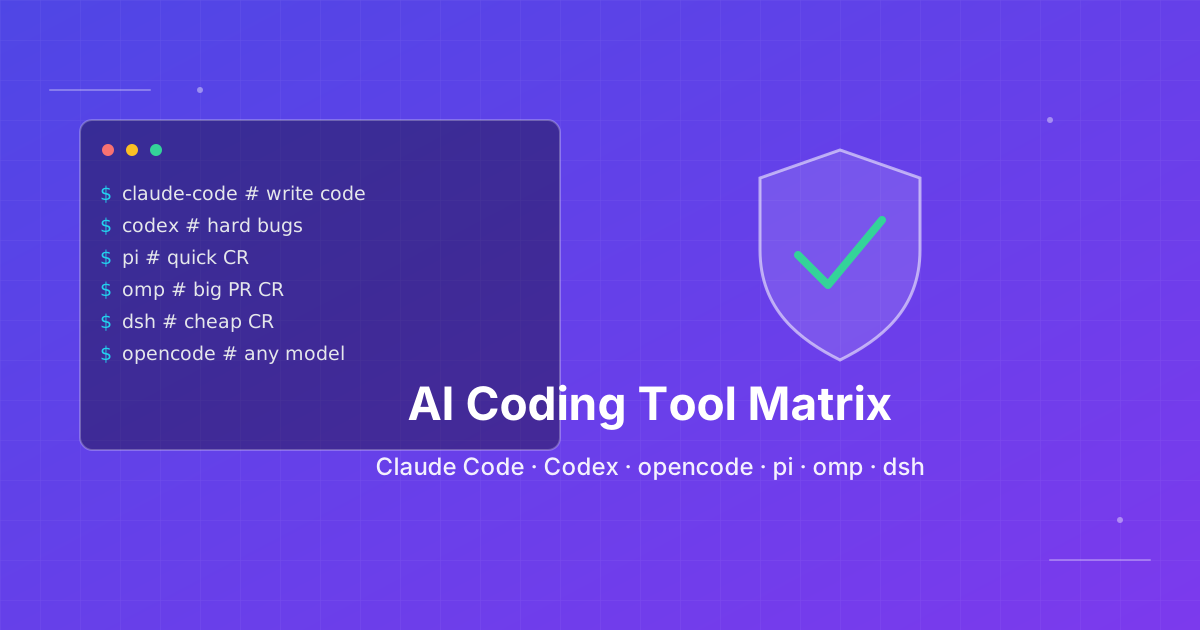
Seven AI Coding CLIs, Six Months: No Matter How Strong the Model, Work Needs Supervision
Claude Code, Codex, opencode, pi, omp and DeepSeek Harness all have personalities. After six months of deep use I run a division of labor: pi for the fastest cheapest reviews, omp for complex PRs, DeepSeek Harness on V4 Flash for high-frequency low-cost review, and Claude Code, Qoder and Cursor for writing. No matter how strong the model, work needs supervision — ideally from an independent third party.