

Chrome DevTools MCP
Chrome DevTools MCP (chrome-devtools-mcp) is Google's Model Context Protocol server that gives a coding agent a live Chrome browser. License is Apache 2.0. GitHub listed 49,501 stars and 3,454 forks on that date. The npm package is chrome-devtools-mcp. Created 2025-09-11.
r/ClaudeAI had a "BEST MCP 2026" roundup on the same mining pass. This page exists because agents that can open a real browser, record a performance trace, and read the console are what that list is about.
It is not a standalone IDE. Pair it with Claude Code, Google Antigravity, Cursor, or Playwright if you wanted Microsoft's multi-browser library instead of Chrome-only DevTools.
Key Features
- Live Chrome, not a fake DOM: the README says it uses Puppeteer plus Chrome DevTools so the agent can click, type, screenshot, and wait for results.
- Performance traces:
performance_start_trace/performance_stop_trace/performance_analyze_insight. The README notes traces may call the CrUX API unless you pass--no-performance-crux. - Debugging: network requests, console messages with source-mapped stacks, Lighthouse, heap snapshots (opt-in).
- Client coverage on the README: Claude Code, Codex, Cursor, Antigravity, Copilot, Gemini CLI, OpenCode, JetBrains Junie, and others. Confirm that list before you freeze it.
- Slim mode:
--slimexposes three tools (navigate, script, screenshot) for basic tasks.
Limitation: the README says the server exposes whatever is in the browser to the MCP client. Do not point it at a logged-in bank tab. Official support is Google Chrome and Chrome for Testing. Other Chromium browsers may work; Google does not promise it.
Specs
| Item | Value | Source |
|---|---|---|
| Role | MCP server + CLI | README |
| License | Apache 2.0 | GitHub API, 2026-08-21 |
| Stars / forks | 49,501 / 3,454 | same |
| Created | 2025-09-11 | same |
| Runtime | Node.js LTS + current Chrome | README requirements |
| Default start | npx -y chrome-devtools-mcp@latest | README |
| Software price | $0 | Apache 2.0 |
Usage statistics collection is on by default. Opt out with --no-usage-statistics or CHROME_DEVTOOLS_MCP_NO_USAGE_STATISTICS. That is independent of Chrome's own metrics.
Use Cases
- Frontend agents that need to click a real page, not invent a DOM.
- Perf debugging: "check https://developers.chrome.com" is the README's first prompt.
- Antigravity / Claude Code users who already have Chrome and want MCP instead of a second browser stack.
Getting Started
- Read Chrome DevTools for agents.
- Add the MCP config with
npx -y chrome-devtools-mcp@latest. - Ask the agent to check a public URL. The browser starts when a tool needs it, not at MCP connect.
- If you do not want usage stats, add
--no-usage-statistics.
Claude Code one-liner from the README: claude mcp add chrome-devtools --scope user npx chrome-devtools-mcp@latest.
Frequently Asked Questions
Does connecting start Chrome?
No. The README says the browser starts when a tool needs an instance.
Is Firefox supported?
Not as a first-party promise. Chrome and Chrome for Testing only.
Same as Playwright?
No. Playwright automates Chromium, Firefox, and WebKit. This server is Chrome DevTools for agents.
Alternatives
- Playwright: multi-browser library if you are not Chrome-only.
- Google Antigravity: Google's agent IDE; this MCP can attach to its browser.
- Kitesurf: hosted browser / CDP playground, not this npm package.
Tips
- Prefer
@latestso the client does not pin a stale server. - Do not share cookies you would not paste into chat.
- Confirm the README client list. It grows faster than this page.
Conclusion
If your coding agent needs a real Chrome tab, start at github.com/ChromeDevTools/chrome-devtools-mcp. If you wanted a test framework, open Playwright instead.
Comments
No comments yet. Be the first to comment!
Related Tools


Related Insights

Skills + Hooks + Plugins: How Anthropic Redefined AI Coding Tool Extensibility
An in-depth analysis of Claude Code's trinity architecture of Skills, Hooks, and Plugins. Explore why this design is more advanced than GitHub Copilot and Cursor, and how it redefines AI coding tool extensibility through open standards.
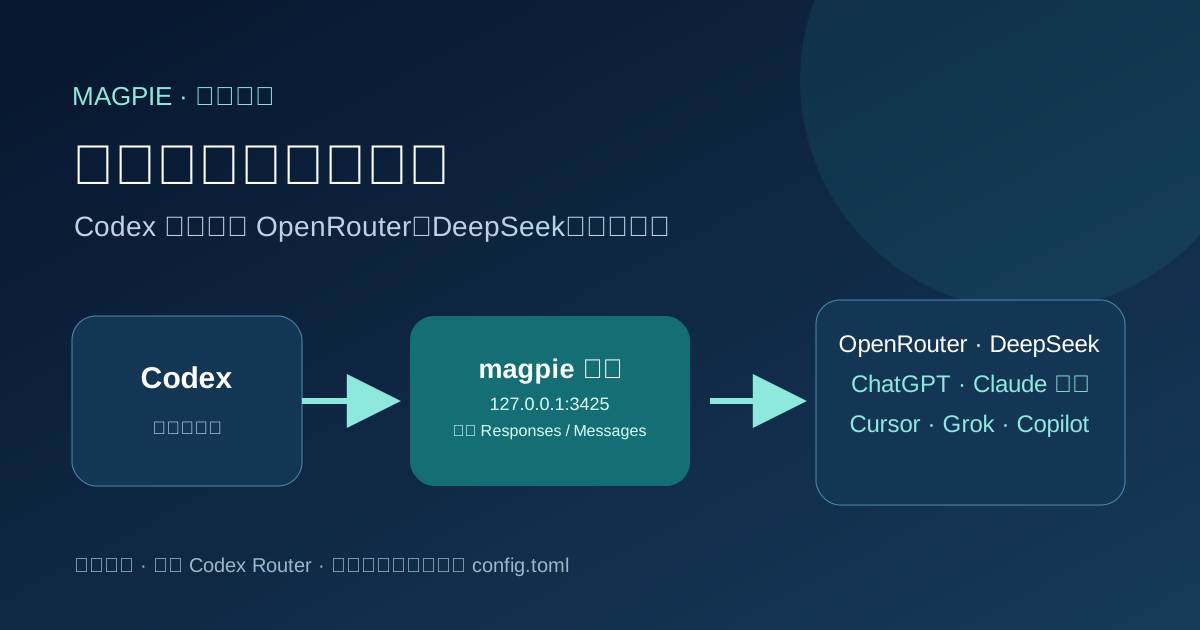
Codex on any model: magpie makes Codex Router unnecessary
magpie is a free, open-source menu bar app that runs a local gateway and puts OpenRouter, DeepSeek and your ChatGPT, Claude, Cursor, Grok and Copilot subscriptions right into Codex's own model picker, with one click and no Codex Router.
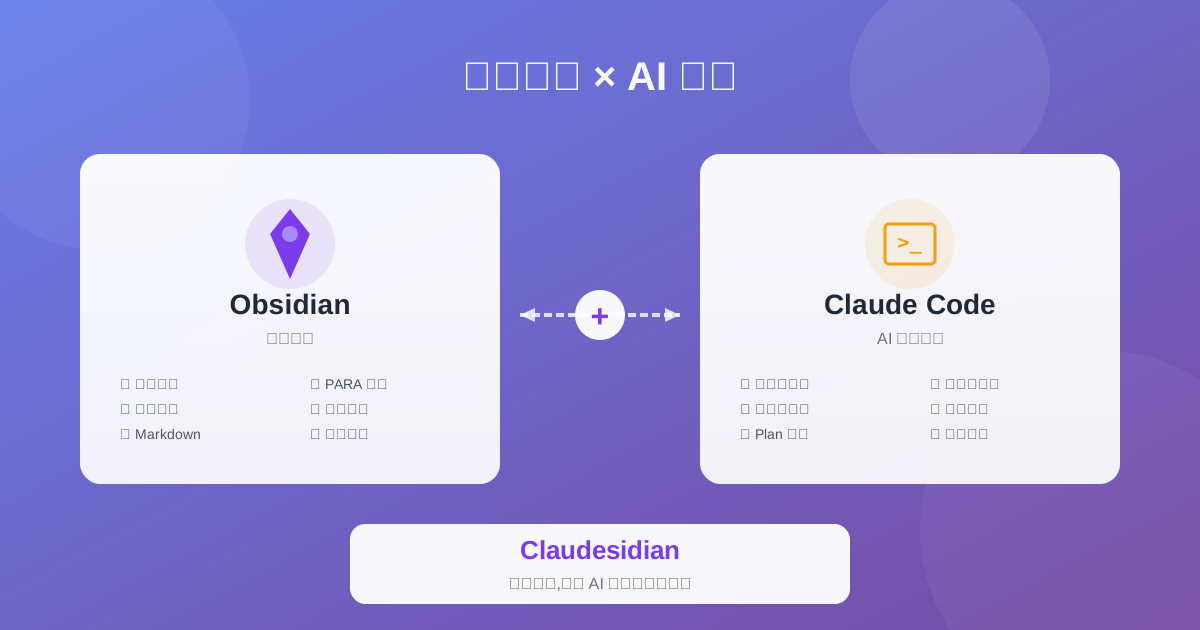
Claudesidian: Transform Obsidian into an AI-Powered Second Brain
Discover Claudesidian, an open-source project that perfectly integrates Obsidian with Claude Code. Built-in PARA method, custom commands, and automated workflows for a complete idea-to-implementation solution.