
Avidnote
Avidnote combines research documents, notes, and AI assistance in a browser workspace. It suits researchers who want to move from reading papers to developing questions and drafting a manuscript without continually moving between separate services. Its official website describes writing, reading, analysis, and transcription tools. This entry was added on October 3, 2026; that date is a catalog listing date, not a verified product launch.
Key features
- Upload research material in PDF, Word, PowerPoint, and spreadsheet formats and keep notes alongside documents.
- Use research templates to explore questions, literature reviews, and possible gaps in a body of work.
- Draft, revise, and proofread academic writing, then export work to Word or PDF.
- Explore quantitative data with analysis suggestions and correlations, or transcribe and organize interview material for qualitative research.
Who it helps
A graduate student can gather papers on one narrow topic, record each paper's methods and findings, and ask for candidate research questions. An interview researcher can turn recordings into a draft transcript and use it as a starting point for coding. Both workflows still require checking the underlying evidence and preserving the original files.
Pricing
As checked on October 3, the website lists a free plan and monthly paid plans: Professional at $19, Premium at $59, and Ultimate at $99. AI credits, storage, reading allowances, and transcription hours differ by plan. The free plan is useful for testing the workflow before paying. Recheck the live pricing table before subscribing; these are vendor-listed prices, with no catalog discount promised.
Getting started
- Open Avidnote and try the free plan with a small set of documents you can verify.
- Write a specific research question and add notes identifying the supporting passages.
- Use a template to generate an outline or suggest gaps, then check every suggested claim against the papers.
- Export the revised draft and retain citations and your own research notes.
Questions and limitations
Can it decide whether a research gap is real?
Treat gap suggestions as hypotheses. A literature search and subject expertise are still needed to establish novelty.
Are uploaded files used for AI training?
The vendor says research is private and not used for AI training. This is its published statement, not an independent privacy audit; consult its current terms for sensitive work.
Alternatives and practical tips
NotebookLM offers another document-centered research workflow. Obsidian may suit researchers who prioritize their own note organization. Explore the research tag for related tools.
Start with one reading task, check output against the original, and compare the allowance you actually consume with the plan limits. Avidnote is most useful as a research assistant whose drafts and analyses remain reviewable.
Comments
No comments yet. Be the first to comment!
Related Tools


Related Insights
Complete Guide to Claude Skills - 10 Essential Skills Explained
Deep dive into Claude Skills extension mechanism, detailed introduction to ten core skills and Obsidian integration to help you build an efficient AI workflow
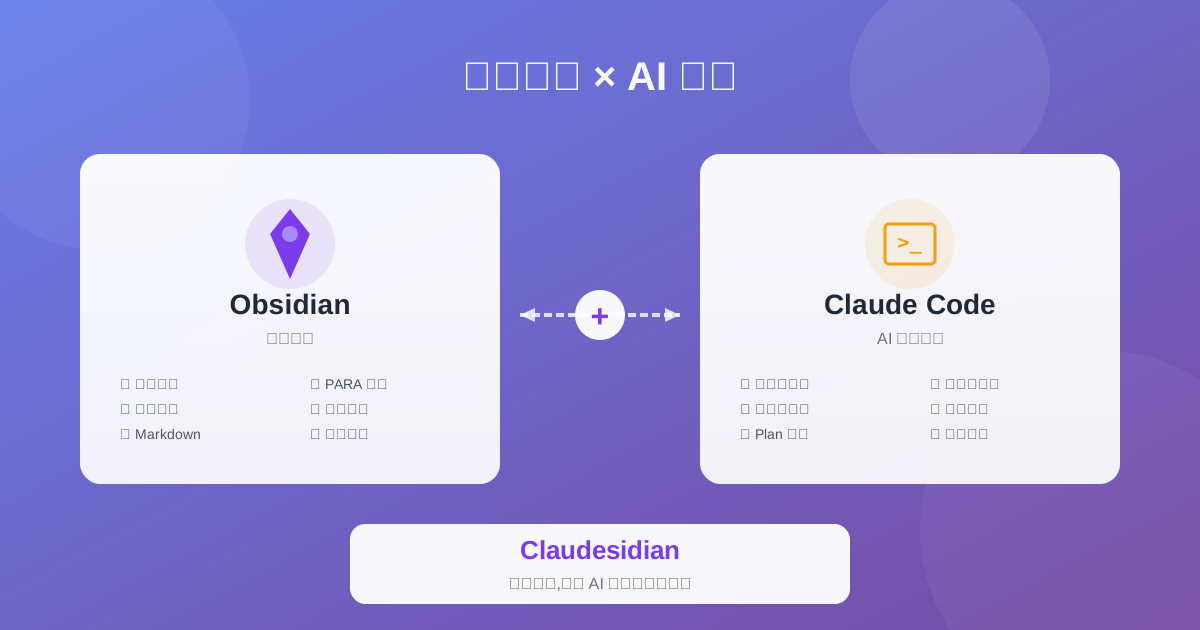
Claudesidian: Transform Obsidian into an AI-Powered Second Brain
Discover Claudesidian, an open-source project that perfectly integrates Obsidian with Claude Code. Built-in PARA method, custom commands, and automated workflows for a complete idea-to-implementation solution.
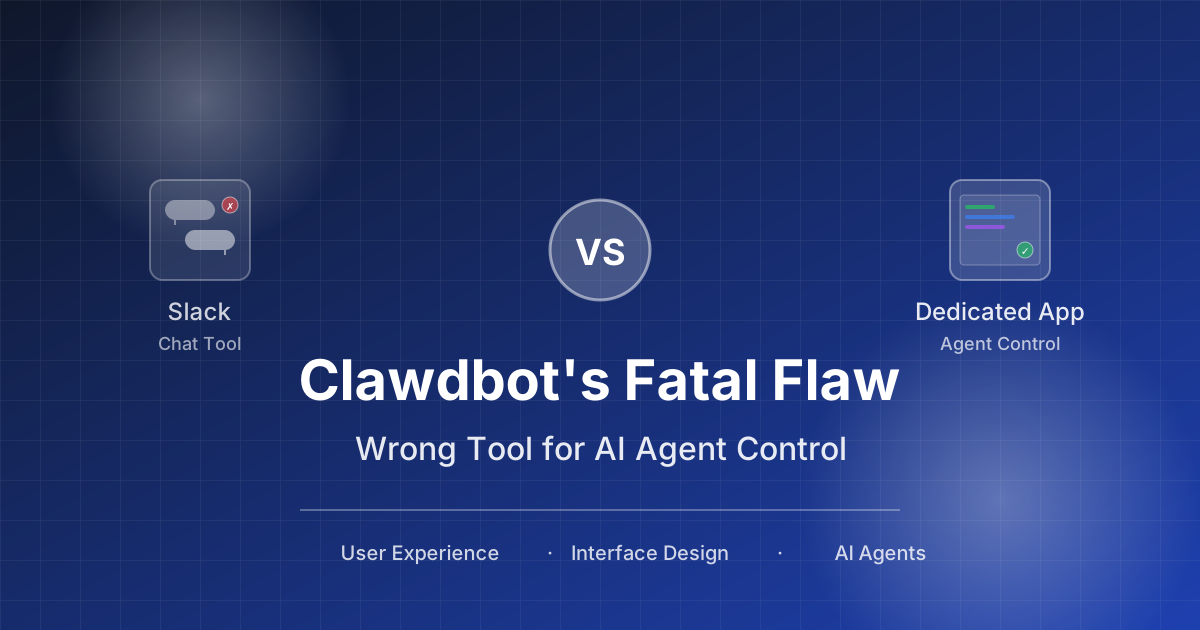
Stop Cramming AI Assistants into Chat Boxes: Clawdbot Picked the Wrong Battlefield
Clawdbot is convenient, but putting it inside Slack or Discord was the wrong design choice from day one. Chat tools are not for operating tasks, and AI isn't for chatting.