

ljg-skills
ljg-skills is an open-source skills library created by Li Jigang, a Chinese writer and AI community figure widely nicknamed the "prompt god." It packs more than 20 skills for coding agents like Codex, covering concept dissection, essay writing, classical text reading, presentation casting, and investment analysis. The library went viral on X and Chinese developer communities in mid-2026, praised as the Eastern counterpart to Western skill systems like Matt Pocock's, and can be installed globally in a single command.
Key Features
- One-command install:
bunx skills add lijigang/ljg-skills -g -a codex --skill '*' -yinstalls every skill to~/.agents/skills/for Codex. - Two output formats: The
masterbranch ships Org-mode files for Emacs and Denote users; themdbranch ships Markdown for Obsidian, VS Code, and Notion ecosystems. - 20+ purpose-built skills:
ljg-learnfor concept dissection,ljg-isfor essence extraction,ljg-thinkfor first-principles drilling,ljg-cardfor visual note cards,ljg-presentfor high-takahashi slide casting, and more. - Selective install: Pick individual skills (
--skill ljg-card --skill ljg-learn) or list available skills with-lbefore installing. - Dependency handling:
ljg-carddocuments its Playwright screenshot dependency so you know exactly what to install after setup. - Self-publishing workflow:
ljg-pushsyncs localljg-*skills back to the repository on both branches, keeping the collection self-maintaining.
Use Cases
- Language and writing learners: Use
ljg-wordfor English word dissection andljg-writesfor turning an opinion into a readable Chinese essay. - Deep readers:
ljg-classicformats classical Chinese text with annotations into a long PNG, whileljg-readdoes three-layer English translation with structure notes. - Researchers:
ljg-paperstarts from a concrete case and shows how a paper rewrites its framework, andljg-qaturns articles, papers, and books into Q-A chains. - Investors:
ljg-investevaluates whether a project is a "order-creating machine" before you commit capital.
Pricing
ljg-skills is free and open source under the MIT license. There is no paid tier, and the underlying Codex or agent subscription you run the skills with is billed separately by its provider.
Getting Started
- Install Codex or any agent that supports the
skillsCLI from Vercel Labs. - Run
bunx skills add lijigang/ljg-skills -g -a codex --skill '*' -yto install all skills globally. - Ask your agent to invoke a skill, for example "use ljg-learn to dissect the concept of attention."
- For Markdown ecosystems, install from the
mdbranch:bunx skills add lijigang/ljg-skills#md -g -a codex --skill '*' -y.
Frequently Asked Questions
Do I need Emacs to use ljg-skills?
No. The master branch stores skills in Org-mode, but the md branch provides Markdown versions that work in Obsidian, VS Code, Notion, and most modern tools.
Which agents are supported?
The install examples target Codex (-a codex), but the skills themselves are mostly prompt text and can be adapted to any agent that can load skills or follow a structured prompt.
Are the skills in Chinese only?
Most skill instructions are written in Chinese and optimized for Chinese-language output. Some skills, like ljg-word and ljg-read, explicitly work with English text.
Alternatives
- Claude Skills: Anthropic's official skills mechanism if you work inside Claude Code.
- OpenSkills: An open skills standard for coding agents.
- Superpowers: A structured meta-skill system for Claude Code.
Tips & Best Practices
- Install selectively first: Run
-lto list skills, install the two or three you use daily, then expand. - Pair formats with tools: Pick the
mdbranch for Obsidian or VS Code, and themasterbranch only if you are an Emacs user. - Keep skills updated: Re-run the add command after upstream changes, and use
ljg-pushif you maintain your own fork.
Comments
No comments yet. Be the first to comment!
Related Tools


Related Insights
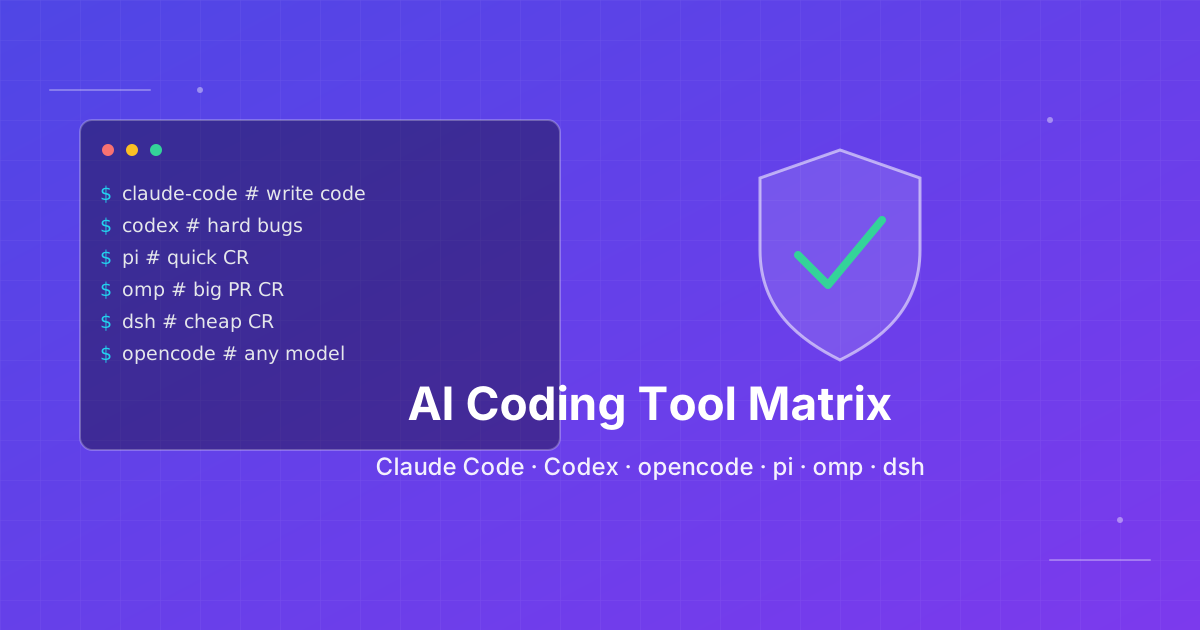
Seven AI Coding CLIs Compared: Tasks, Costs, and Independent Review
Compare Claude Code, Codex CLI, OpenCode, Pi, omp, DeepSeek Harness, and Grok Build with a repeatable task checklist and practical review workflow.
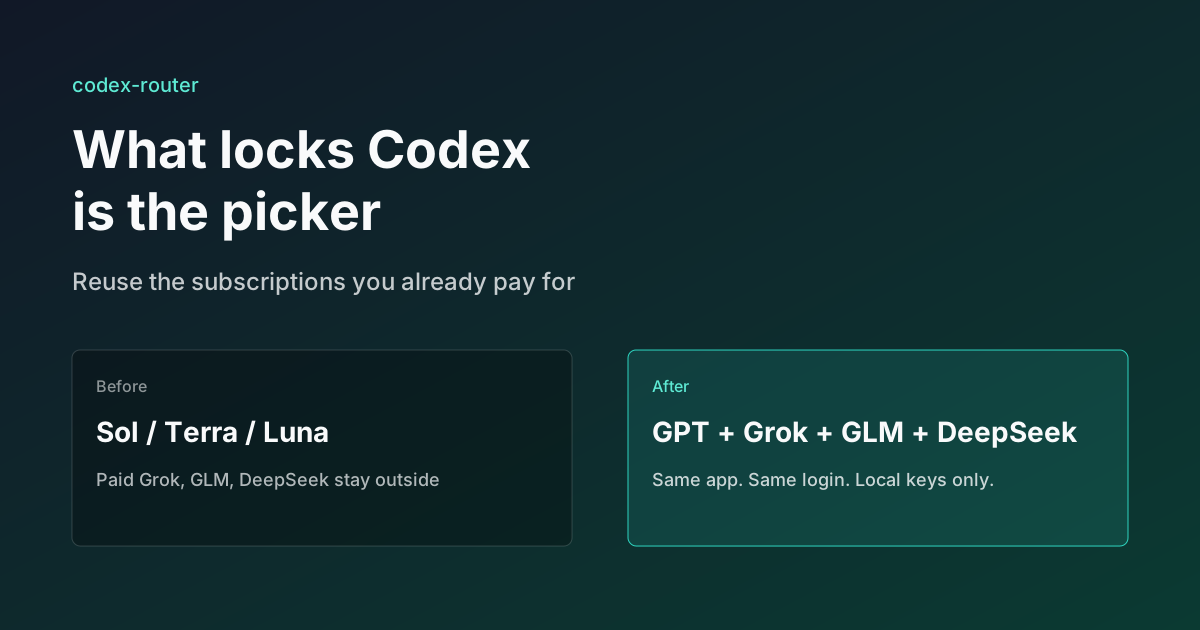
What Locks Codex Is the Picker, Not the Models
You already pay for OpenCode Go, Grok, and Z.ai, but the Codex picker still shows mostly GPT. The community project codex-router does not teach another install ritual. It puts subscriptions you already bought back into the selector, keeps keys on the machine, and leaves native GPT alone.
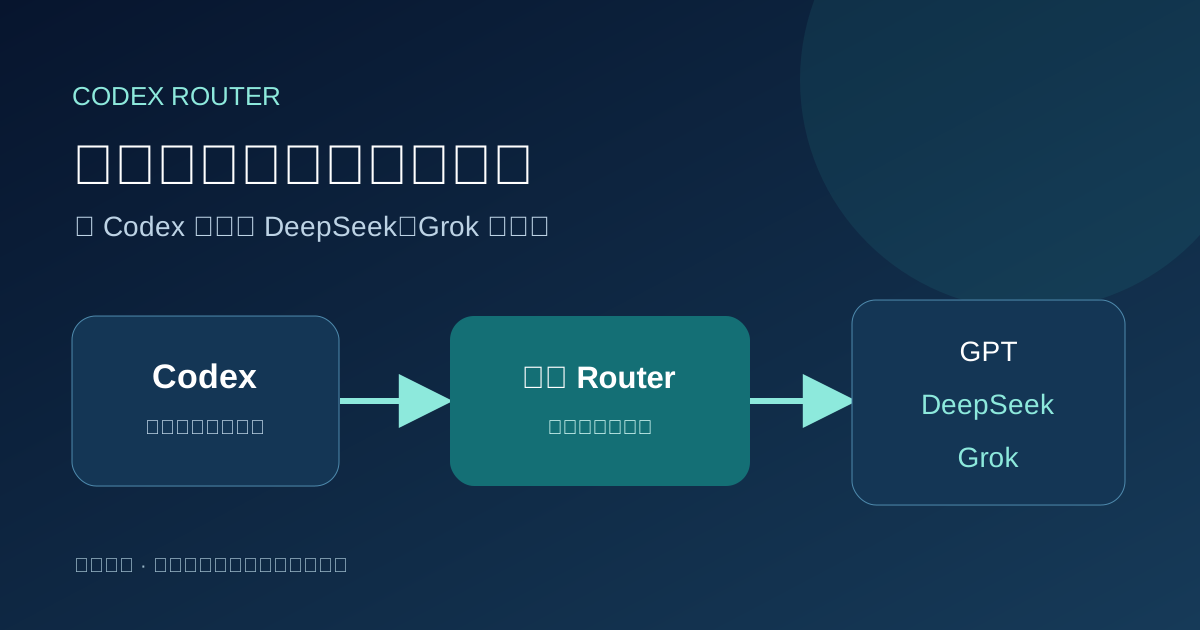
Running low on ChatGPT Codex quota? Switch to DeepSeek or Grok inside Codex
Codex Router lets you keep your Codex workspace while using DeepSeek, Grok, and other external models. A plain-English guide to routing, quotas, and network access.