

Mental Health Analyzer
Mental Health Analyzer is a comprehensive mental health data analysis skill from the Claude-Ally-Health project. It helps users track psychological states, identify emotional patterns, monitor crisis risks, and optimize coping strategies through evidence-based assessment tools.
Key Features
1. Mental Health Assessment Analysis
Track and analyze standardized mental health assessments:
- PHQ-9 Depression Tracking: Monitor depression score trends and severity changes
- GAD-7 Anxiety Tracking: Analyze anxiety symptoms and patterns over time
- PSQI Sleep Quality: Correlate sleep quality with mental health states
- Severity Detection: Identify changes in severity levels (none/mild/moderate/severe)
- Trend Prediction: Forecast mental health trajectory (improving/stable/declining)
2. Emotional Pattern Recognition
Identify patterns in emotions, triggers, and coping strategies:
- Common Emotions: Track frequency and intensity of different emotions
- Trigger Identification: Recognize events and situations that affect mood
- Coping Strategy Effectiveness: Evaluate which coping mechanisms work best
- Emotional Cycles: Detect recurring emotional patterns and cycles
- Mood Variability: Assess emotional stability and volatility
3. Mental Health Treatment Progress Tracking
Monitor therapeutic progress and goal achievement:
- Treatment Goal Achievement: Track progress toward therapy goals
- Symptom Improvement: Measure reduction in depression and anxiety symptoms
- Therapy Effectiveness: Assess correlation between therapy and improvement
- Medication Response: Monitor mental health changes after medication adjustments
- Progress Visualization: Generate charts showing treatment journey
4. Crisis Risk Assessment
Multi-level crisis detection and early warning:
- High Risk: PHQ-9 item 9 (self-harm ideation) changes, rapid deterioration
- Medium Risk: Moderate severity with increasing trend
- Low Risk: Mild symptoms with stable or improving trend
- Risk Alerts: Automated warnings for concerning patterns
- Professional Referral: Recommendations for immediate professional help when needed
5. Sleep-Mental Health Correlation
Analyze relationships between sleep and psychological wellbeing:
- Sleep Quality vs Depression: Correlation between PSQI and PHQ-9 scores
- Sleep Disruption Impact: How sleep issues affect mood and anxiety
- Sleep Improvement Benefits: Mental health improvements from better sleep
- Insomnia Patterns: Identify sleep problems affecting mental health
6. Exercise-Mood Correlation
Examine how physical activity affects emotional state:
- Exercise vs Depression: Relationship between workout frequency and mood
- Activity Type Analysis: Which exercises most improve mental health
- Exercise Timing: Optimal times for mood-boosting workouts
- Consistency Benefits: Long-term mental health effects of regular exercise
7. Nutrition-Mental Health Correlation
Study dietary impacts on mood and anxiety:
- Nutrient Deficiency: Links between nutrition and mental health
- Dietary Patterns: How eating habits affect psychological wellbeing
- Caffeine/Alcohol: Effects on anxiety and sleep quality
- Mood Foods: Identify foods that support mental health
8. Chronic Disease-Mental Health Correlation
Understand bidirectional relationships with physical health:
- Chronic Pain: Impact on depression and anxiety
- Diabetes: Blood sugar control and mood stability
- Cardiovascular: Stress and cardiovascular risk
- Disease Burden: Psychological effects of chronic illness management
Use Cases
Who Should Use This Skill?
- Therapy Clients: Track mental health progress between sessions
- Depression/Anxiety Patients: Monitor symptoms and treatment effectiveness
- Mental Health Professionals: Data-driven insights for clinical decisions
- Wellness Enthusiasts: Understand factors affecting emotional wellbeing
- Chronic Disease Patients: Manage psychological aspects of chronic conditions
- Caregivers: Track mental health of loved ones (with consent)
Problems It Solves
- Progress Invisibility: Quantifies mental health improvements that feel subjective
- Trigger Identification: Reveals patterns in what affects your mental state
- Treatment Optimization: Shows which interventions actually work
- Early Warning: Detects concerning trends before full crisis
- Holistic Understanding: Connects mental health with sleep, exercise, and nutrition
Technical Implementation
Assessment Tools Used
- PHQ-9 (Patient Health Questionnaire-9): Standard depression screening (0-27 scale)
- GAD-7 (Generalized Anxiety Disorder-7): Anxiety assessment (0-21 scale)
- PSQI (Pittsburgh Sleep Quality Index): Sleep quality measurement
- Daily Mood Logs: Subjective emotional state tracking
Analysis Methods
- Time Series Analysis: Trend detection and forecasting
- Correlation Analysis: Relationships between variables (Pearson, Spearman)
- Change Point Detection: Identify significant shifts in mental state
- Risk Scoring: Multi-factor crisis risk calculation
- Pattern Recognition: Recurring emotional cycles and triggers
Data Sources
data-example/mental-health-tracker.json: Main mental health profiledata-example/mental-health-logs/.index.json: Log indexdata-example/mental-health-logs/YYYY-MM/YYYY-MM-DD.json: Daily mood diaries- Cross-reference with sleep, exercise, nutrition, chronic disease data
Medical Safety Boundaries
What This Skill CANNOT Do
- ❌ Diagnose mental health disorders
- ❌ Prescribe psychiatric medications
- ❌ Predict suicide risk or self-harm behavior
- ❌ Replace professional mental health treatment
- ❌ Handle acute psychiatric crises
What This Skill CAN Do
- ✅ Identify mental health trends and patterns
- ✅ Assess crisis risk levels and issue alerts
- ✅ Provide coping strategy suggestions (non-therapeutic)
- ✅ Track treatment progress and goal achievement
- ✅ Provide professional help recommendations
- ✅ Analyze mental health correlations with other health factors
Getting Started
Prerequisites
- Claude Code or Claude.ai with Skills support
- Mental health data in Claude-Ally-Health format
- Minimum data: 3 PHQ-9/GAD-7 assessments OR 7 days of mood logs
Quick Start Guide
- Collect Data: Complete PHQ-9/GAD-7 assessments and daily mood logs
- Trigger Analysis: Say "analyze my mental health trends"
- Review Patterns: Examine emotional patterns and trigger analysis
- Check Progress: View therapy progress if in treatment
- Act on Insights: Implement recommendations and track changes
Example Commands
- "Analyze my mental health trends"
- "Show my emotional patterns"
- "Track my therapy progress"
- "Assess crisis risk"
- "Generate mental health report"
- "How does sleep affect my mood?"
- "Which coping strategies work best for me?"
Advantages & Unique Selling Points
Compared to General Mood Tracking Apps:
- Clinical Assessment Tools: Uses validated PHQ-9 and GAD-7 instruments
- Crisis Detection: Multi-level risk assessment with automated alerts
- Holistic Analysis: Connects mental health with sleep, exercise, nutrition, chronic disease
- Treatment Tracking: Specifically designed for therapy progress monitoring
- Evidence-Based: Recommendations based on clinical research
What Makes It Stand Out:
- Integration with comprehensive health tracking system
- Automated correlation analysis across health dimensions
- Medical safety boundaries with clear referral guidelines
- Privacy-first local data storage
- Contextual insights from daily life factors
Integration
Works seamlessly with:
- Sleep Analyzer: Understand sleep-mood bidirectional relationships
- Fitness Analyzer: Track exercise benefits for mental health
- Nutrition Analyzer: Identify dietary impacts on mood
- Chronic Disease Trackers: Manage psychological aspects of chronic illness
- AI Health Analyzer: Comprehensive health risk including mental health
Frequently Asked Questions
Is this a replacement for therapy?
No. This skill provides data analysis and insights but cannot replace professional mental health treatment. Always consult mental health professionals for diagnosis and treatment.
How accurate is the crisis risk assessment?
The assessment uses validated screening tools and pattern analysis but is not diagnostic. High risk alerts should prompt immediate professional consultation, not self-treatment.
Can I share this data with my therapist?
Yes. The generated reports and visualizations can provide valuable data for therapeutic discussions. Always use professional judgment about what to share.
What if I get a high-risk alert?
High-risk alerts indicate you should seek immediate professional help. Contact a mental health crisis line, your therapist, or go to an emergency room. Don't rely solely on the skill.
Does it track medication effects?
Yes, you can log medication changes and the skill will analyze correlations with symptom improvements, but it cannot recommend medications or dosage changes.
Related Skills
If you're interested in Mental Health Analyzer, you might also find these Claude-Ally-Health skills useful:
- Sleep Analyzer: Sleep quality analysis and improvement recommendations
- Fitness Analyzer: Exercise tracking for mood benefits
- Nutrition Analyzer: Dietary analysis for mental health support
- AI Health Analyzer: Comprehensive health including mental health risk prediction
Tips & Best Practices
- Consistent Logging: Daily mood logs provide richer insights than assessments alone
- Honest Reporting: Accuracy depends on honest self-reporting
- Regular Assessments: Complete PHQ-9/GAD-7 monthly for trend tracking
- Contextual Notes: Add notes about life events affecting mood
- Share with Professionals: Use insights to inform therapy discussions
- Act on Patterns: Implement changes based on identified triggers and effective coping strategies
- Emergency Plan: Have a crisis plan ready before high-risk situations
Conclusion
Mental Health Analyzer empowers individuals to understand and improve their mental health through data-driven insights. By tracking standardized assessments, identifying patterns, and analyzing correlations with lifestyle factors, it provides valuable information for self-awareness and therapeutic progress. While not a replacement for professional care, it's a powerful complement to mental health treatment and personal wellbeing practices.
Related: AI Health Analyzer and Clinical Decision Support Skill. Hub: skills.
Comments
No comments yet. Be the first to comment!
Related Tools


Related Insights

Anthropic Subagent: The Multi-Agent Architecture Revolution
Deep dive into Anthropic multi-agent architecture design. Learn how Subagents break through context window limitations, achieve 90% performance improvements, and real-world applications in Claude Code.
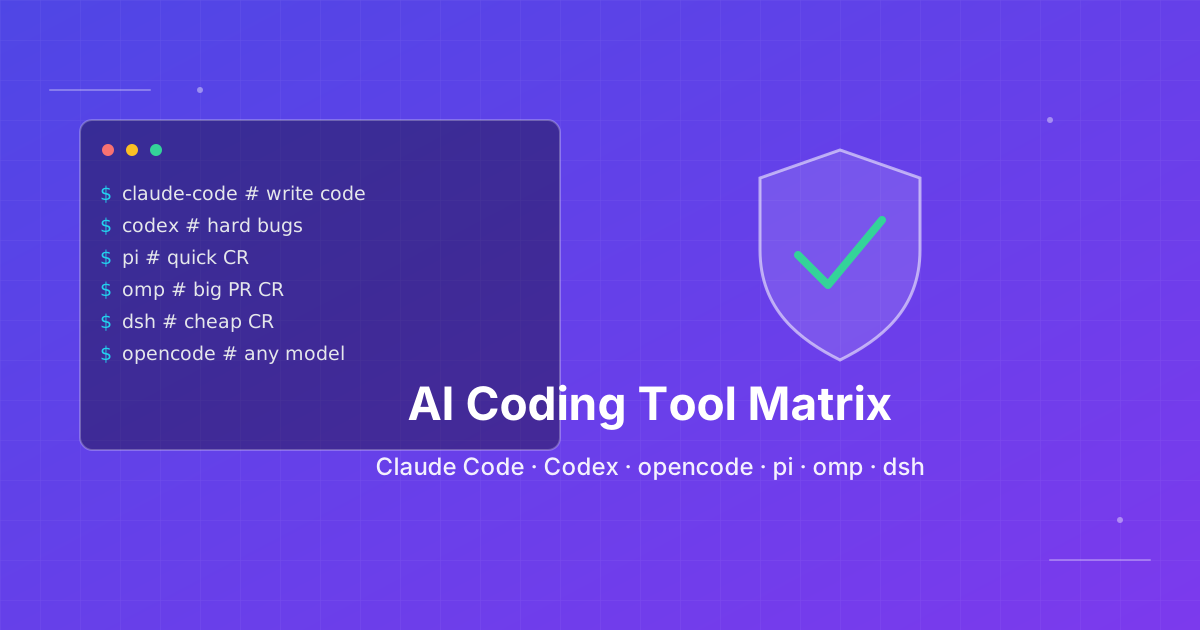
How to pick an AI coding CLI for your repo
Match Claude Code, Codex CLI, OpenCode, Pi, omp, DeepSeek Harness, and Grok Build to the work you actually run. Docs rechecked 2026-10-06.

Skills + Hooks + Plugins: How Anthropic Redefined AI Coding Tool Extensibility
An in-depth analysis of Claude Code's trinity architecture of Skills, Hooks, and Plugins. Explore why this design is more advanced than GitHub Copilot and Cursor, and how it redefines AI coding tool extensibility through open standards.