
OpenDots
OpenDots is CopilotKit's MIT-licensed template for building a persistent AI coworker workspace. It combines specialist agents, working documents and optional computer services in a web and mobile interface. It is an early-development application template that you deploy and configure, rather than a hosted assistant with an account-ready service.
Features and intended users
Spaces organize working documents and nested pages. Each Dot has a name, role, instructions and permitted tools, and can be given access to multiple Spaces. Pages live in the workspace database while conversations use CopilotKit Threads. Manual document editing works before conversation services are configured.
Optional computer services give each specialist a browser profile and persistent workspace files. The computer panel exposes browser control, human takeover, terminal output and activity. Browser, file and shell permissions are configured per Dot. These capabilities require separate services; an unconfigured template does not execute host commands.
Text, calls and Slack are different integration paths. Voice needs its own provider setup. Slack uses a managed Channels connection with an explicit workspace and user allowlist, so it is not available merely by starting the web application.
Practical setup workflow
Follow the official setup guide using Node.js 24 and npm. Clone the repository, install its locked dependencies, copy the environment example and run the development application. First test manual page editing and persistence. Without service credentials the interface shows setup state rather than simulated agent replies.
Then configure conversation and model credentials on the server. Create one specialist with a narrow role and one Space. Ask it to prepare a document for review; the human-in-the-loop card offers approval or decline before saving. Add computer, voice or Slack services only after this smaller workflow works.
Cost and limitations
The source is MIT licensed, but hosting, model providers and connected services carry separate operational costs. No fixed hosted subscription price is claimed. The README distinguishes local verification from connected-service testing, which matters when evaluating screenshots or demos.
Self-hosting also means maintaining service configuration, access rules and stored documents. Keep credentials on the server and review per-agent permissions before enabling shell tools. Several unrelated projects use the OpenDots name; this entry specifically covers CopilotKit/OpenDots.
FAQ and alternatives
Can it work without keys? Manual editing works, while conversation generation needs configured services.
Are calls and computers included automatically? Their providers and services must be configured separately.
Read the official setup guide, compare Pi Durable for a library-level recovery harness, or browse agent infrastructure. The next step is to validate one document-review workflow before connecting broader tools.
Comments
No comments yet. Be the first to comment!
Related Tools


Related Insights

Anthropic Subagent: The Multi-Agent Architecture Revolution
Deep dive into Anthropic multi-agent architecture design. Learn how Subagents break through context window limitations, achieve 90% performance improvements, and real-world applications in Claude Code.
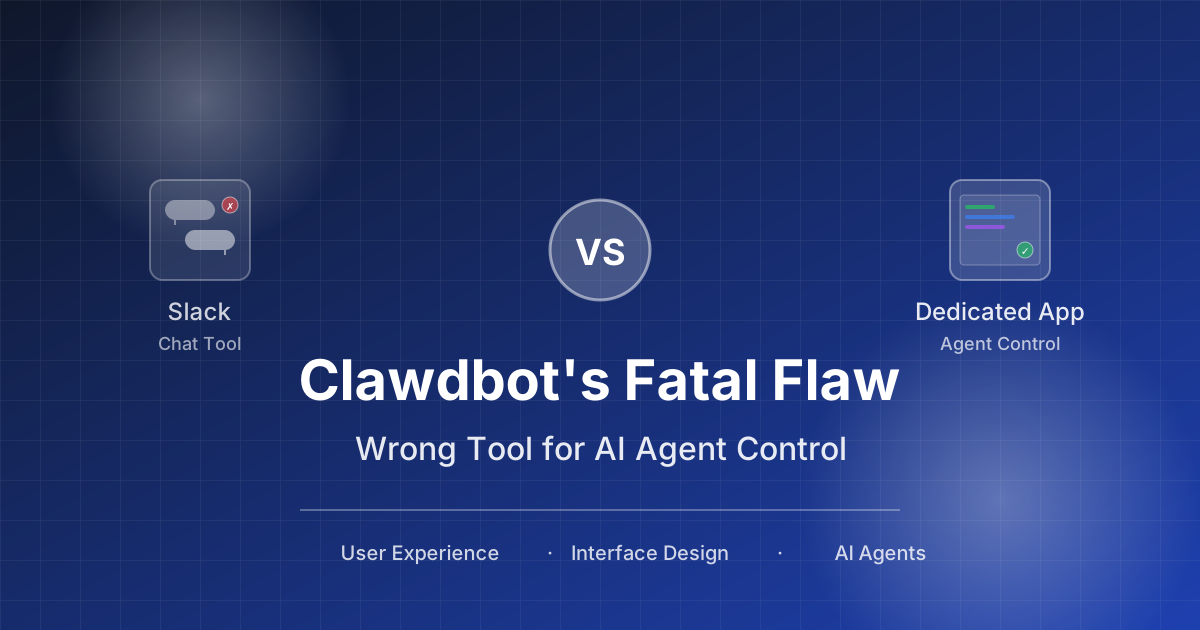
Stop Cramming AI Assistants into Chat Boxes: Clawdbot Picked the Wrong Battlefield
Clawdbot is convenient, but putting it inside Slack or Discord was the wrong design choice from day one. Chat tools are not for operating tasks, and AI isn't for chatting.

Grok Bot and Hermes Bot: one person finally gets a think tank and a secretariat
Grok Bot now ships with Cursor Pro+. Hermes Bot runs on a VPS. They are not smarter chat boxes. The think tank advises, the secretariat executes, and you still make the call.