

Skyfire
Skyfire is identity-plus-payment infrastructure for AI agents. The flow is present, verify, deliver, settle. Creating a pay / kya-pay token commits the amount against the buyer wallet; sellers do not carry buyer non-payment risk inside a valid token. Quickstart says signup creates a Buyer Agent and a pre-funded wallet. skyfire.xyz returned 403 from this network, and there is no public plan dollar table in the docs on the public page.
Compare Payman AI if you wanted bank-facing agentic banking, Coinbase Agentic Wallets if you wanted Coinbase's wallet product, and Crossmint if you wanted a priced wallet/API ladder.
Key Features
- Three tokens:
kyaproves who the agent is.paymoves money.kya-paydoes both. Confirm claims on the token pages before you implement. - User / agent / wallet hierarchy: A user owns agents; each agent has a wallet; seller agents publish services buyers pay for with tokens.
- Settlement guarantee inside a valid token: Docs say the committed amount is locked at token creation.
- Buyer and seller paths: Quickstart splits "as a buyer" vs "as a seller." MCP and OpenAPI pages exist in the docs nav.
Use Cases
- Buyer agents that need a pre-funded wallet and a pay token to call a seller API.
- Seller APIs that want to verify KYA and charge a token instead of issuing their own API keys.
- People comparing Skyfire vs Coinbase vs Crossmint on public docs, not on composed quotes.
Limitation: Marketing claims about Polygon USDC, Ripple founders, Circle/Gemini backers, and a June 2025 launch were not re-verified on the docs pages we used. Editorially composed reviews are out.
Pricing
No public seat table on 2026-08-17.
| Surface | Price | Notes from docs |
|---|---|---|
| Buyer signup | Unlisted | Magic-link login. Buyer Agent plus a pre-funded wallet. Amount of pre-fund not stated. |
| Seller services | Seller-defined | Sellers publish services; buyers pay with tokens. |
| Platform fee | Unlisted | Confirm the live official page. |
If a leftover blog lists a Skyfire subscription dollar, treat the missing price page as the source.
Getting Started
- Read Introduction to Skyfire.
- Follow the Quickstart buyer or seller path.
- Create one
kyatoken before you create a chargeablepaytoken. - Confirm Crossmint or Coinbase if you needed a public dollar ladder.
Frequently Asked Questions
Can a kya token be charged?
No. Docs say kya only proves identity.
Is there a free plan price?
Signup mentions a pre-funded wallet. There is no public $0 / $N table.
Same as Payman?
No. Payman's live site is bank demos. Skyfire documents agent-to-agent tokens.
Alternatives
- Payman AI: Bank-facing agentic banking, unlisted price.
- Coinbase Agentic Wallets: Coinbase wallet product.
- Crossmint: Public $0 / $99 / $499 ladder on the last refresh.
Tips
- Quote token types, not a fake seat price.
- Do not paste Polygon/USDC or backer lists unless you re-open a first-party page that still says them.
- Confirm wallet pre-fund before you assume production money is in the account.
Conclusion
Skyfire is a documented KYA/pay token layer with no public subscription ladder on the day we checked. Start at the introduction, then decide whether Crossmint already covers the wallet you need.
Comments
No comments yet. Be the first to comment!
Related Tools


Related Insights

Anthropic Subagent: The Multi-Agent Architecture Revolution
Deep dive into Anthropic multi-agent architecture design. Learn how Subagents break through context window limitations, achieve 90% performance improvements, and real-world applications in Claude Code.
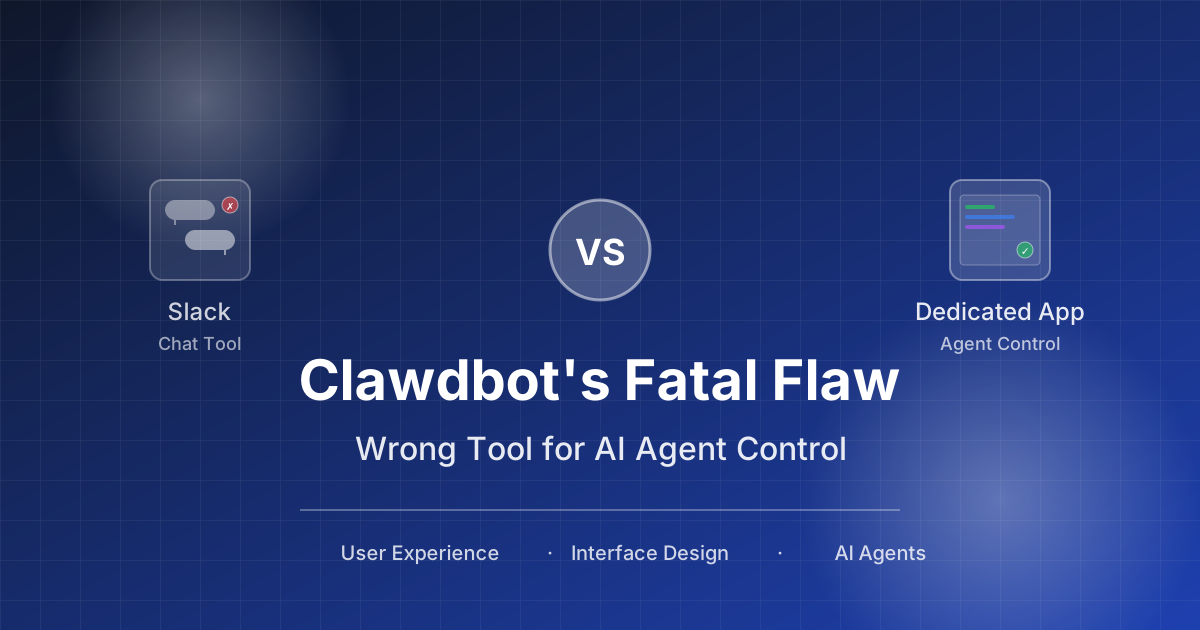
Stop Cramming AI Assistants into Chat Boxes: Clawdbot Picked the Wrong Battlefield
Clawdbot is convenient, but putting it inside Slack or Discord was the wrong design choice from day one. Chat tools are not for operating tasks, and AI isn't for chatting.

Grok Bot and Hermes Bot: one person finally gets a think tank and a secretariat
Grok Bot now ships with Cursor Pro+. Hermes Bot runs on a VPS. They are not smarter chat boxes. The think tank advises, the secretariat executes, and you still make the call.