

Payman AI
Payman AI sells agentic banking to banks and credit unions. There is no public Sandbox / Production dollar table. paymanai.com/pricing 404s. docs.paymanai.com returned HTTP 526 from this network. Keep the old isolated-wallet / policy / MCP story only as product language still used in older copy, not as a live SKU list. Do not keep Fifth Third, Stripe processing, PCI, or "100,000 registrations" unless a live first-party page still says them.
Compare Stripe agents if you wanted Stripe's own agent toolkit, Coinbase AgentKit if you wanted onchain agent wallets, and Skyfire if you wanted KYA payment tokens.
Key Features
- Bank-facing agents: The live homepage is "AI agents that handle money" for banks and credit unions, not a self-serve wallet signup.
- Demo, not a price card: Access is "Schedule Demo". There is no Hobby $X row to quote.
- SOC 2: The homepage still says SOC 2 Certified. Confirm the current trust page before you put that in a contract.
- Older developer surface: Previous catalog copy mentioned isolated USD/USDC/test wallets, policies, approvals, REST/SDK/MCP. Those docs were down when we checked. Do not treat them as a confirmed 2026-08-17 catalog.
Use Cases
- Banks and credit unions evaluating an AI money-movement demo.
- Teams comparing Payman vs Stripe vs Skyfire on public pages, not on invented sandbox prices.
- People who need a public developer wallet API today: look at Stripe or Coinbase first.
Limitation: We could not re-verify sandbox fake-money, PCI, Fifth Third custody, or LangChain/CrewAI/AutoGen connectors on a live docs page. Editorially composed "user reviews" from the old entry are out.
Pricing
No public plan table on 2026-08-17.
| Plan | Price | Notes from the live site |
|---|---|---|
| Public website | Unlisted | Schedule a demo. No Sandbox $0 or Production $N row. |
| Production | Sales | Contact Payman. Confirm the live official page. |
If a leftover blog still lists Sandbox / Production as priced SKUs, treat the missing pricing URL as the source.
Getting Started
- Open paymanai.com and use Schedule Demo. Do not expect a self-serve checkout.
- Confirm docs.paymanai.com later if you needed MCP or SDK details.
- Compare Stripe or Coinbase if you needed a public developer path this week.
- Do not paste composed testimonials into a deck.
Frequently Asked Questions
Is there a free sandbox price?
Not on the public site on the public page.
Is Payman still a developer wallet marketplace?
The live homepage is bank/credit-union agentic banking. Confirm docs when they are up.
Same as Skyfire?
No. Skyfire documents KYA/pay tokens for agent-to-agent checkout. Payman is selling bank demos.
Alternatives
- Stripe agents: Stripe-native agent payments.
- Coinbase AgentKit: Onchain agent toolkit.
- Skyfire: KYA + payment tokens.
Tips
- Say "pricing unlisted; schedule a demo."
- Confirm docs.paymanai.com before you promise MCP.
Conclusion
Payman is a sales-led agentic banking product with no public dollar table on the day we checked, not a priced sandbox SKU. Start at paymanai.com, then decide whether Stripe agents already covers the integration you need.
Comments
No comments yet. Be the first to comment!
Related Tools


Related Insights

Anthropic Subagent: The Multi-Agent Architecture Revolution
Deep dive into Anthropic multi-agent architecture design. Learn how Subagents break through context window limitations, achieve 90% performance improvements, and real-world applications in Claude Code.
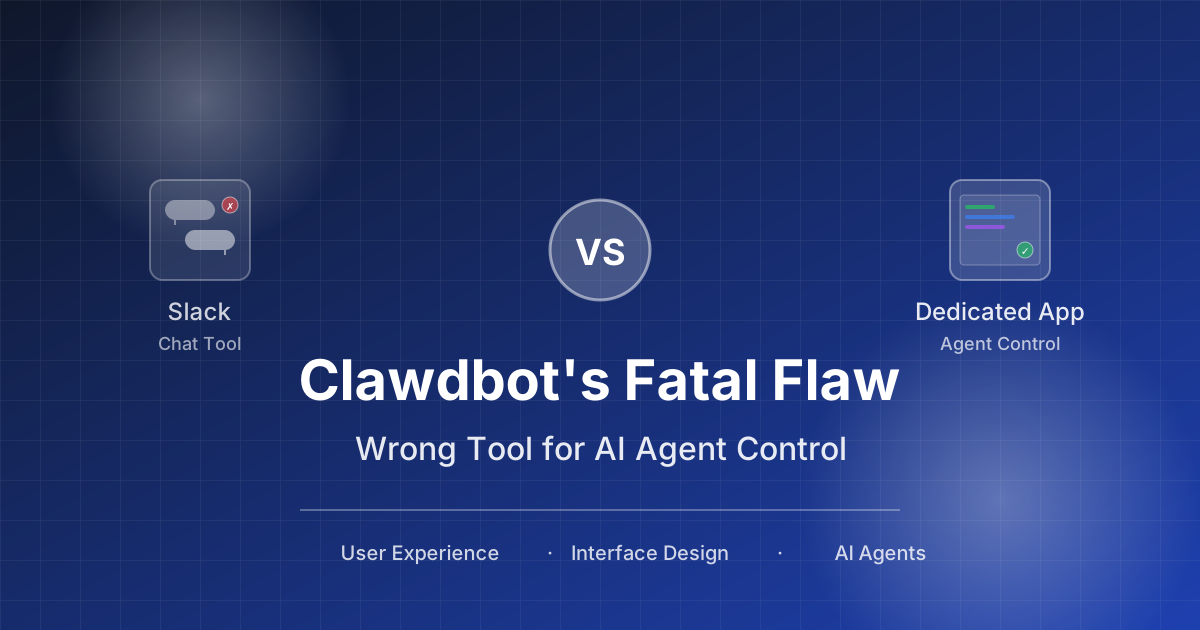
Stop Cramming AI Assistants into Chat Boxes: Clawdbot Picked the Wrong Battlefield
Clawdbot is convenient, but putting it inside Slack or Discord was the wrong design choice from day one. Chat tools are not for operating tasks, and AI isn't for chatting.

Grok Bot and Hermes Bot: one person finally gets a think tank and a secretariat
Grok Bot now ships with Cursor Pro+. Hermes Bot runs on a VPS. They are not smarter chat boxes. The think tank advises, the secretariat executes, and you still make the call.