

Strata
Strata is a local inference project for running Qwen3.8-Flash-Next on Windows or Linux PCs. Its repository was created on September 24, 2026; renewed Reddit discussions in early October are a discovery lead rather than a different launch date. It combines a chat interface, a monitor and APIs that applications or coding agents can connect to.
Features and use cases
The current official README lists NVIDIA and AMD graphics support, local chat, coding and image-related use. Feature availability depends on the platform and build, so check the relevant setup section before treating every path as equivalent. The OpenAI-compatible and Anthropic-compatible APIs allow an existing client to use the local engine. Compatibility describes the interface, not parity with the hosted model behind that client.
This is useful for someone who wants to evaluate a large MoE checkpoint on existing desktop hardware and connect it to a familiar workflow. For a pilot, take a small repository, ask for an explanation of one module, then request a limited change with tests. Review the result before granting access to a larger codebase. A local model does not automatically make the tools attached to a coding agent local or harmless.
Requirements and limits
The project lists a graphics card with at least 12 GB VRAM, at least 32 GB system RAM and approximately 80 GB disk space. It recommends 64 GB RAM for all listed quantization sizes. These are the authors’ requirements, not a promise of the same throughput on every PC. Quantization choice, prompt length, memory bandwidth and GPU all influence speed and output quality.
The README describes one request being processed at a time. Initial loading and longer inputs should be included in your latency measurements; a short-chat token rate is not a concurrency or end-to-end benchmark.
Cost and quick start
Strata’s own code is MIT licensed. Some components and model weights have separate licenses, linked by the project. There is no paid Strata subscription described in the README, but hardware, electricity and storage remain costs.
- Check the Windows or Linux instructions and available resources.
- Follow the official
START-HERE.batorsetup.shpath after reviewing what it installs. - Start with a supported quantization and a short local chat.
- Point a test client at the local server on port 8080 with the documented API path.
- Measure load time, response quality and long-input latency before using it for daily work.
FAQ and alternatives
Does a compatible API make it Claude? No. It serves its supported local checkpoint through familiar request formats.
Are community speed claims universal? No. Match the precise hardware, quantization and input length before comparing results.
Ollama is another model-running option with a different deployment experience. OpenCode is a coding client rather than the inference engine. See the AI ecosystem category and local AI tag. Start with one controlled local task and decide from measured quality whether Strata fits your machine.
Comments
No comments yet. Be the first to comment!
Related Tools


Related Insights
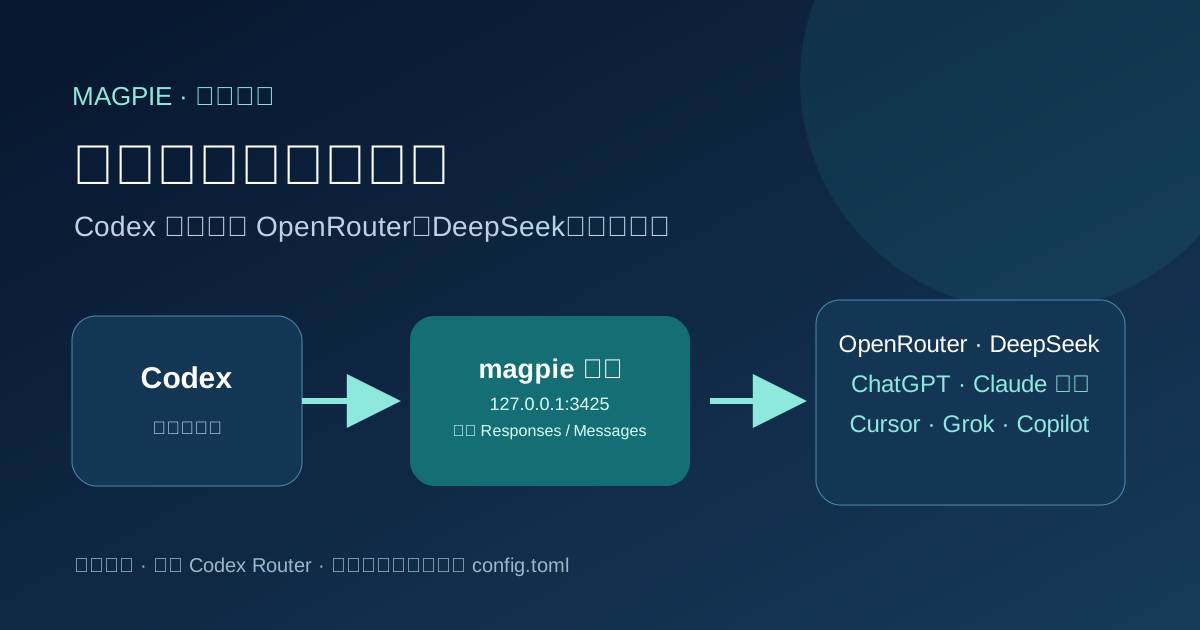
Codex on any model: magpie makes Codex Router unnecessary
magpie is a free, open-source menu bar app that runs a local gateway and puts OpenRouter, DeepSeek and your ChatGPT, Claude, Cursor, Grok and Copilot subscriptions right into Codex's own model picker, with one click and no Codex Router.
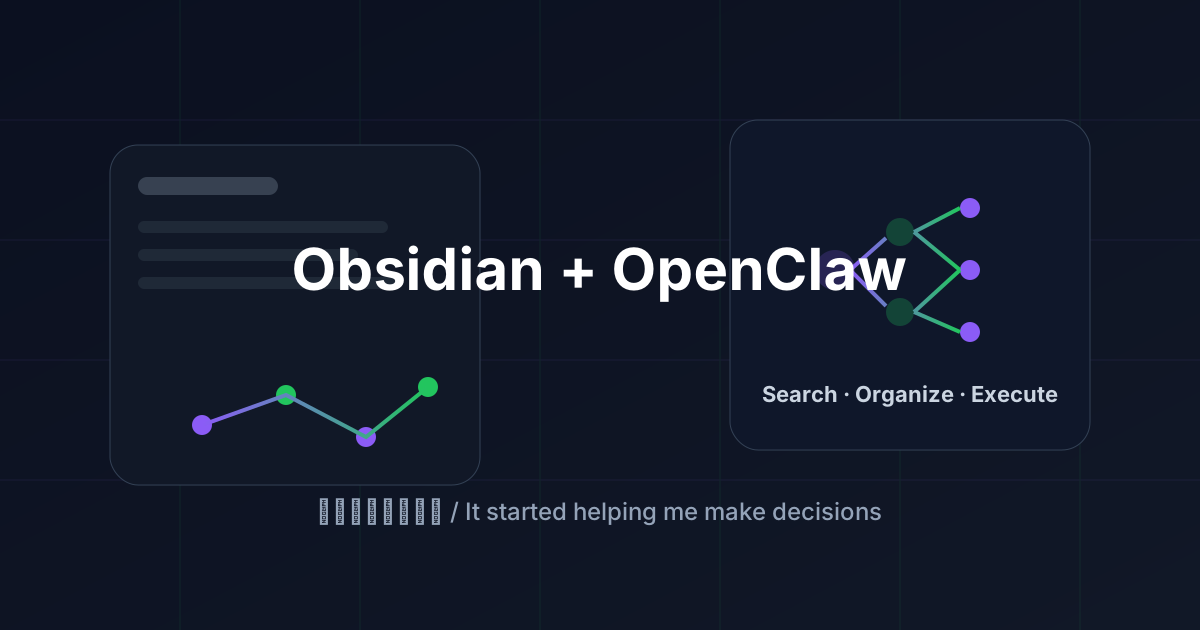
After I Connected Obsidian to OpenClaw, It Started Helping Me Make Decisions
Once Obsidian stopped being just a place to store notes and started working with OpenClaw, it began helping me organize context, connect information, and improve real decisions.