
Visor
Visor is an independent AGPL-3.0 Android client for Ray-Ban Meta Gen 2 glasses. It replaces the companion application for a supported pair and routes the glasses' assistant request to Claude or an OpenAI-compatible endpoint selected by the owner. The repository documents a direct Bluetooth and Wi-Fi Direct connection to the glasses, on-phone conversation history, local gallery import, live view, and optional RTMP broadcasting.
What it offers
- Provider choice: "Hey Meta" can call Anthropic or an OpenAI-compatible service using an API key supplied by the owner. A vision request includes the captured photo and recent conversation with that provider.
- Phone-local companion workflow: Gallery imports, live view, replay, snapshots, notifications, and settings are controlled from the Android app rather than a Visor-hosted account.
- Documented network boundary: The README says Visor has no first-party server, analytics, or crash reporting, but setup still contacts Meta for login, ownership receipt, frame data, and language packs; the configured model provider receives assistant requests.
- Released builds: GitHub Releases provide signed APKs and SHA-256 files, including several releases on October 16, 2026.
A careful setup workflow
Confirm you have a Ray-Ban Meta Gen 2 pair and Android 10 or newer, then read the official requirements before downloading a release. Verify the APK hash, pair the glasses, and test a non-sensitive request first. Add a narrowly scoped provider key only after confirming where its request logs and retention are controlled. Keep the Meta AI app disconnected while testing: the glasses accept one active session, so the other application's session ends when it connects.
Limits and risks
Visor is unaffiliated with Meta or EssilorLuxottica, is tested on one stated firmware version, and does not claim support for every Meta glasses model. Building from source requires Meta client tokens that are deliberately absent from the repository, so a local build cannot complete Meta login and ownership setup without them. It also routes voice, recent conversation, and optionally a photo to the provider you configure. Treat the project as early software, review its AGPL obligations, and do not use it where an unsupported integration or provider data path is unacceptable.
Next step
Read the official README and release notes before deciding whether its supported hardware and data path fit your workflow.
Comments
No comments yet. Be the first to comment!
Related Tools


Related Insights
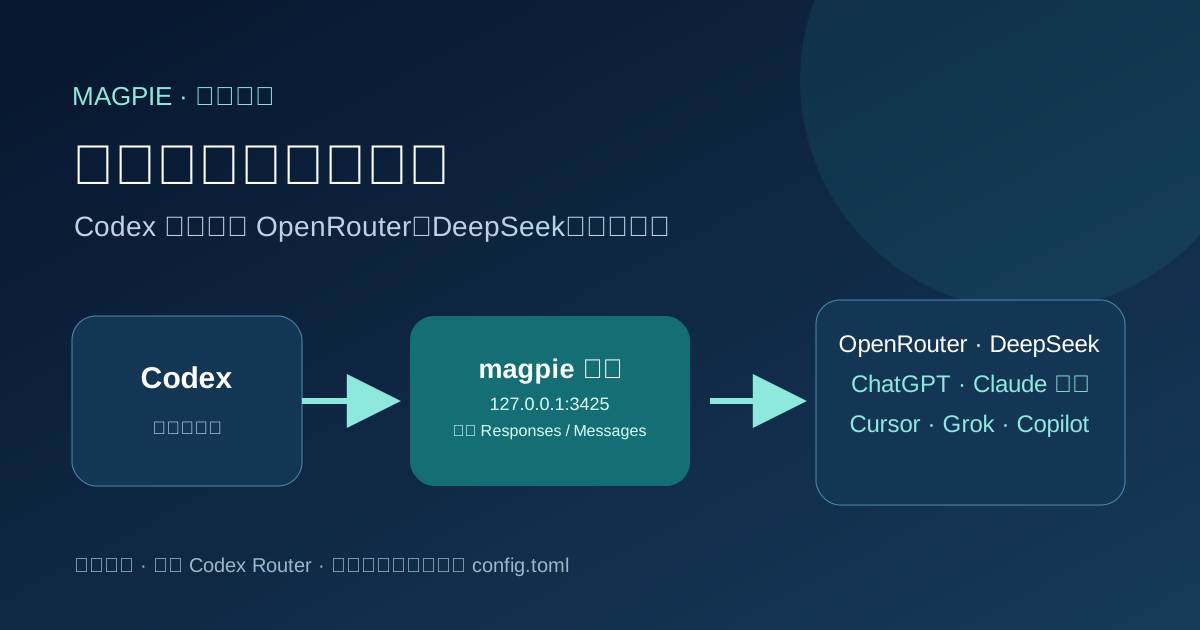
Point Codex at any model with magpie
Install magpie, add a local or signed-in provider, then switch Codex to that model. Rechecked against official magpie docs on 2026-10-06.

Claude Code account precautions: before you spend $200, do these six things
Gmail plus Apple private sign-in, Cliproxy residential routing for CC and emulators, IP/DNS checks, gradual upgrades, and history-preserving sign-out. Includes a profile and script.
Claude Code's Next Frontier: Not Code, But Your Local Obsidian Knowledge Base
Explore how Obsidian + Claude Code transforms from a knowledge management tool into your private AI assistant. Complete guide including obsidian-skills, Claudian plugin, Claudesidian template, and best practices for achieving both data privacy and AI capabilities.