
Crush
Crush is Charm's terminal coding agent. The CLI itself is $0. The first-party inference path is Hyper: Free $0 / month with 100 Hypercredits, Subscription $20 / month with 250 Hypercredits refreshing daily, plus prepaid bundles $5 / 100, $10 / 500, $20 / 2,000. The Hyper page says 1 Hypercredit is currently 5¢. You can also paste Anthropic, OpenAI, Gemini, OpenRouter, and other keys. Do not call this a Claude subscription.
Compare Claude Code if you wanted Anthropic's CLI, Goose if you wanted Block's local agent, and OpenCode if you wanted another open harness.
Key Features
- Multi-model TUI: switch providers mid-session. Catwalk is the community model catalog.
- LSP + MCP: Crush uses language servers for extra context and accepts
http,stdio, andsseMCP servers. - crushrc: Bash-based config that runs the same on Windows. JSON config is still accepted but deprecated.
- Yolo flag:
crush --yoloskips every permission prompt. The README says be very careful. - Wide OS list: macOS, Linux, Windows, Android, FreeBSD, OpenBSD, NetBSD. Install via brew, npm
@charmland/crush, winget, orgo install.
Limitation: --yolo is first-wins inside a shared crush serve workspace. A later client cannot flip the flag. Config files are trusted code. Do not launch Crush in a directory whose crushrc you have not read.
Use Cases
- People who want a Charm TUI and will pay Hyper or BYOK.
- People who already live in Bubble Tea apps and want LSP-aware edits in the terminal.
- People comparing open CLIs before buying Claude Code.
Pricing
CLI is free. Inference on 2026-08-25 from hyper.charm.land.
| Path | Price | Notes from first-party pages |
|---|---|---|
| Crush CLI | $0 | FSL-1.1-MIT. 27,650 stars on the check date. |
| Hyper Free | $0 / month | 100 Hypercredits per month. |
| Hyper Subscription | $20 / month | 250 Hypercredits, refreshing daily. |
| Hyper prepaid | $5 / $10 / $20 | 100 / 500 / 2,000 Hypercredits. Page says they never expire. |
| BYOK | Provider bill | Anthropic, OpenAI, Gemini, OpenRouter, Ollama, and others via the model picker. |
Confirm before you budget.
Getting Started
- Install with
brew install charmbracelet/tap/crush, ornpm install -g @charmland/crush. - Run
crush. Pick a Hyper model, or pressctrl+land paste a provider key. - Allow tools with
permissions allow view editincrushrcif you want fewer prompts. - Do not pass
--yoloon a machine you do not trust.
First-party start: github.com/charmbracelet/crush and hyper.charm.land.
Frequently Asked Questions
Is the CLI still free?
Yes. The FSL-1.1-MIT CLI is $0. Hyper and BYOK are how models get billed.
Same as Claude Code?
No. Crush is Charm's agent. Claude Code is Anthropic's.
Does --yolo persist across clients?
In crush serve, the first client to create the workspace wins. Later --yolo values do not change it.
Alternatives
- Claude Code: Anthropic first-party CLI.
- Goose: Block's local agent plus MCP.
- OpenCode: another open harness.
Tips
- Quote 27,650 stars and FSL-1.1-MIT from the GitHub check.
- Budget Hyper against 5¢ per credit, not against a leftover unlimited claim.
- Read
crushrcbefore you launch in someone else's repo.
Conclusion
Crush is a 27,650-star Charm TUI with a public Hyper $0 / $20 table, not a Claude seat. Start at github.com/charmbracelet/crush, pick Hyper or BYOK, then decide whether Claude Code already covers the workflow you need.
Comments
No comments yet. Be the first to comment!
Related Tools


Related Insights
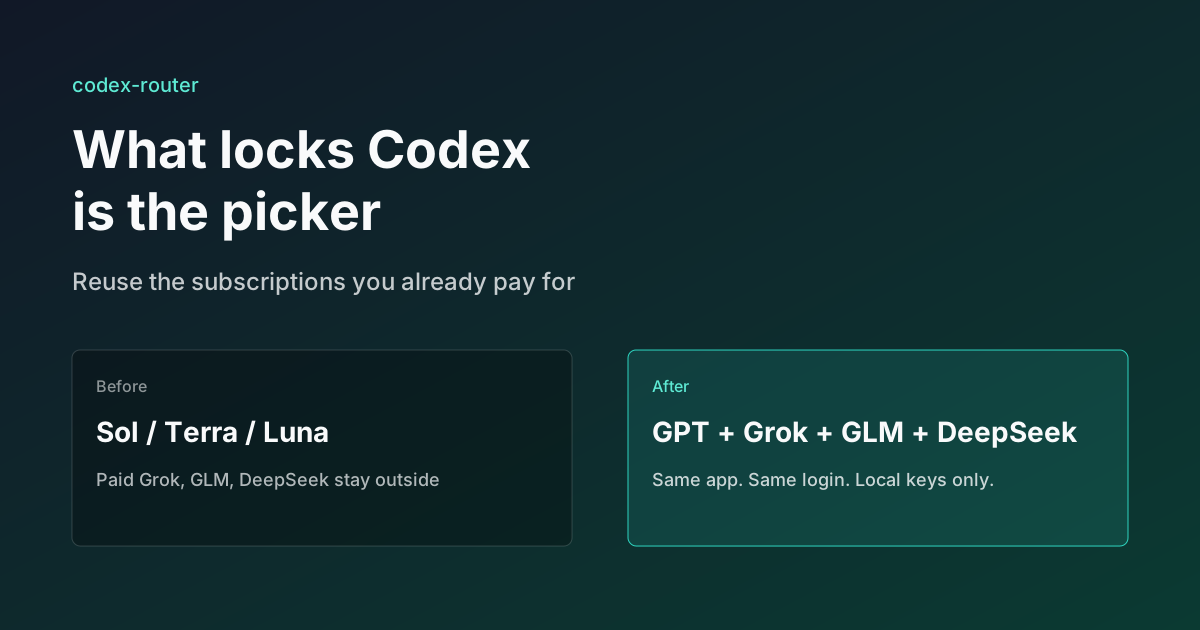
What Locks Codex Is the Picker, Not the Models
You already pay for OpenCode Go, Grok, and Z.ai, but the Codex picker still shows mostly GPT. The community project codex-router does not teach another install ritual. It puts subscriptions you already bought back into the selector, keeps keys on the machine, and leaves native GPT alone.
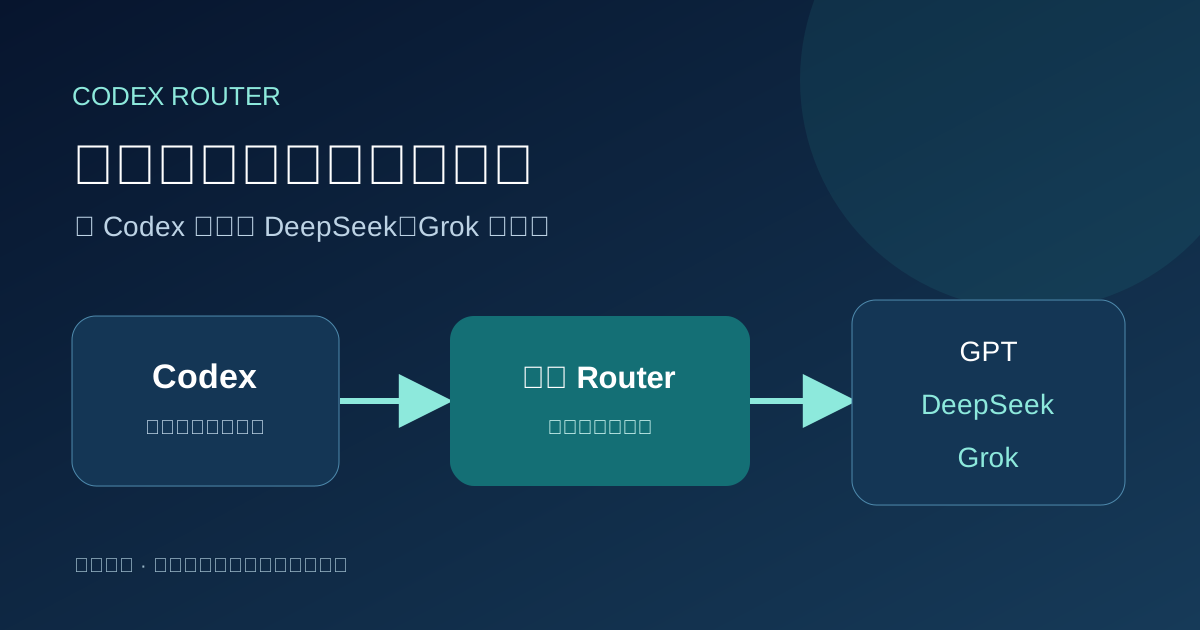
Running low on ChatGPT Codex quota? Switch to DeepSeek or Grok inside Codex
Codex Router lets you keep your Codex workspace while using DeepSeek, Grok, and other external models. A plain-English guide to routing, quotas, and network access.

Skills + Hooks + Plugins: How Anthropic Redefined AI Coding Tool Extensibility
An in-depth analysis of Claude Code's trinity architecture of Skills, Hooks, and Plugins. Explore why this design is more advanced than GitHub Copilot and Cursor, and how it redefines AI coding tool extensibility through open standards.