

IBM Bob
IBM Bob is an enterprise software-development agent with IDE and shell clients. It works with code and development tasks, while enterprise deployment options address where the service, inference and audit information run. IBM announced general availability on April 28, 2026. Its September release update, published October 1, describes self-hosted deployment and improvements to the agent workflow.
Key features
- IDE and shell access: Bob IDE and Bob Shell provide different interfaces to the development workflow.
- Self-hosted backend: The documented deployment runs on Red Hat OpenShift, on premises or in a customer's cloud. The operator handles service components such as identity, inference routing, auditing and usage metering.
- Inference choices: A customer-hosted backend can route to cloud providers through Amazon Bedrock, Azure OpenAI, Vertex AI or compatible endpoints. Fully self-hosted configurations instead use supported locally deployed models and guardrail services.
- Project plugins: Plugins can bundle skills, modes, rules and MCP configuration under
.bob/plugins/<name>or the user's global plugin directory. - Background commands: Long-running builds, watchers and development servers can run in the background so the agent workflow can continue.
A practical workflow
For an individual evaluation, begin with one repository and a task that has a clear acceptance condition. Let Bob inspect the project, review its proposed edits and run the project's existing checks. Keep credentials and production access outside the initial experiment. A workspace plugin can then capture reusable instructions and tool configuration for the same project.
For self-hosted evaluation, first decide whether inference may reach an external provider. Follow IBM's deployment guide to provision a supported OpenShift environment, check model endpoints and configure identity and audit retention. The release notes describe cluster-wide installation steps requiring cluster-admin privileges, followed by namespaced installation. A single-node proof of concept is documented, but entitlement and enterprise terms need coordination with IBM.
Pricing and limitations
As checked on October 5, 2026, the pricing page advertises a 30-day trial with 50 Bobcoins and no payment information required. Monthly plans list Pro at US$20 for 50 Bobcoins, Pro+ at US$60 for 180 and Ultra at US$200 for 1,000. Optional overage and premium modernization packages have separate terms. Self-hosted enterprise pricing is sales-led; regional prices and taxes may differ.
Self-hosting the backend does not automatically keep model prompts inside the cluster. External inference routes still send code context to the selected provider. Fully self-hosted operation requires supported models, GPU resources and guardrail services; an air-gapped installation also needs mirrored images. Assess these requirements before treating the service as a fully local tool.
The September release supports newer MCP transports and removes HTTP+SSE. Existing integrations using that transport require migration. Plugin behavior and model coverage should be validated on a small project rather than assumed compatible with every tool or workload.
FAQ and alternatives
Is Bob only an editor extension? IBM documents IDE and shell clients plus enterprise backend deployment options.
Does a self-hosted backend guarantee local inference? No. The model routing choice determines whether inference leaves the environment.
Compare Claude Code and Lody, and browse development tools. Consult IBM's release notes, deployment announcement and pricing.
Comments
No comments yet. Be the first to comment!
Related Tools


Related Insights

Skills + Hooks + Plugins: How Anthropic Redefined AI Coding Tool Extensibility
An in-depth analysis of Claude Code's trinity architecture of Skills, Hooks, and Plugins. Explore why this design is more advanced than GitHub Copilot and Cursor, and how it redefines AI coding tool extensibility through open standards.
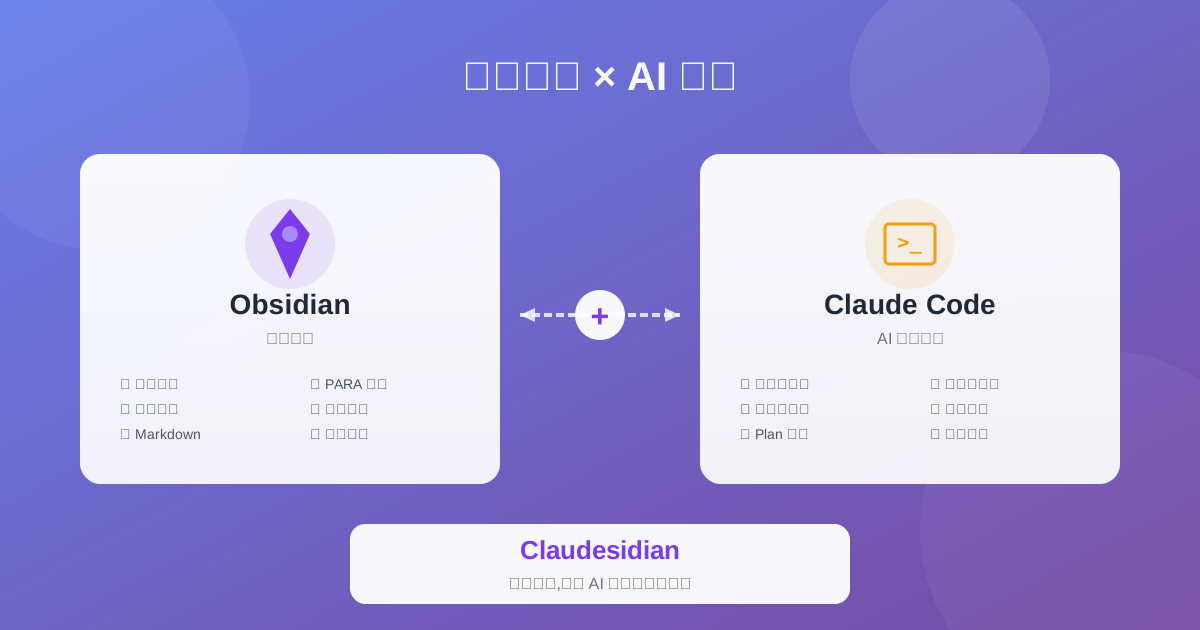
Claudesidian: Transform Obsidian into an AI-Powered Second Brain
Discover Claudesidian, an open-source project that perfectly integrates Obsidian with Claude Code. Built-in PARA method, custom commands, and automated workflows for a complete idea-to-implementation solution.
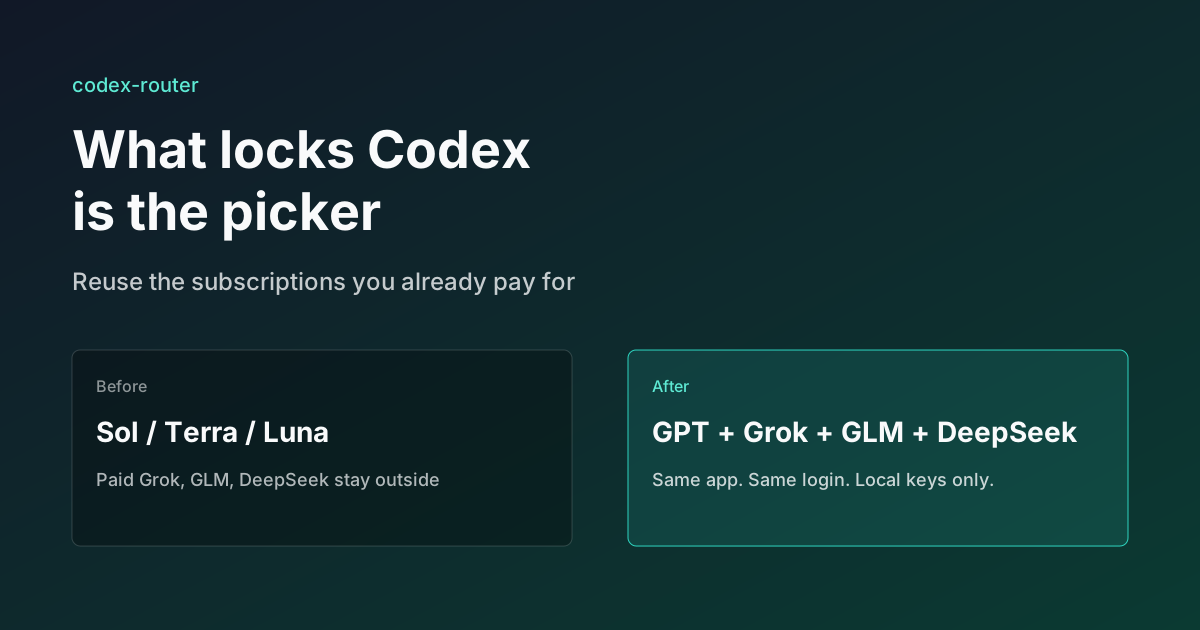
What Locks Codex Is the Picker, Not the Models
You already pay for OpenCode Go, Grok, and Z.ai, but the Codex picker still shows mostly GPT. The community project codex-router does not teach another install ritual. It puts subscriptions you already bought back into the selector, keeps keys on the machine, and leaves native GPT alone.