
Xirp is Spotify's agentic development environment, launched in public beta on August 10, 2026, and built on Spotify Portal (the commercial Backstage). It solves the chaos of running many coding agents at once: a session manager that runs Claude Code, Gemini CLI, and Codex side by side on the same repository, each in its own Git worktree, with context that follows you when you switch tools mid-project. More than 1,300 Spotify engineers had already logged 36,000+ sessions on it before the public launch.
Key Features
- Vendor-neutral session management: Launch, manage, and switch between Claude Code, Gemini CLI, and Codex without losing working state.
- Git worktree isolation: Every session runs in its own worktree, so dozens of agents can work the same codebase in parallel without conflicts.
- Context portability: Prompts, rules, skills, and session history stay in Xirp, not in any single vendor — switch tools mid-task and everything carries over.
- Portal integration: When connected to Portal, every session starts with organizational context: component architecture, dependency graphs, ownership, and architectural decisions.
- Institutional memory: Session transcripts and metadata flow back into Portal, so the next engineer or agent resumes where the last one stopped.
- Auto-documentation: Coding sessions become living documentation that stays current without anyone stopping to write docs.
- Workspace plugin: Work items, sessions, and docs live in one place.
- Model flexibility: Route work to the best price-performance option, including self-hosted open-source models.
Use Cases
Who Should Use This Tool?
- Engineering teams running many agents: Anyone juggling a dozen Claude Code, Codex, and Gemini sessions across repos.
- Organizations avoiding vendor lock-in: Xirp keeps prompts, rules, and history in a shared environment above the model layer.
- Platform teams on Backstage/Portal: Existing Portal customers get an agent command center that feeds catalog data both ways.
Problems It Solves
- Session chaos: Dozens of parallel sessions with no visibility or coordination.
- Context loss: Rebuilding context every time an agent starts, or switching tools mid-project.
- Lock-in: Engineering workflows bound to whichever vendor stores prompts and session history.
Pricing
| Plan | Price | Features |
|---|---|---|
| Beta | Free | Full Xirp environment, includes a Portal instance, macOS beta |
Xirp is currently free to try in beta, including an included Portal instance. Spotify has not published commercial pricing; the beta program starts teams on one project.
Advantages & Unique Selling Points
Compared to Competitors:
- Vendor neutrality by design: Competing with CC Switch on breadth is different — Xirp orchestrates whole sessions with shared state, not just configs.
- Organizational context: Portal's software catalog is injected into every session, which is unique among agent tools.
- Proven at scale: 1,300+ engineers and 36,000+ sessions of internal battle-testing before launch.
What Makes It Stand Out:
- The context layer lives above any single model provider.
- Sessions write knowledge back, creating institutional memory.
- Built by Spotify R&D on Portal's commercial Backstage foundation.
User Reviews
Spotify's launch generated significant enterprise buzz, with RuntimeWire and other outlets covering the "layer above coding agents" positioning. Internal validation is the strongest signal: thousands of engineers adopted it organically across 36,000+ sessions, reporting faster context setup and cost efficiencies from routing to the best-priced model. The main open question is pricing, which remains unpublished beyond the free beta.
Getting Started
Quick Start Guide
- Join the beta: Request access at xirp.spotify.com (a Spotify account is required).
- Connect an agent: Add Claude Code, Gemini CLI, or Codex sessions.
- Work in worktrees: Launch parallel sessions on the same repo — each gets its own worktree.
- Connect Portal: Load organizational context and write session knowledge back.
Integration
- Agents: Claude Code, Gemini CLI, OpenAI Codex.
- Platform: Spotify Portal / Backstage (commercial), macOS beta client.
- Models: Any — including self-hosted open-source models.
Frequently Asked Questions
Is Xirp free?
The beta is free to try and includes a Portal instance. Commercial pricing is not yet published.
Does it replace Claude Code?
No. Xirp is the environment around coding agents — it launches and manages Claude Code, Codex, and Gemini sessions, each with its own worktree.
Can I switch models mid-project?
Yes. Context is decoupled from the model provider, so switching tools carries the full working state over.
How does it compare to Zed Delta or CC Switch?
CC Switch manages agent configs; Zed Delta focuses on multiplayer review. Xirp orchestrates full sessions with organizational context — a different layer.
Alternatives
If Xirp isn't the right fit, consider these alternatives:
- Claude Code: Anthropic's terminal agent if you need one tool, not an environment.
- Codex CLI: OpenAI's open-source terminal agent.
- Gemini CLI: Google's terminal coding agent.
Tips & Best Practices
- Start with one team, one project: Spotify's own beta path — prove value before rolling out broadly.
- Connect Portal early: The organizational context is the multiplier; sessions without it are just sessions.
- Let sessions write docs: Auto-documentation only helps if you let session knowledge flow back into Portal.
Comments
No comments yet. Be the first to comment!
Related Tools


Related Insights

Skills + Hooks + Plugins: How Anthropic Redefined AI Coding Tool Extensibility
An in-depth analysis of Claude Code's trinity architecture of Skills, Hooks, and Plugins. Explore why this design is more advanced than GitHub Copilot and Cursor, and how it redefines AI coding tool extensibility through open standards.
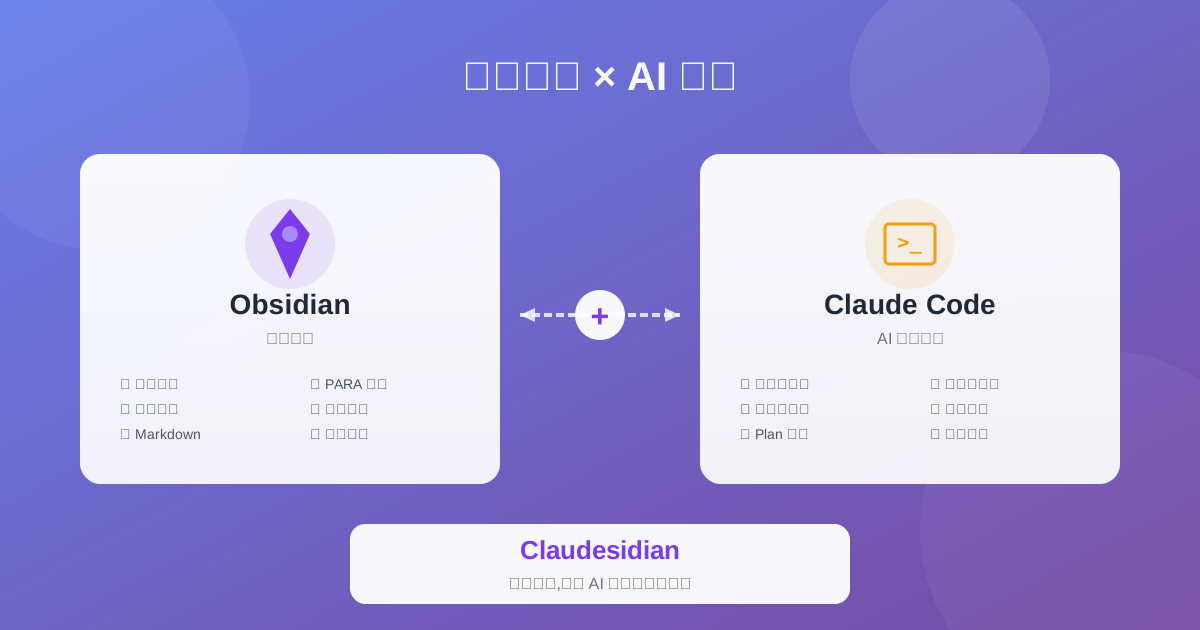
Claudesidian: Transform Obsidian into an AI-Powered Second Brain
Discover Claudesidian, an open-source project that perfectly integrates Obsidian with Claude Code. Built-in PARA method, custom commands, and automated workflows for a complete idea-to-implementation solution.
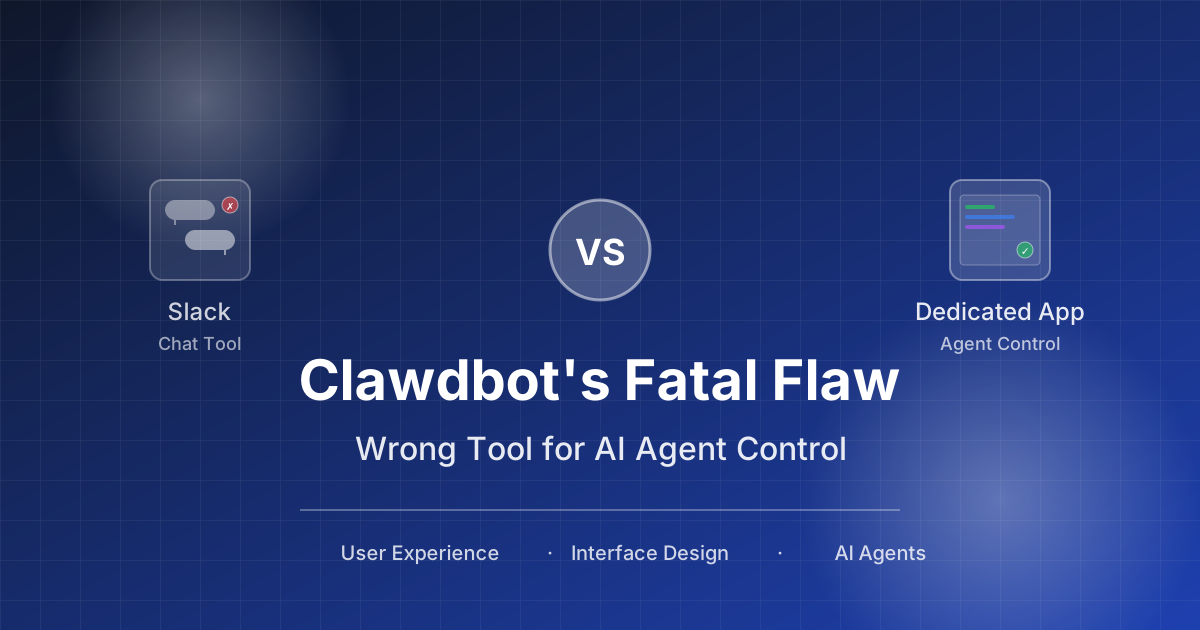
Stop Cramming AI Assistants into Chat Boxes: Clawdbot Picked the Wrong Battlefield
Clawdbot is convenient, but putting it inside Slack or Discord was the wrong design choice from day one. Chat tools are not for operating tasks, and AI isn't for chatting.