

BaoCut
BaoCut is a desktop tool for turning spoken recordings into transcripts, subtitles, and edited videos. Its current website presents version 2.1.0 for Apple Silicon Macs running macOS 14 or later. You can work manually or connect Claude Code or Codex to perform a sequence of editing tasks through an agent conversation.
Core capabilities
The product page lists on-device speech recognition, speaker labels, word timestamps, bilingual subtitle editing, and translated dubbing. Subtitle exports include SRT, VTT, and ASS; other outputs include Markdown transcripts and MP4 with burned-in subtitles. A timeline supports video, audio, text, and images.
For developers, the bcut CLI and an MCP server expose the editing engine. The public agent skill connects external agents to that workflow. The repository's MIT license applies to the skill; it should not be treated as evidence that all desktop app source code is available.
A useful first project
Try a short tutorial or interview before processing a long recording. Transcribe it locally, correct names and specialist terms, and confirm speaker assignments. Then translate the corrected transcript and inspect line breaks, reading speed, and timing. Export a subtitle file first so you can review it independently of the video render.
If you need dubbed audio, use material for which you have the necessary speaker permission. Check pronunciation and timing on a short segment before generating the whole track. For talking-head cleanup, review suggested pauses and retakes rather than removing every hesitation automatically.
Quick start
- Check the current Mac requirements and download from the official site.
- Import a short recording and run local transcription.
- Correct the transcript before translation or dubbing.
- Choose manual editing or connect an existing supported agent account.
- Inspect a sample export, then process the remaining material.
This sequence makes errors easier to locate: transcription mistakes should be fixed before they become translated subtitles or spoken output.
Cost and privacy boundaries
No paid desktop plan was listed on the checked download page, but that does not establish that every workflow is free. Connected agent accounts or cloud APIs may have their own charges. Speech recognition runs locally; translation can use your agent or a selected cloud model. The fact that the agent application runs on your Mac does not mean its model inference is local.
Read the privacy policy for cloud processing, update checks, and optional usage-data settings. Treat local transcription and cloud-assisted editing as separate data flows.
FAQ
Is there a Windows version?
The desktop page advertises the Mac app. The skill repository separately documents an unsigned Windows CLI preview; that is not the same as a Windows desktop release.
Must I connect an AI account to transcribe?
The official page says on-device transcription needs no AI account. Agent-driven and cloud translation workflows have separate setup requirements.
Alternatives
- Meetily: compare for meeting transcription and notes.
- HeyGen: compare for a different video creation and localization workflow.
Explore generative AI tools and speech-to-text tools. BaoCut is a practical candidate when subtitle accuracy and editable local media projects are central to your workflow.
Comments
No comments yet. Be the first to comment!
Related Tools


Related Insights
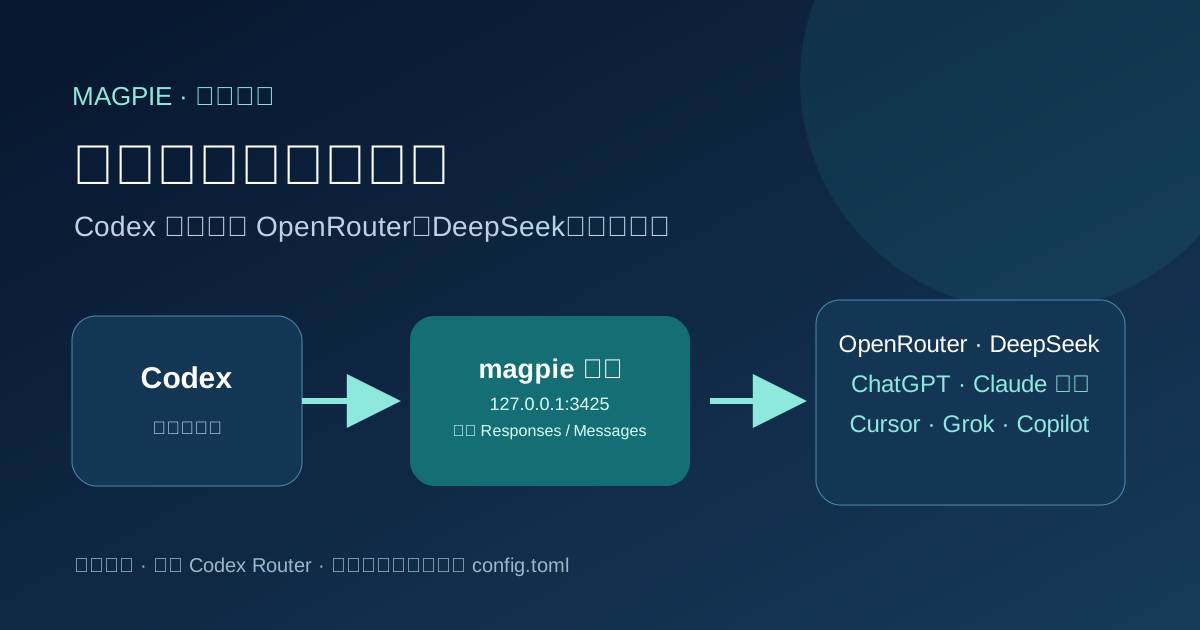
Codex on any model: magpie makes Codex Router unnecessary
magpie is a free, open-source menu bar app that runs a local gateway and puts OpenRouter, DeepSeek and your ChatGPT, Claude, Cursor, Grok and Copilot subscriptions right into Codex's own model picker, with one click and no Codex Router.
After I Connected Obsidian to OpenClaw, It Started Helping Me Make Decisions
Once Obsidian stopped being just a place to store notes and started working with OpenClaw, it began helping me organize context, connect information, and improve real decisions.