

Claude 3.5 Sonnet is a mid-tier Claude model that Anthropic announced on June 21, 2024. It is no longer available: Anthropic notified developers on August 13, 2025 and retired both API snapshots, claude-3-5-sonnet-20240620 and claude-3-5-sonnet-20241022, on October 28, 2025. Anthropic's recommended replacement for both is Claude Sonnet 5.5 (claude-sonnet-5-5). Requests to retired models fail, so this page is a reference for what the model was and where to move.
Key features
- 200K context window: according to Anthropic's launch post, the model shipped with a 200K-token context window.
- Speed and price tier: Anthropic said it outperformed Claude 3 Opus on a wide range of evaluations at the speed and cost of Claude 3 Sonnet, running at about twice the speed of Opus. Launch pricing was $3 per million input tokens and $15 per million output tokens.
- Vision: Anthropic called it its strongest vision model at the time, especially for charts, graphs and other visual reasoning.
- Artifacts: the launch introduced Artifacts, which show generated code, documents or designs in a window beside the chat.
- Vendor benchmark claims: Anthropic reported that it solved 64% of problems in an internal agentic coding evaluation versus 38% for Claude 3 Opus. These are vendor numbers, not independent results.
Use cases
- Auditing old integrations that still reference
claude-3-5-sonnet-20240620orclaude-3-5-sonnet-20241022. - Understanding how Claude 3.5 Sonnet results in older papers or blog posts relate to current models.
- Planning a migration to Claude Sonnet 5.5 and re-running your own evals.
Pricing and availability
Status: retired on October 28, 2025 (deprecation announced August 13, 2025), per Anthropic's model deprecations page, checked on 2026-10-29. The $3 / $15 per million tokens figure above is the launch price from the announcement and no longer applies because the model cannot be called. For current Sonnet pricing, see the Claude Sonnet 5.5 entry.
Getting started
- Search your code and config for the two retired model ids.
- Replace them with
claude-sonnet-5-5, the replacement Anthropic lists. - Read Anthropic's migration guide and re-run your own evals, since prompts tuned for 3.5 Sonnet may behave differently.
- Check the deprecations page for the status of any other Claude model you use.
FAQ
Is Claude 3.5 Sonnet still available?
No. Anthropic retired claude-3-5-sonnet-20240620 and claude-3-5-sonnet-20241022 on October 28, 2025, and requests to them fail.
What replaced Claude 3.5 Sonnet?
Anthropic's deprecations page recommends claude-sonnet-5-5 for both snapshots. See Claude Sonnet 5.5.
What was its context window?
200K tokens, according to Anthropic's June 21, 2024 announcement.
When was the retirement announced?
August 13, 2025, about 11 weeks before the retirement date.
Alternatives
- Claude Sonnet 5.5: Anthropic's listed replacement.
- Claude Sonnet 4.5: an earlier Sonnet that is itself deprecated, with retirement set for November 30, 2026.
- Claude Haiku 5.5: a smaller Claude tier for lower-cost work.
Conclusion
Claude 3.5 Sonnet was a strong mid-tier model in 2024, but it is retired and cannot be called. Move to Claude Sonnet 5.5 and verify behavior with your own tests. See the Anthropic announcement, the deprecations page and the models category.
Sources
Comments
No comments yet. Be the first to comment!
Related Tools

Related Insights
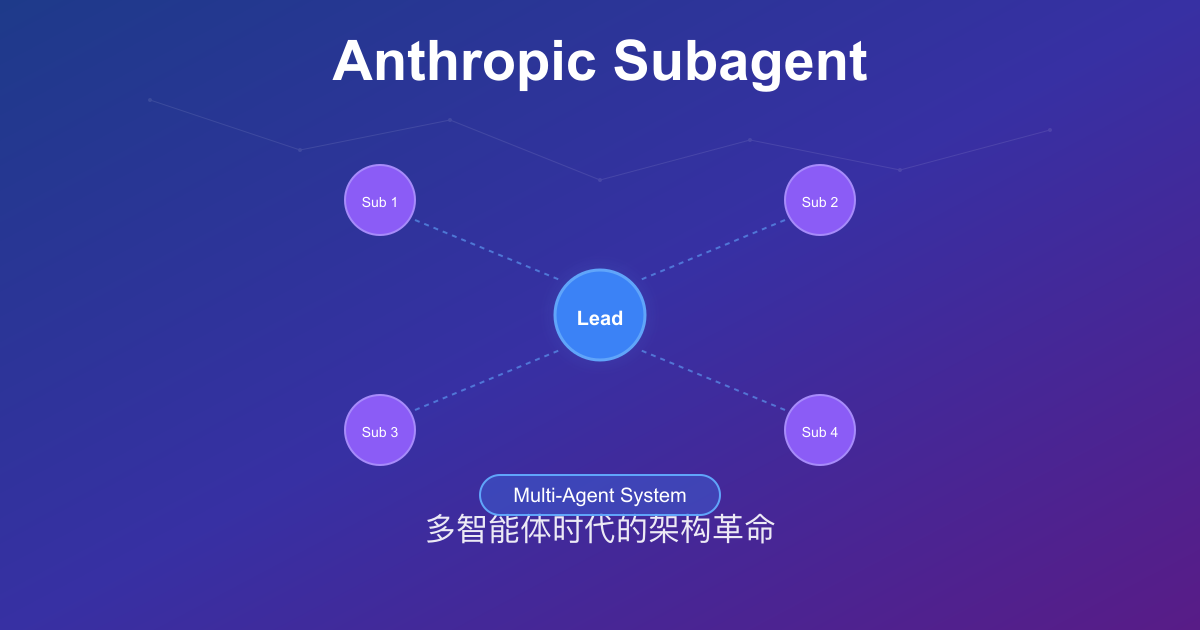
Anthropic Subagent: The Multi-Agent Architecture Revolution
Deep dive into Anthropic multi-agent architecture design. Learn how Subagents break through context window limitations, achieve 90% performance improvements, and real-world applications in Claude Code.

Complete Guide to Claude Skills - 10 Essential Skills Explained
Deep dive into Claude Skills extension mechanism, detailed introduction to ten core skills and Obsidian integration to help you build an efficient AI workflow

The Twilight of Low-Code Platforms: Why Claude Agent SDK Will Make Dify History
A deep dive from first principles of large language models on why Claude Agent SDK will replace Dify. Exploring why describing processes in natural language is more aligned with human primitive behavior patterns, and why this is the inevitable choice in the AI era.