

Claude v1 is the first-generation Claude model line that Anthropic offered through its API, under the model names claude-1.0, claude-1.1, claude-1.2 and claude-1.3. It is no longer available. According to Anthropic's model deprecations page, developers were notified on September 4, 2024, and the Claude 1 and Claude Instant models were retired on November 6, 2024. Requests to a retired model fail, so any code still pointing at these names must be migrated.
Status and replacement
| Item | Detail |
|---|---|
| Deprecated model names | claude-1.0, claude-1.1, claude-1.2, claude-1.3 |
| Notice date | September 4, 2024 |
| Retirement date | November 6, 2024 |
| Anthropic's recommended replacement | claude-haiku-4-5-20251001 (Claude Haiku 4.5) |
The same notice also retired the claude-instant-1.0, claude-instant-1.1 and claude-instant-1.2 models. Anthropic's deprecation table lists Claude Haiku 4.5 as the replacement for every one of them. Details on every later retirement are on the same page.
Key features
- Historical reference: Claude v1 is the starting point of the Claude family, which today spans the Haiku, Sonnet and Opus tiers.
- Clear lifecycle: Anthropic documents the terms Active, Legacy, Deprecated and Retired, and says it gives at least 60 days of notice before retiring a publicly released model.
- Preservation commitment: Anthropic says it has committed to long-term preservation of model weights for retired models and hopes to make past models publicly available again at some point.
Use cases
- Auditing old code, notebooks or tutorials that still reference
claude-1.xmodel names. - Understanding which Claude model a legacy integration was built on before porting it.
- Planning a migration from a retired snapshot to a current model.
Getting started
Claude v1 cannot be called any more, so there is nothing to start with. To move off it:
- Search your codebase for
claude-1.andclaude-instant-1.model strings. - Switch the
modelparameter to a current model. Anthropic's table recommendsclaude-haiku-4-5-20251001for these models, and the Claude Sonnet 5.5 page covers a stronger mid-tier option. - Re-run your own evaluations, because prompts tuned for a 2023-era model often need adjusting. Anthropic's migration guides cover the details.
FAQ
Is Claude v1 still available?
No. Anthropic retired claude-1.0 through claude-1.3 on November 6, 2024, and requests to retired models fail.
What replaced Claude v1?
Anthropic's deprecation table recommends claude-haiku-4-5-20251001, which is Claude Haiku 4.5.
Were Claude Instant models retired too?
Yes. claude-instant-1.0, claude-instant-1.1 and claude-instant-1.2 were retired on the same date, with the same recommended replacement.
How much notice does Anthropic give before retiring a model?
Anthropic says it provides at least 60 days of notice before retiring a publicly released model, by email and in the documentation.
Alternatives
- Claude Haiku 4.5: the replacement Anthropic names for Claude 1 and Instant models.
- Claude Sonnet 5.5: a current mid-tier Claude model.
- Claude Opus 5.5: the current flagship tier for complex work.
Conclusion
Claude v1 is a retired model, kept in this catalog so that searches for the name lead to an accurate answer. Use the model deprecations page for the authoritative lifecycle table, and browse the models category for current options.
Sources
Comments
No comments yet. Be the first to comment!
Related Tools

Related Insights
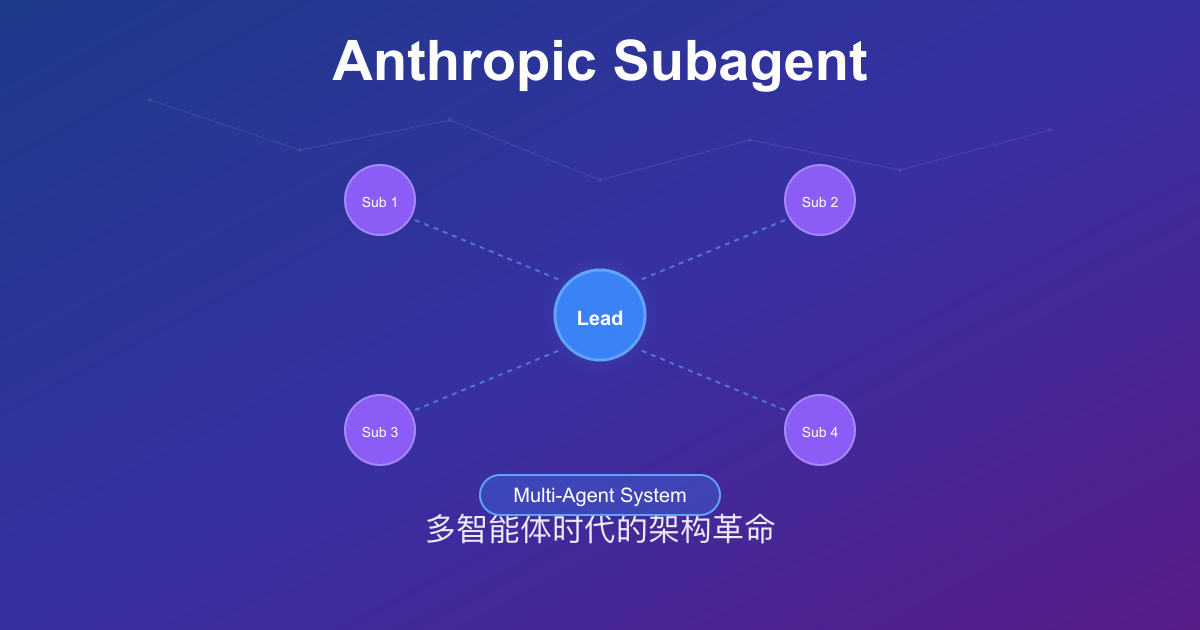
Anthropic Subagent: The Multi-Agent Architecture Revolution
Deep dive into Anthropic multi-agent architecture design. Learn how Subagents break through context window limitations, achieve 90% performance improvements, and real-world applications in Claude Code.

Complete Guide to Claude Skills - 10 Essential Skills Explained
Deep dive into Claude Skills extension mechanism, detailed introduction to ten core skills and Obsidian integration to help you build an efficient AI workflow

The Twilight of Low-Code Platforms: Why Claude Agent SDK Will Make Dify History
A deep dive from first principles of large language models on why Claude Agent SDK will replace Dify. Exploring why describing processes in natural language is more aligned with human primitive behavior patterns, and why this is the inevitable choice in the AI era.