

DeepSeek V3 is an open-weights Mixture-of-Experts language model from DeepSeek, described in a technical report (arXiv 2412.19437) dated December 27, 2024. Its Hugging Face model card lists 671B total parameters with 37B activated per token and a 128K context length. DeepSeek's API documentation no longer lists it: the current model names are deepseek-flash, served by DeepSeek-V4.1-Flash-1017, and deepseek-v4-pro.
Key features
- 671B MoE, 37B active: the card lists Multi-head Latent Attention and DeepSeekMoE, an auxiliary-loss-free load-balancing strategy, and a Multi-Token Prediction objective.
- 14.8T training tokens: pretraining on 14.8 trillion tokens, followed by supervised fine-tuning and reinforcement learning.
- 128K context: the card gives a 128K context length.
- Training cost: the card cites 2.788M H800 GPU hours and says the run had no irrecoverable loss spikes.
- Vendor benchmarks: DeepSeek reports MATH-500 90.2, Arena-Hard 85.5 and MMLU-Pro 75.9 for the chat model, with outputs capped at 8K tokens. These are DeepSeek's own evaluations.
Use cases
- Self-hosting an open-weights general model for research or internal use, within the license terms.
- Studying MoE architecture, FP8 training and multi-token prediction through the public report and weights.
- Reproducing or comparing against results published for V3.
Pricing and availability
The weights are on Hugging Face. The code is MIT licensed, and the model weights fall under a separate Model Agreement that the card says supports commercial use. The weights ship in FP8, with a script to convert to BF16. DeepSeek's API docs did not list V3 or a V3 price when we checked on 2026-10-29, and say legacy deepseek-v4-flash names are now served by DeepSeek-V4.1-Flash-1017 at the Flash price. For hosted use, move to the current models.
Getting started
- Read the model card and the technical report, and accept the Model Agreement.
- Plan hardware for a 671B MoE model, or use a quantized community build at your own risk.
- For API work, use
deepseek-flashordeepseek-v4-profrom the DeepSeek API docs instead.
FAQ
How big is DeepSeek V3?
671B total parameters with 37B active per token, per the Hugging Face card.
What is its context length?
128K tokens, according to the card.
Is DeepSeek V3 still available on the API?
DeepSeek's API docs no longer list it. They list deepseek-flash and deepseek-v4-pro. The open weights remain on Hugging Face.
What replaced DeepSeek V3?
For API use, DeepSeek V4.1 Flash and DeepSeek V4 Pro are the current models in the docs.
Alternatives
- DeepSeek V4.1 Flash: the current Flash model name in the API docs.
- DeepSeek V4 Pro: the Pro model in the API docs.
- DeepSeek-R1: DeepSeek's reasoning model.
Conclusion
DeepSeek V3 is a well-documented open MoE model that is still useful for research and self-hosting, but new API projects should use the current V4 names. Start from the model card or the API docs, and see more in the models category.
Sources
- Websitehttps://www.deepseek.com/
- Social Mediahttps://x.com/deepseek_ai
Comments
No comments yet. Be the first to comment!
Related Tools

Related Insights
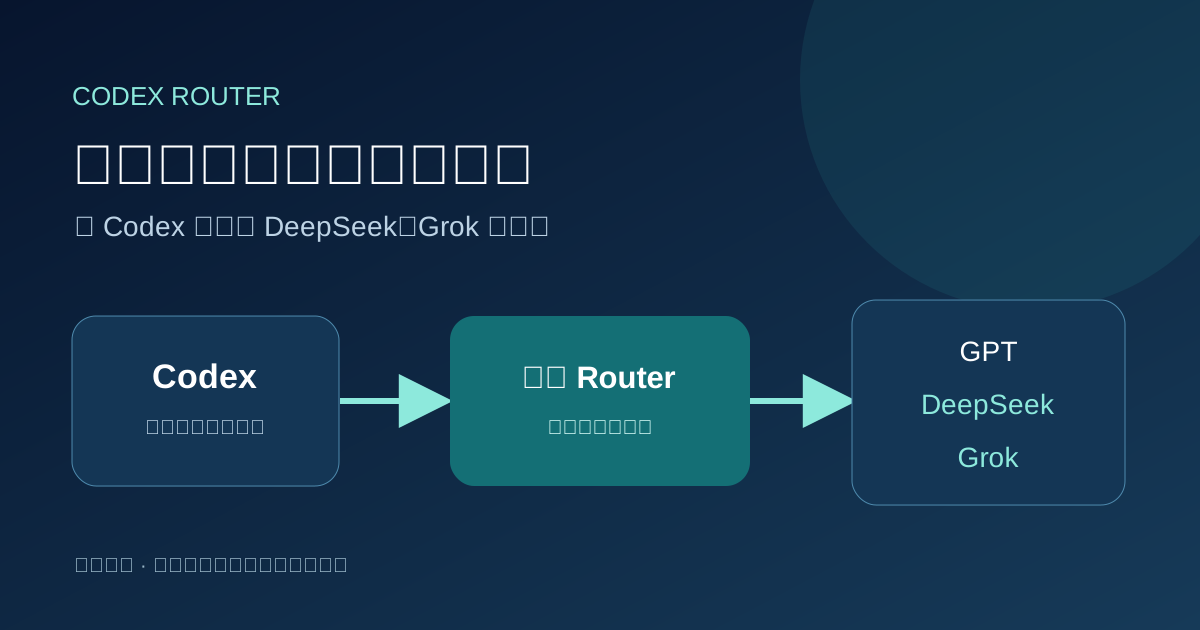
Running low on ChatGPT Codex quota? Switch to DeepSeek or Grok inside Codex
Codex Router lets you keep your Codex workspace while using DeepSeek, Grok, and other external models. A plain-English guide to routing, quotas, and network access.
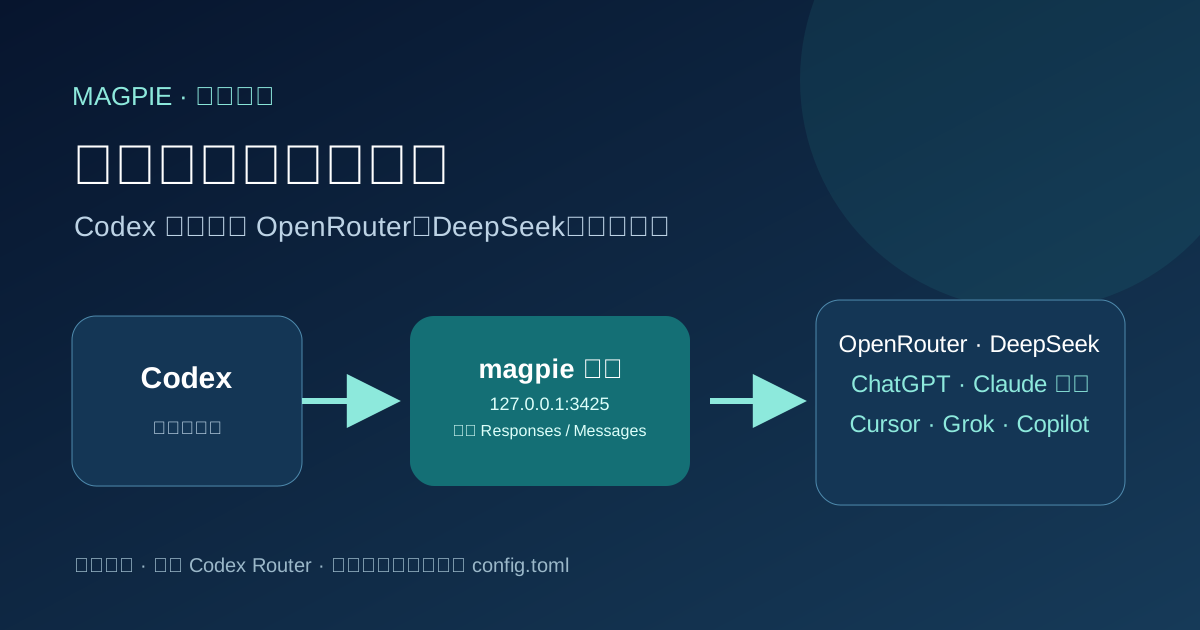
Point Codex at any model with magpie
Install magpie, add a local or signed-in provider, then switch Codex to that model. Rechecked against official magpie docs on 2026-10-06.

How to pick an AI coding CLI for your repo
Match Claude Code, Codex CLI, OpenCode, Pi, omp, DeepSeek Harness, and Grok Build to the work you actually run. Docs rechecked 2026-10-06.