

GLM-5.2
GLM-5.2 is Zhipu AI's June 13, 2026 coding and long-horizon model. Use this page for the MIT-weight 744B MoE snapshot, not as "Zhipu's newest model".
Key Features
- 744B MoE, MIT weights: Same GLM-5 line the 5.3 page calls the unchanged base.
- 1M context via
glm-5.2[1m]: Official overview still describes a 1M-token window and up to 131,072 output tokens on this generation. - Thinking SKUs:
glm-5.2andglm-5.2-thinkingboth appear on the models table. Thinking has no tool support on that table. - Not the default anymore: Zhipu's later post-training run is sold as GLM-5.3.
Use Cases
- Pinned agents that already call
glm-5.2orglm-5.2[1m]. - Self-host of the MIT snapshot while 5.3 weights are still rolling out.
- Cost-sensitive coding on the GLM Coding Plan if your integration has not moved.
Limitation: launch claims (Arena #2, SWE-bench vs GPT-5.5, "1/6 the price") are vendor-reported. Confirm them before you repeat them as fact. Tool support differs by SKU; the overview table says thinking has no tools.
Pricing
docs.z.ai/guides/overview on 2026-08-17. Prices are per 1M tokens.
| Model | Input | Cached input | Output | Context on that table |
|---|---|---|---|---|
| glm-5.2 | $0.2 | $0.03 | $1.2 | 200K |
| glm-5.2-thinking | $1.4 | $0.26 | $4.4 | 200K |
| glm-5.3 | $1.4 | $0.26 | $4.4 | 200K |
| glm-5.3-thinking | $2.0 | $0.4 | $6.0 | 200K |
The older page quoted only the $1.40 / $4.40 thinking price. The cheaper glm-5.2 row is now first-party. Coding Plan seat prices were not re-verified; do not keep the unverified "$18/month" figure.
Getting Started
- Read the Z.ai models overview.
- Call
glm-5.2orglm-5.2-thinking. Useglm-5.2[1m]only if your client still documents that suffix. - For new work, compare GLM-5.3 first.
- If you need tools, do not assume the thinking SKU has them.
Frequently Asked Questions
Is GLM-5.2 still the flagship?
No. GLM-5.3 is the later flagship. 5.2 stays on the API table.
Why do some pages say 1M and the price table say 200K?
The overview table prints 200K next to the 5.2/5.3 rows. The 1M window is a separate [1m] path in older Zhipu copy. Confirm the id you actually call.
Are the $1.40 / $4.40 numbers for every 5.2 request?
No. That pair is the thinking row. Non-thinking glm-5.2 is $0.2 / $1.2.
Alternatives
- GLM-5.3: Current Zhipu coding flagship.
- Kimi K3: 1M-context open-weight competitor.
- GPT-5.6 Sol: Closed OpenAI frontier.
Tips
- Quote the overview table, not the June launch blog, for price.
- Link 5.3 from any 5.2 sentence that says "newest".
- Confirm tool support before you wire a thinking SKU into an agent.
Comments
No comments yet. Be the first to comment!
Related Tools


Related Insights
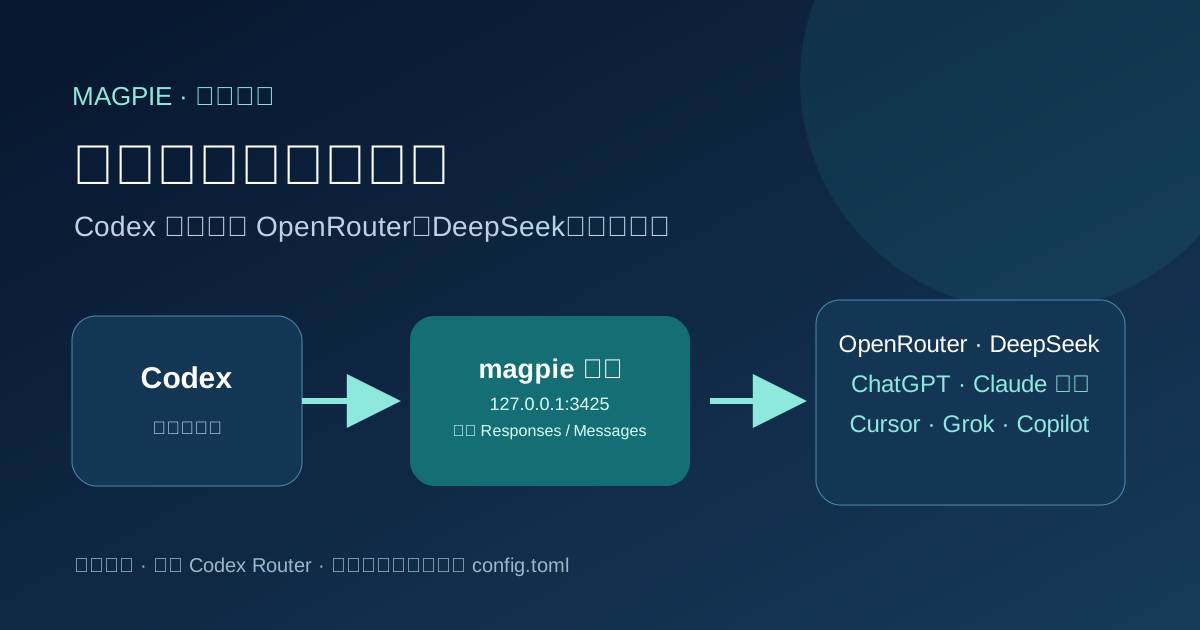
Codex on any model: magpie makes Codex Router unnecessary
magpie is a free, open-source menu bar app that runs a local gateway and puts OpenRouter, DeepSeek and your ChatGPT, Claude, Cursor, Grok and Copilot subscriptions right into Codex's own model picker, with one click and no Codex Router.
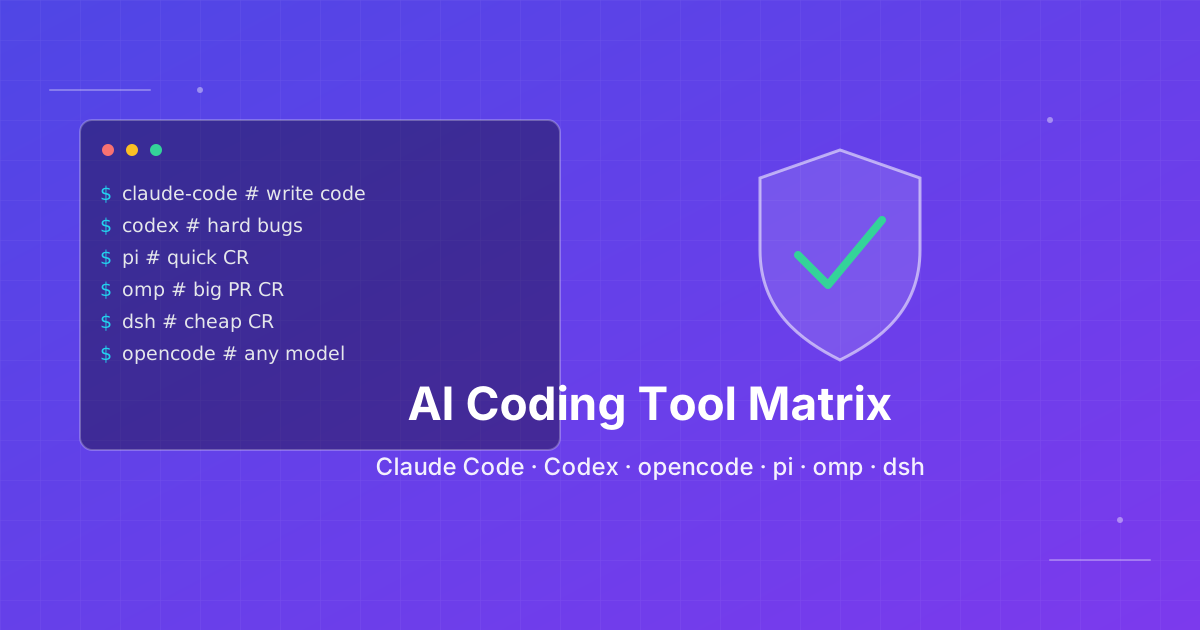
Seven AI Coding CLIs, Six Months: No Matter How Strong the Model, Work Needs Supervision
Claude Code, Codex, opencode, pi, omp and DeepSeek Harness all have personalities. After six months of deep use I run a division of labor: pi for the fastest cheapest reviews, omp for complex PRs, DeepSeek Harness on V4 Flash for high-frequency low-cost review, and Claude Code, Qoder and Cursor for writing. No matter how strong the model, work needs supervision — ideally from an independent third party.

Anthropic Subagent: The Multi-Agent Architecture Revolution
Deep dive into Anthropic multi-agent architecture design. Learn how Subagents break through context window limitations, achieve 90% performance improvements, and real-world applications in Claude Code.