
Muse Spark 1.2 is Meta's coding-focused flagship model, released August 5, 2026 alongside Muse Code, a beta terminal coding agent. It significantly scales training compute on coding tasks and expands training environment diversity, improving code generation, complex debugging, codebase understanding, and end-to-end developer workflows. With a 1M context window, higher first-attempt accuracy, and more reliable tool calling, it is available today in Muse Code and through the Meta Model API with expanded global access.
Core Features
- Coding-focused training: Significantly scaled compute on coding tasks with broader environment diversity for code generation, debugging, and codebase understanding.
- 1M context: Long-running tasks run start to finish in one session without context splitting.
- Higher first-attempt accuracy: Optimized for real coding workflows with fewer failed attempts.
- Reliable tool calling: Built for agentic use with consistent function and tool invocation.
- Co-trained with Muse Code: Trained alongside the terminal agent using rejection-sampled harness trajectories, goals, compaction, and subagents for best harness compatibility.
- Dual tiers:
muse-spark-1.2-contributor(used to improve Meta products) andmuse-spark-1.2(not used for product improvement).
Model Specifications
| Specification | Muse Spark 1.2 |
|---|---|
| Focus | Coding, debugging, codebase understanding, developer workflows |
| Context | 1M tokens |
| Access | Muse Code (beta), Meta Model API |
| Tiers | Contributor and non-contributor |
| Open weights | Announced for coming weeks (per Meta) |
Use Cases
- Terminal coding agents: Muse Code uses Muse Spark 1.2 to build, debug, and ship code with multiple coordinating agents.
- Complex debugging: End-to-end developer workflows on large codebases.
- General agents: Maintains strength in general agent tasks alongside coding.
- Autonomous GitHub bots: Build GitHub agents on the Meta Model API with Muse Spark and OpenCode.
Advantages
- Meta frontier coding: The model behind Muse Code, Meta's first terminal coding agent, benchmarked close to Claude Opus 5.
- 1M context: Whole-repo, start-to-finish sessions in one call.
- Harness-native: Co-trained with Muse Code's toolset for the best agent experience.
Tips
- Pair with Muse Code for the intended harness integration; the model was co-trained with it.
- Choose the non-contributor tier if you do not want your prompts used to improve Meta products.
- Use the 1M context for whole-repo tasks to avoid manual context splitting.
Conclusion
Muse Spark 1.2 is Meta's answer to the coding-agent frontier: a 1M-context, coding-focused model co-trained with its own terminal agent. If you want Meta's frontier coding capability through a first-party harness or API, it is the flagship choice.
Related: Claude 3.5 Sonnet and Claude 3 Haiku. Hub: models.
Comments
No comments yet. Be the first to comment!
Related Tools


Related Insights
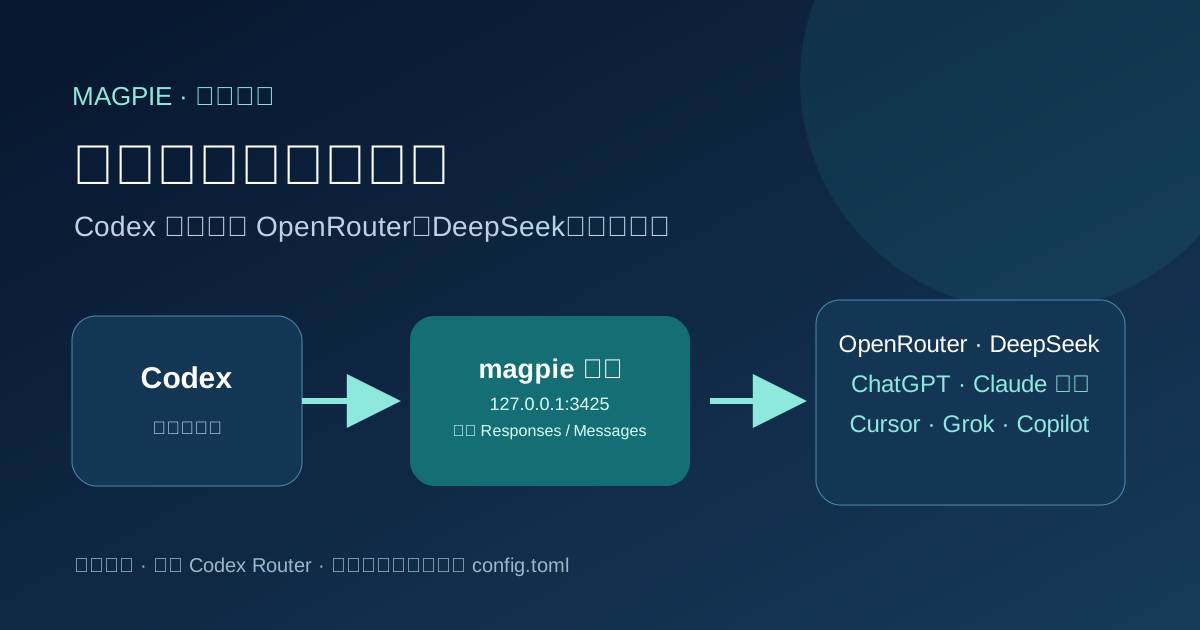
Codex on any model: magpie makes Codex Router unnecessary
magpie is a free, open-source menu bar app that runs a local gateway and puts OpenRouter, DeepSeek and your ChatGPT, Claude, Cursor, Grok and Copilot subscriptions right into Codex's own model picker, with one click and no Codex Router.
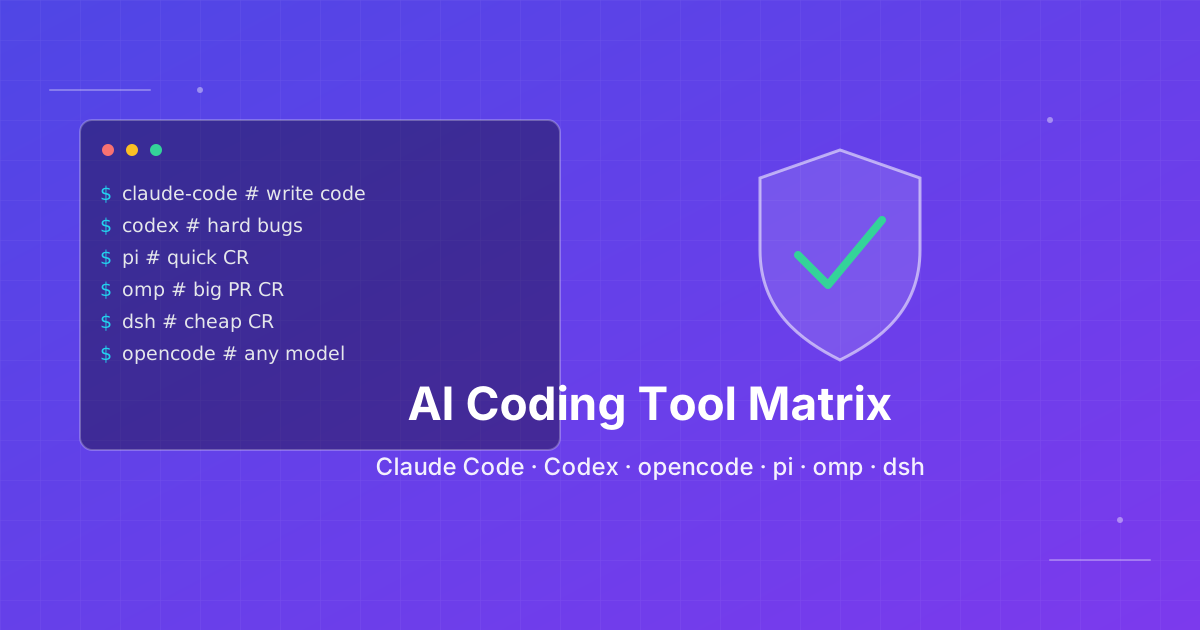
Seven AI Coding CLIs, Six Months: No Matter How Strong the Model, Work Needs Supervision
Claude Code, Codex, opencode, pi, omp and DeepSeek Harness all have personalities. After six months of deep use I run a division of labor: pi for the fastest cheapest reviews, omp for complex PRs, DeepSeek Harness on V4 Flash for high-frequency low-cost review, and Claude Code, Qoder and Cursor for writing. No matter how strong the model, work needs supervision — ideally from an independent third party.

Anthropic Subagent: The Multi-Agent Architecture Revolution
Deep dive into Anthropic multi-agent architecture design. Learn how Subagents break through context window limitations, achieve 90% performance improvements, and real-world applications in Claude Code.