

GLM-5.3
GLM-5.3 is Zhipu's current coding flagship. It is text-only, 1M-token context, 128K max output, and reasoning always on (low / high / max; default max). thinking.type: disabled fails. docs.z.ai/guides/overview/pricing.md still prices GLM-5.2 at $1.4 / $0.26 cached / $4.4 per 1M tokens. There is no GLM-5.3 token row. Coding Plan seats on the last first-party check of z.ai/subscribe are Lite $10 / Pro $30 / Max $60 per month, not a single $18 starter. Do not keep the vendor +50% / Terminal Bench 28.3 / "open in two weeks" numbers unless you re-open a first-party scorecard that still prints them.
Compare GLM-5.2 if you needed a live token price today, GLM Coding Plan for the seat table, and Claude Code if you wanted Anthropic's own agent.
Key Features
- Coding Plan first: Docs send you to Individual / Team Coding Plan, with off-peak and weekend calls at 50% points.
- Always-on reasoning: Migrate off
thinking.type: disabledbefore you switch the model ID toglm-5.3. - 1M / 128K: Context and max output from the model page. Confirm before you promise a bigger window.
- API later: OpenAI chat, Responses, and Anthropic message base URLs are listed. Availability is "soon," not a live $1.40 meter.
Use Cases
- People already on Lite $10 or Pro $30 who want the newest GLM coding checkpoint in Claude Code / Cline.
- Teams that need a public token price today: stay on GLM-5.2's $1.4 / $4.4 row.
- Self-host shoppers: weights were "planned" at launch. Do not treat MIT weights as shipped until a repo exists.
Limitation: Internal +50%, Claude Fable 5 comparisons, CyberGym 84.5%, and "MIT in two weeks" are vendor launch claims. We did not re-measure them.
Pricing
Coding Plan from z.ai/subscribe (same table as the GLM Coding Plan refresh). Token table from pricing.md.
| Path | Price | Notes |
|---|---|---|
| Coding Plan Lite / Pro / Max | $10 / $30 / $60 per month | GLM-5.3 is on the plan. Yearly $8 / $24 / $48. |
| GLM-5.3 token API | Not listed | Docs: available soon. |
| GLM-5.2 token API (sibling) | $1.4 in / $0.26 cache / $4.4 out per 1M | Live row if you need a dollar meter today. |
If a leftover blog still says Coding Plan starts around $18 or copies GLM-5.2's $1.40 onto 5.3, treat these two pages as the source.
Getting Started
- Open docs.z.ai/guides/llm/glm-5.3 and read the always-on reasoning note.
- Buy a seat at z.ai/subscribe only after you know Lite $10 vs Pro $30.
- Point your coding agent at the Coding Plan base URL, not a guessed token price.
- Confirm GLM-5.2 if you needed pay-as-you-go today.
Frequently Asked Questions
Is GLM-5.3 $1.40 / $4.40?
Not on the public token table. That row is still GLM-5.2.
Is it open source today?
Do not mark it MIT-available.
Same as Coding Plan?
Coding Plan is the seat. GLM-5.3 is the model currently attached to that seat.
Alternatives
- GLM-5.2: Live token price.
- GLM Coding Plan: Lite $10 / Pro $30 / Max $60.
- Claude Code: Anthropic's first-party agent.
Tips
- Quote Coding Plan $10 / $30 / $60, not $18.
- Do not paste Terminal Bench 28.3 into a deck without a live scorecard.
- Confirm the API banner before you write a 5.3 token integration.
Conclusion
GLM-5.3 is a Coding Plan model with no public token row yet, not an $18 unlimited or a copied $1.40 API. Start at the model page, then decide whether GLM-5.2 already covers the meter you need.
Comments
No comments yet. Be the first to comment!
Related Tools


Related Insights
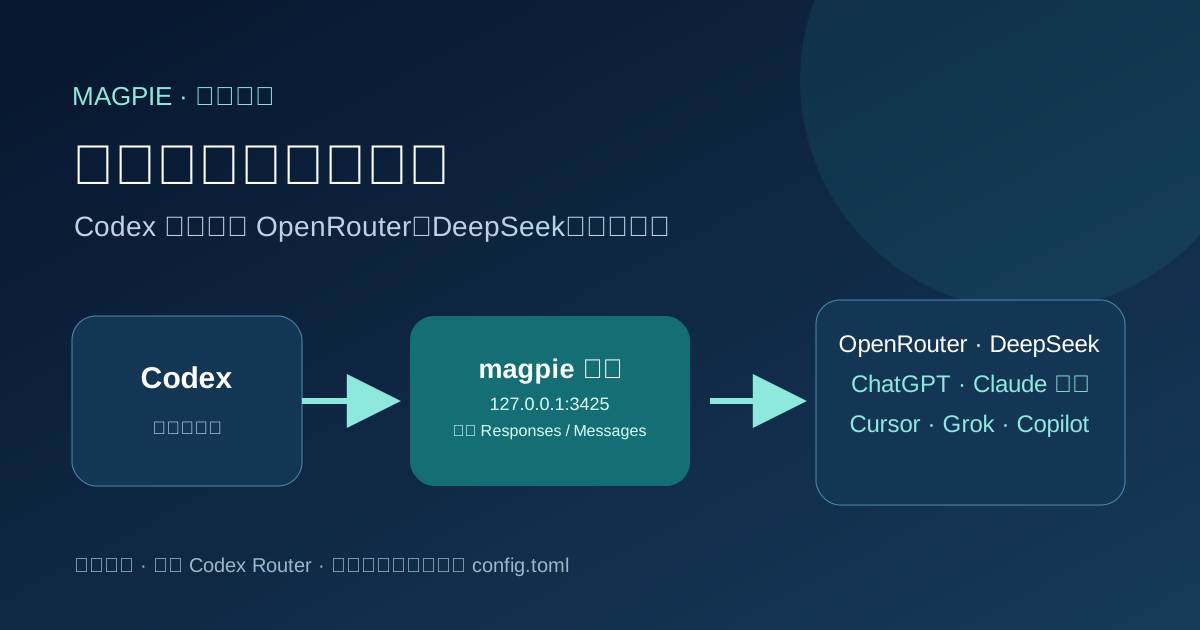
Codex on any model: magpie makes Codex Router unnecessary
magpie is a free, open-source menu bar app that runs a local gateway and puts OpenRouter, DeepSeek and your ChatGPT, Claude, Cursor, Grok and Copilot subscriptions right into Codex's own model picker, with one click and no Codex Router.
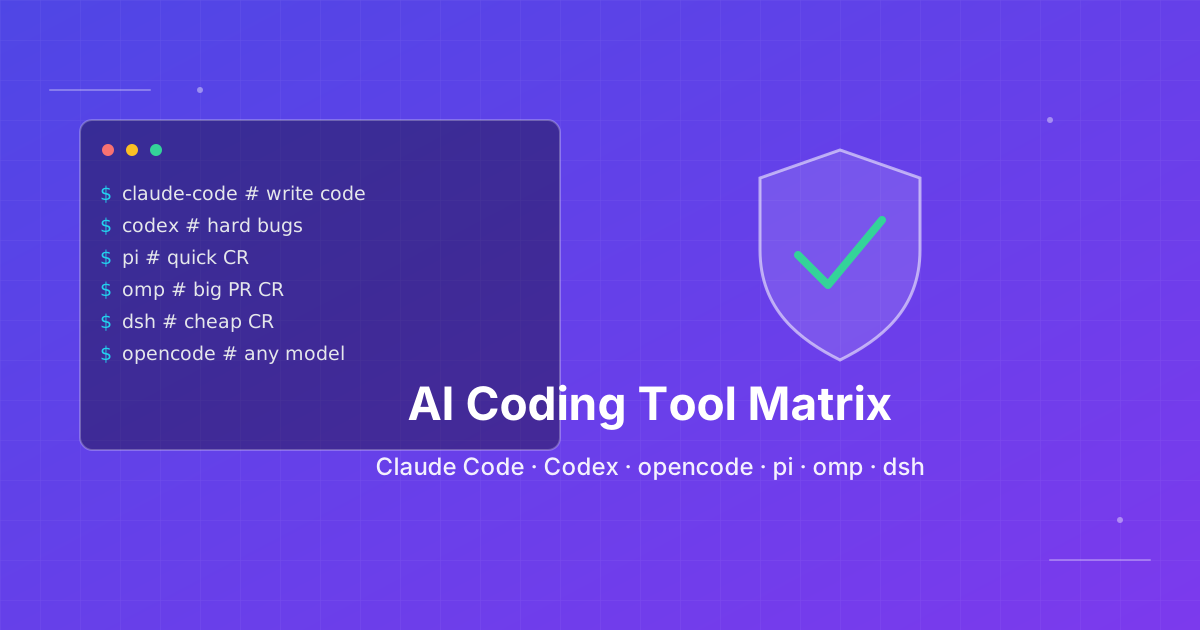
Seven AI Coding CLIs Compared: Tasks, Costs, and Independent Review
Compare Claude Code, Codex CLI, OpenCode, Pi, omp, DeepSeek Harness, and Grok Build with a repeatable task checklist and practical review workflow.

Anthropic Subagent: The Multi-Agent Architecture Revolution
Deep dive into Anthropic multi-agent architecture design. Learn how Subagents break through context window limitations, achieve 90% performance improvements, and real-world applications in Claude Code.