

AI Health Analyzer
AI Health Analyzer is a comprehensive health analysis system powered by artificial intelligence technology from the Claude-Ally-Health project. It provides intelligent health insights, risk prediction, and personalized recommendations by integrating multi-dimensional health data.
Key Features
1. Intelligent Health Analysis
- Multi-dimensional Data Integration: Integrates 4 types of data sources including basic metrics, lifestyle, mental health, and medical history
- Abnormal Pattern Recognition: Detects anomalies and change points using CUSUM, Z-score, and other algorithms
- Correlation Analysis: Calculates correlations between different health indicators (Pearson, Spearman)
- Trend Prediction: Performs trend analysis and prediction based on historical data
2. Health Risk Prediction
- Hypertension Risk: Based on Framingham Risk Score model
- Diabetes Risk: Based on ADA Diabetes Risk Assessment standards
- Cardiovascular Disease Risk: Based on ACC/AHA ASCVD guidelines
- Nutritional Deficiency Risk: Based on RDA achievement rate and dietary pattern analysis
- Sleep Disorder Risk: Based on PSQI and sleep pattern analysis
3. Personalized Recommendation Engine
- Basic Personalization: Based on static profile data like age, gender, BMI, activity level
- Recommendation Levels: Level 1 (General), Level 2 (Reference), Level 3 (Medical advice)
- Evidence-Based: Based on medical guidelines and evidence-based medicine
- Actionability: Provides specific, feasible improvement suggestions
4. Natural Language Interaction
- Intelligent Q&A: Supports health data queries, trend analysis, correlation queries
- Context Understanding: Maintains conversation history, supports multi-turn dialogue
- Intent Recognition: Identifies user query intent, provides precise responses
5. AI Health Report Generation
- Comprehensive Report: Includes all dimensional health data, AI insights, risk assessment
- Quick Summary: Key metrics overview, abnormal alerts, main recommendations
- Risk Assessment Report: Various disease risks, risk factor analysis, prevention measures
- Trend Analysis Report: Multi-dimensional trends, change point identification, predictive analysis
- HTML Interactive Report: ECharts charts with Tailwind CSS styling
Use Cases
Who Should Use This Skill?
- Health-Conscious Individuals: People who want comprehensive health monitoring and analysis
- Chronic Disease Patients: Individuals managing conditions like hypertension or diabetes
- Fitness Enthusiasts: Those tracking workout performance and health metrics
- Healthcare Professionals: Doctors and health coaches analyzing patient data
- Wellness Coaches: Professionals providing personalized health recommendations
Problems It Solves
- Data Fragmentation: Consolidates health data from multiple sources into unified insights
- Risk Unawareness: Predicts potential health risks before they become serious
- Generic Advice: Provides personalized recommendations based on individual data patterns
- Complex Analysis: Automates sophisticated health analysis that would otherwise require medical expertise
Technical Implementation
This Skill uses advanced AI algorithms and medical standards:
- Statistical Analysis: CUSUM, Z-score, Pearson correlation, Spearman correlation
- Risk Models: Framingham, ADA, ACC/AHA ASCVD guidelines
- Data Processing: Time series analysis, anomaly detection, trend prediction
- Visualization: ECharts for interactive charts, Tailwind CSS for styling
- Storage: File-based JSON data storage for complete privacy
Getting Started
Prerequisites
- Claude Code or Claude.ai with Skills support
- Health data in JSON format (see Claude-Ally-Health data structure)
- Basic health profile information
Quick Start Guide
- Install the Skill: Add ai-analyzer skill to your
.claude/skillsdirectory - Prepare Data: Organize health data in the required JSON format
- Configure AI Settings: Set up data sources in
data/ai-config.json - Run Analysis: Ask Claude to analyze your health data
- Review Reports: Generate comprehensive or focused health reports
Example Queries
- "AI analyze my health status"
- "What are my health risks?"
- "Generate AI health report"
- "Predict my hypertension risk"
- "How is my sleep quality?"
- "What can I do to improve my health?"
Advantages & Unique Selling Points
Compared to General Health Apps:
- AI-Powered Insights: Uses advanced AI algorithms for deeper analysis than simple tracking apps
- Evidence-Based: Recommendations based on established medical guidelines (Framingham, ADA, ACC/AHA)
- Privacy-First: File-based storage keeps all health data completely private and local
- Comprehensive Analysis: Analyzes correlations across multiple health dimensions simultaneously
- Customizable: Open-source skill that can be adapted to specific health needs
What Makes It Stand Out:
- Integration with Claude Code for natural language health consultations
- Multi-level recommendation system (general, reference, medical)
- Interactive HTML reports with professional visualizations
- Support for multiple health data sources and formats
- Complete conversation history for contextual health discussions
Integration
Works seamlessly with:
- Claude-Ally-Health System: Full integration with the personal health information system
- Fitness Trackers: Can process data from various fitness tracking devices
- Sleep Monitors: Analyzes sleep data for sleep disorder risk assessment
- Nutrition Apps: Integrates dietary data for nutritional analysis
- Medical Records: Processes lab results and medical imaging reports
Frequently Asked Questions
Is my health data secure?
Yes, all data is stored locally in JSON files. No data is sent to external servers except when using Claude for analysis, which follows Anthropic's privacy policies.
What medical standards does it use?
The skill uses established medical guidelines including Framingham Risk Score, ADA Diabetes Risk Assessment, and ACC/AHA ASCVD guidelines.
Can it replace my doctor?
No. This skill provides informational analysis and Level 3 recommendations always include disclaimers to consult healthcare professionals. It's a supplementary tool, not a replacement for medical advice.
What data sources does it support?
It supports basic health metrics, fitness data, sleep data, nutrition data, mental health data, medications, and medical history.
How accurate are the risk predictions?
Risk predictions use validated medical models but are estimates based on available data. Accuracy depends on data quality and completeness. Always consult healthcare professionals for medical decisions.
Related Skills
If you're interested in AI Health Analyzer, you might also find these Claude-Ally-Health skills useful:
- Emergency Card: Generate emergency medical information cards
- Fitness Analyzer: Detailed workout and fitness progress analysis
- Nutrition Analyzer: Comprehensive nutritional analysis and meal planning
- Sleep Analyzer: In-depth sleep quality analysis and improvement recommendations
- Mental Health Analyzer: Mental health tracking and wellness insights
Tips & Best Practices
- Regular Updates: Update health data regularly for more accurate trend analysis
- Complete Profile: Ensure your health profile is comprehensive for better personalization
- Multiple Data Sources: Integrate data from various sources for holistic insights
- Review Trends: Focus on long-term trends rather than day-to-day fluctuations
- Act on Recommendations: Implement Level 1 and Level 2 recommendations, consult doctors for Level 3
- Track Changes: Monitor how lifestyle changes affect your health metrics over time
Conclusion
AI Health Analyzer is a powerful skill for anyone serious about understanding and improving their health. By combining AI technology with established medical guidelines, it provides comprehensive, personalized health insights that go far beyond simple tracking. While it's not a replacement for professional medical care, it's an invaluable tool for proactive health management and informed health discussions.
Related: Clinical Decision Support Skill and Clinical Reports Skill. Hub: skills.
Comments
No comments yet. Be the first to comment!
Related Tools


Related Insights

Anthropic Subagent: The Multi-Agent Architecture Revolution
Deep dive into Anthropic multi-agent architecture design. Learn how Subagents break through context window limitations, achieve 90% performance improvements, and real-world applications in Claude Code.
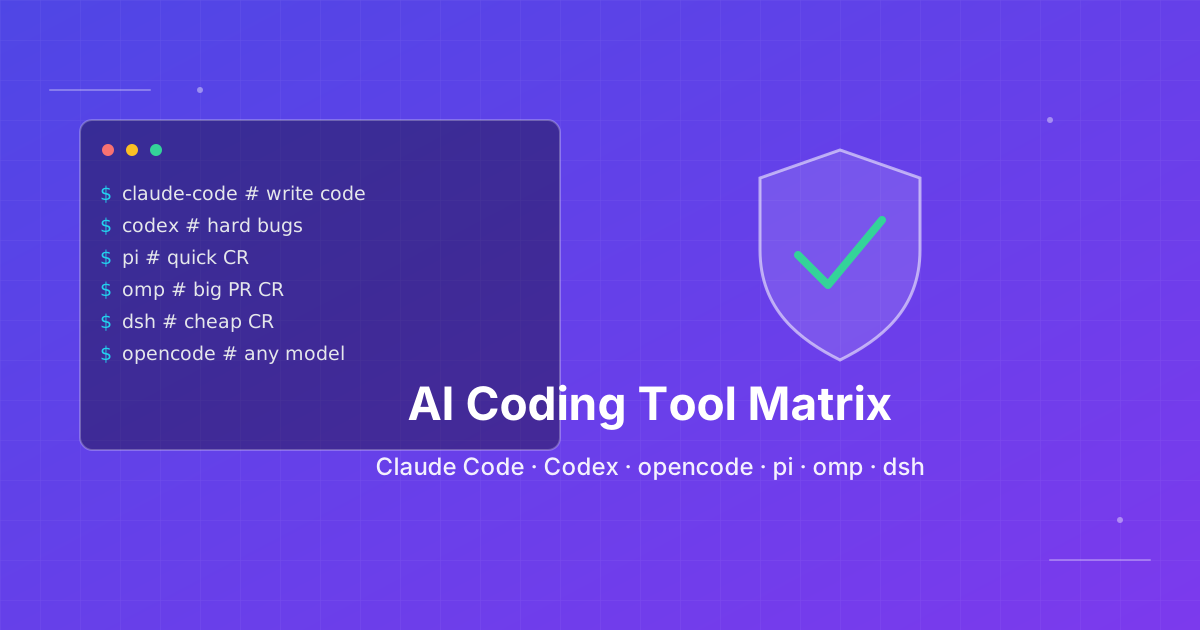
How to pick an AI coding CLI for your repo
Match Claude Code, Codex CLI, OpenCode, Pi, omp, DeepSeek Harness, and Grok Build to the work you actually run. Docs rechecked 2026-10-06.

Skills + Hooks + Plugins: How Anthropic Redefined AI Coding Tool Extensibility
An in-depth analysis of Claude Code's trinity architecture of Skills, Hooks, and Plugins. Explore why this design is more advanced than GitHub Copilot and Cursor, and how it redefines AI coding tool extensibility through open standards.