

Reasonix is a DeepSeek-native AI coding agent for the terminal, engineered around prefix-cache stability so you can leave it running. It is a config- and plugin-driven harness shipped as a single static Go binary — no Node, no Python, no runtime to install — tuned so that long sessions stay cheap on DeepSeek's token pricing.
Key Features
- Single Go Binary: CGO-free static binary, cross-compiled for darwin/linux/windows × amd64/arm64. The only dependency is a TOML parser.
- Prefix-Cache Tuned: Stable environment summary at startup, stale tool output pruned before compaction, and append-only prompt structure keep the KV-cache hit rate high — long autonomous runs stay affordable.
- Config-Driven: Providers, agents, tools, and plugins are all declared in
reasonix.toml. No hardcoded models; any OpenAI-compatible endpoint is a config entry. - Multi-Model & Composable: DeepSeek ships as a preset; optionally run two models together (executor + planner) in separate, cache-stable sessions.
- Plugin-Driven: MCP servers contribute tools, prompts, and resources; Extension Protocol v1 sidecars can intercept runtime events and ship versioned plugin packages.
- Full Tool Suite: readfile, writefile, editfile, movefile, bash, ls, glob, grep — with per-call permission policies (allow/ask/deny).
- Safety & Control: Plan mode (read-only), permissions, workspace sandbox, and per-turn checkpoints you can revert at any time.
- Four Entry Points: Terminal, desktop app, browser, or your editor over ACP (Agent Client Protocol). SSH remote sessions included.
Use Cases
Who Should Use This Tool?
- DeepSeek Power Users: Developers who want a coding agent tuned for DeepSeek's pricing model and 1M-token context.
- Terminal Purists: Anyone who wants a fast, zero-runtime coding agent without Electron bloat.
- Long-Running Automation: Teams that leave agents working on multi-hour tasks and need checkpoints and undo.
Problems It Solves
- Token cost on long sessions: Prefix-cache-aware context maintenance keeps repeat context cheap on DeepSeek.
- Runtime dependency hell: One static binary, six targets, nothing to install underneath.
- Unrecoverable agent runs: Per-turn checkpoints let you revert any turn and audit what the agent did.
Pricing
| Plan | Price | Features |
|---|---|---|
| Open Source | $0 | MIT-licensed; bring your own DeepSeek API key; pay only model usage. |
Advantages & Unique Selling Points
Compared to Competitors:
- DeepSeek-native economics: Purpose-built around prefix caching rather than treating DeepSeek as a generic OpenAI-compatible backend.
- Zero-friction distribution: A single static binary versus Node-based agents that need a runtime.
- Truly config-driven: No hardcoded models; every provider and tool is a TOML entry.
What Makes It Stand Out:
- 32,000+ GitHub stars and 3,000+ merged PRs with 98 contributors, developed in the open.
- Cache-stable multi-model collaboration (executor + planner).
- Plan mode, permissions, sandbox, and checkpoints make long autonomous runs readable and reversible.
Getting Started
Quick Start Guide
- Build:
git clone https://github.com/esengine/DeepSeek-Reasonix && cd DeepSeek-Reasonix && make build→bin/reasonix. - Configure: Set
DEEPSEEK_API_KEY; adjustreasonix.tomlfor providers and tools. - Run:
reasonixin your project directory (orreasonix -p "prompt"headless).
Integration
Integrates with:
- DeepSeek API (and any OpenAI-compatible endpoint)
- MCP servers for tools, prompts, and resources
- Zed and other editors via ACP
Frequently Asked Questions
Does it work with models other than DeepSeek?
Yes. DeepSeek ships as a preset, but any OpenAI-compatible endpoint is a config entry.
How does it keep costs low?
It maintains a stable prompt prefix and prunes stale tool output before compaction, maximizing DeepSeek's prefix-cache (KV-cache) hit rate.
Is it really a single binary?
Yes — CGO-free Go, cross-compiled for darwin/linux/windows × amd64/arm64. Nothing else needs installing.
Alternatives
If Reasonix isn't the right fit, consider these alternatives:
- Todos: Chief-agent orchestration workspace supporting DeepSeek and 700+ models.
- Grok Build: xAI's terminal coding agent powered by grok-4.5.
- CrewAI: Python role-based multi-agent framework.
Tips & Best Practices
- Keep sessions running: Reasonix is built to be left running; the prefix cache rewards long-lived sessions.
- Use plan mode for exploration: Read-only investigation keeps costs predictable before edits begin.
- Checkpoint before risky turns: Revert any turn with per-turn checkpoints if something goes wrong.
Comments
No comments yet. Be the first to comment!
Related Tools


Related Insights
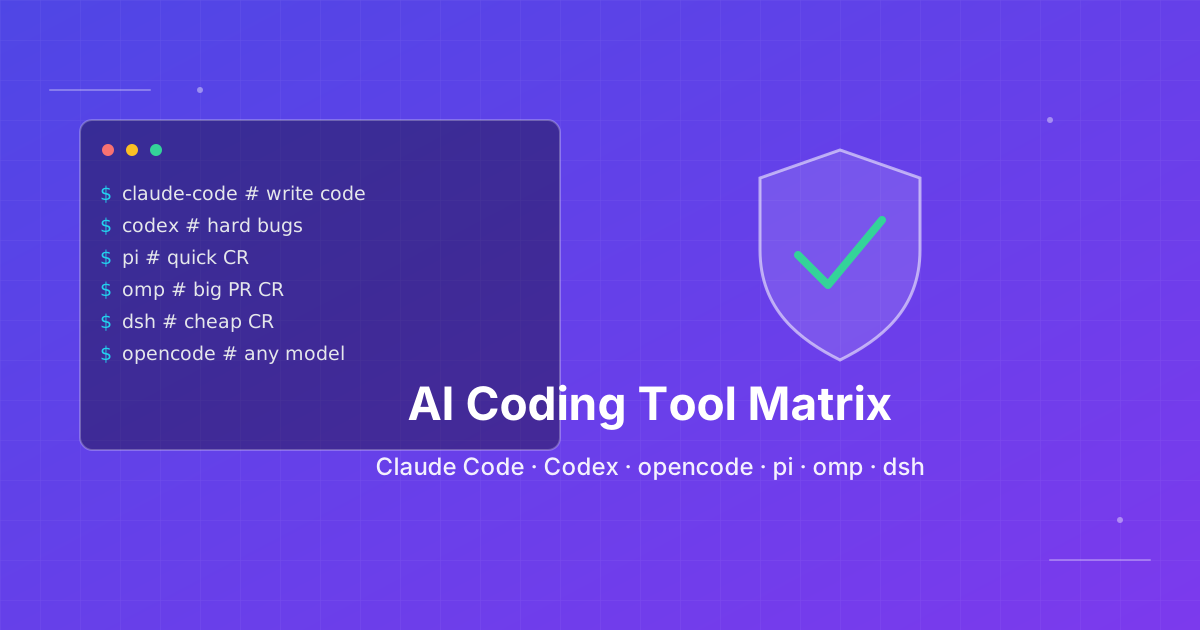
Seven AI Coding CLIs, Six Months: No Matter How Strong the Model, Work Needs Supervision
Claude Code, Codex, opencode, pi, omp and DeepSeek Harness all have personalities. After six months of deep use I run a division of labor: pi for the fastest cheapest reviews, omp for complex PRs, DeepSeek Harness on V4 Flash for high-frequency low-cost review, and Claude Code, Qoder and Cursor for writing. No matter how strong the model, work needs supervision — ideally from an independent third party.
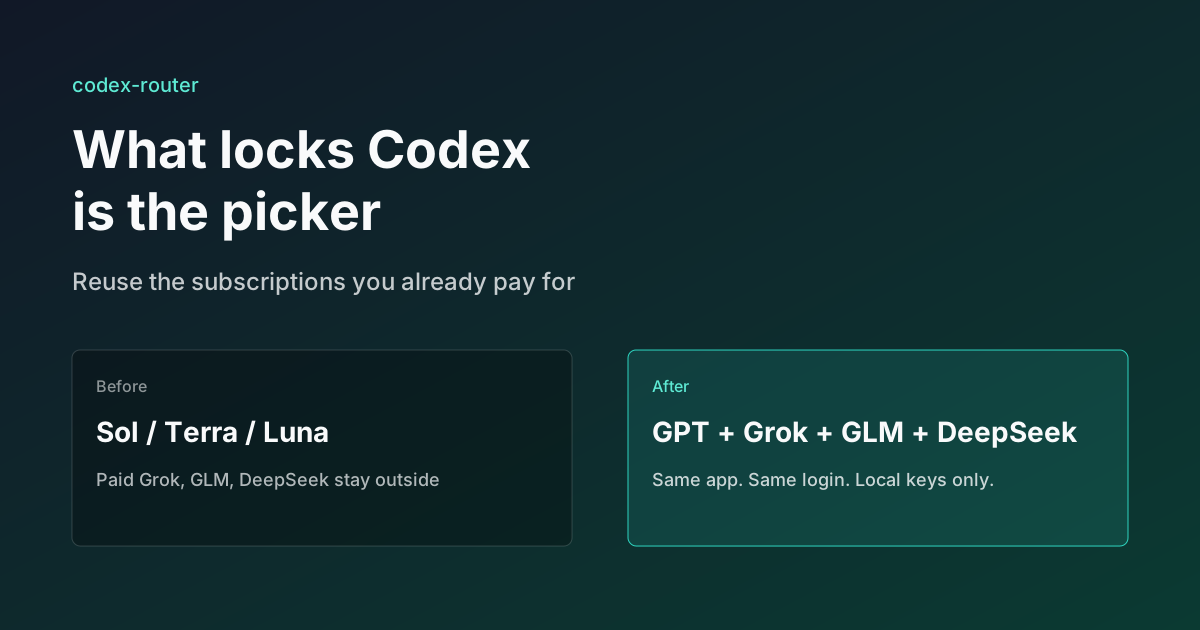
What Locks Codex Is the Picker, Not the Models
You already pay for OpenCode Go, Grok, and Z.ai, but the Codex picker still shows mostly GPT. The community project codex-router does not teach another install ritual. It puts subscriptions you already bought back into the selector, keeps keys on the machine, and leaves native GPT alone.
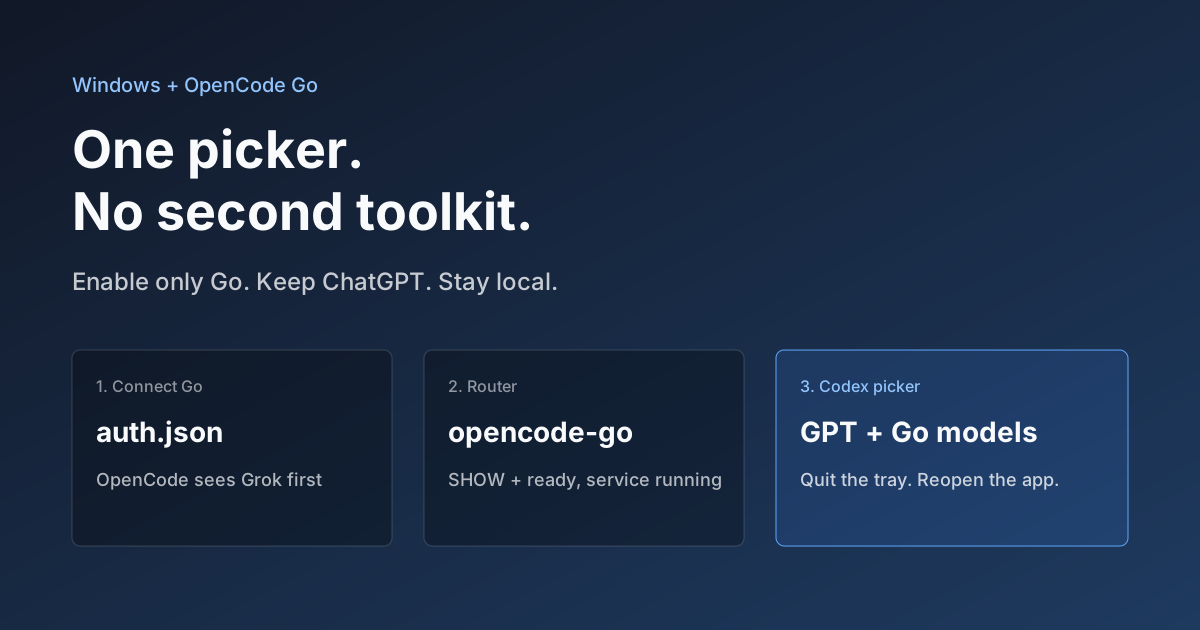
Hook OpenCode Go into Codex on Windows. Do Not Open a Second Toolkit.
A ChatGPT-signed Codex desktop app still shows mostly GPT in the picker. On Windows, enable only OpenCode Go and the Grok, GLM, Kimi, DeepSeek, and MiniMax models you already pay for appear in the same selector. Keys stay local. Native GPT stays put.