
AgentsView is a local-first analytics and session search tool for AI coding agents. It discovers the session files every agent CLI writes on your machine, syncs them into a local SQLite database, and serves a web UI that lets you browse, search, and track token costs across all of them. It is a single Go binary with no account, no hosted backend, and nothing that leaves your computer, which makes it a practical companion for anyone running more than one coding agent.
Key Features
- Universal session discovery: auto-detects sessions from Claude Code, Codex, Copilot CLI, Gemini CLI, OpenCode, OpenHands, Cursor, Pi, Kimi, OpenClaw, Hermes Agent, and more than 20 other harnesses.
- Full-text search: FTS5 index over every message, so you can find a past decision without remembering which agent you used.
- Token usage and cost dashboard: per-session and per-model cost breakdowns with daily spend charts, a fast local replacement for ccusage.
- Semantic and hybrid search: index message content with any OpenAI-compatible embedding endpoint and search by meaning, with citations back to the conversation unit.
- Analytics: activity heatmaps, tool usage, velocity metrics, and project breakdowns in the web UI.
- Fast reads: because session data is already indexed in SQLite, queries run over 100x faster than tools that re-parse raw session files each time.
- Live updates: SSE pushes as active sessions receive new messages, plus keyboard-first navigation.
Use Cases
Who Should Use This Tool?
- Multi-agent developers running Claude Code, Codex, and OpenCode side by side and losing track of where a decision happened.
- Cost-conscious teams who want to see token spend across every agent without piping each one into a separate tool.
- Reviewers and leads who need to answer "why is this code shaped this way" weeks later from a searchable thread.
- Anyone replacing ccusage who wants a rich web UI plus cost tracking in one binary.
Problems It Solves
- Session fragmentation: every agent stores transcripts in its own directory; AgentsView unifies them.
- Cost blindness: you get one dashboard instead of per-venue scraping.
- Cold-start context loss: full-text and semantic search let you recover a prior thread without restarting the work.
Pricing
| Plan | Price | Features |
|---|---|---|
| Open source | Free | Everything: session browser, search, cost dashboard, analytics |
| Desktop app | Free (release) | macOS / Windows builds via GitHub Releases or Homebrew cask |
There is no paid tier. The whole product is MIT-licensed and local-first, so the only cost is your own hardware to index the sessions.
Advantages & Unique Selling Points
- One binary, no accounts: it never phones home, so it works in air-gapped and compliance-heavy environments where hosted CCUs are not an option.
- More than cost: it pairs token tracking with search and analytics that most cost tools do not offer.
- Broad harness coverage: support continues to grow with each agent that gains session files.
Getting Started
- Install:
brew install --cask agentsview, grab a release archive, or rungo install github.com/kenn-io/agentsview@latest. - Serve: run
agentsview serveto index discovered sessions and open the web UI athttp://127.0.0.1:8080. - Daily cost check: run
agentsview usage dailyto print a per-day spend summary from the terminal.
Frequently Asked Questions
Does it store anything remotely?
No. Everything is a local SQLite database and local web server. Only the optional semantic-search call to your own embedding endpoint leaves the machine.
Can it replace ccusage?
For per-session and per-model cost breakdowns across all agents, yes, and it is faster because it reads from the index rather than re-parsing session files.
How many agents does it support?
More than 20, including Claude Code, Codex, Copilot CLI, Gemini CLI, OpenCode, OpenHands, Cursor, Pi, Kimi, OpenClaw, Hermes Agent, and more.
Alternatives
Comments
No comments yet. Be the first to comment!
Related Tools


Related Insights

Skills + Hooks + Plugins: How Anthropic Redefined AI Coding Tool Extensibility
An in-depth analysis of Claude Code's trinity architecture of Skills, Hooks, and Plugins. Explore why this design is more advanced than GitHub Copilot and Cursor, and how it redefines AI coding tool extensibility through open standards.
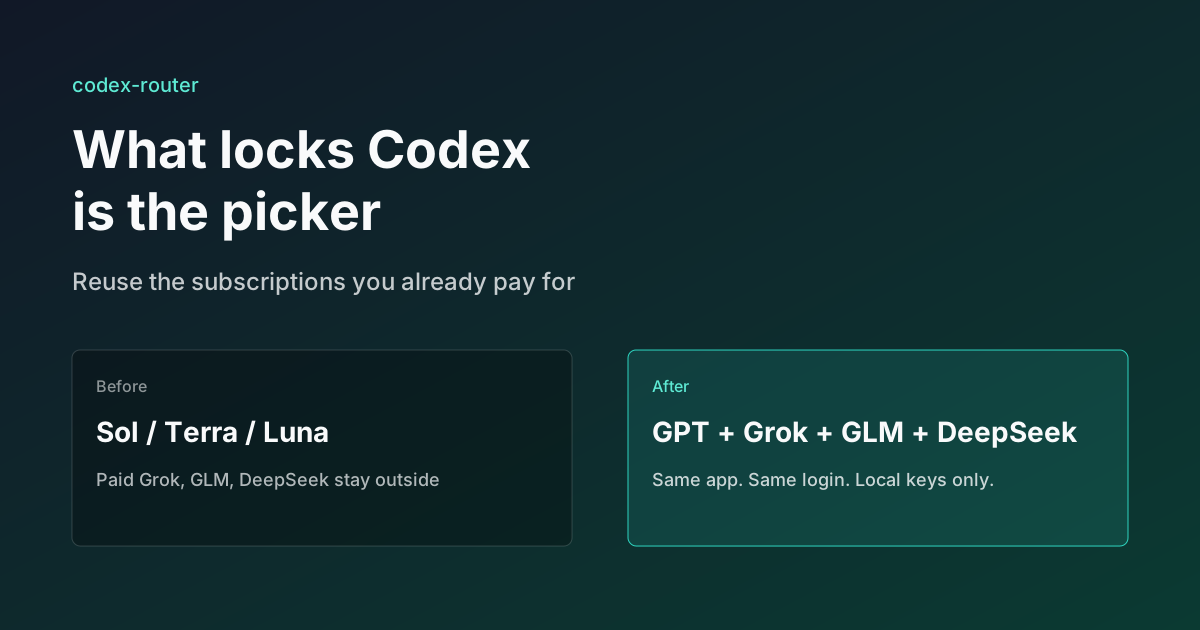
What Locks Codex Is the Picker, Not the Models
You already pay for OpenCode Go, Grok, and Z.ai, but the Codex picker still shows mostly GPT. The community project codex-router does not teach another install ritual. It puts subscriptions you already bought back into the selector, keeps keys on the machine, and leaves native GPT alone.
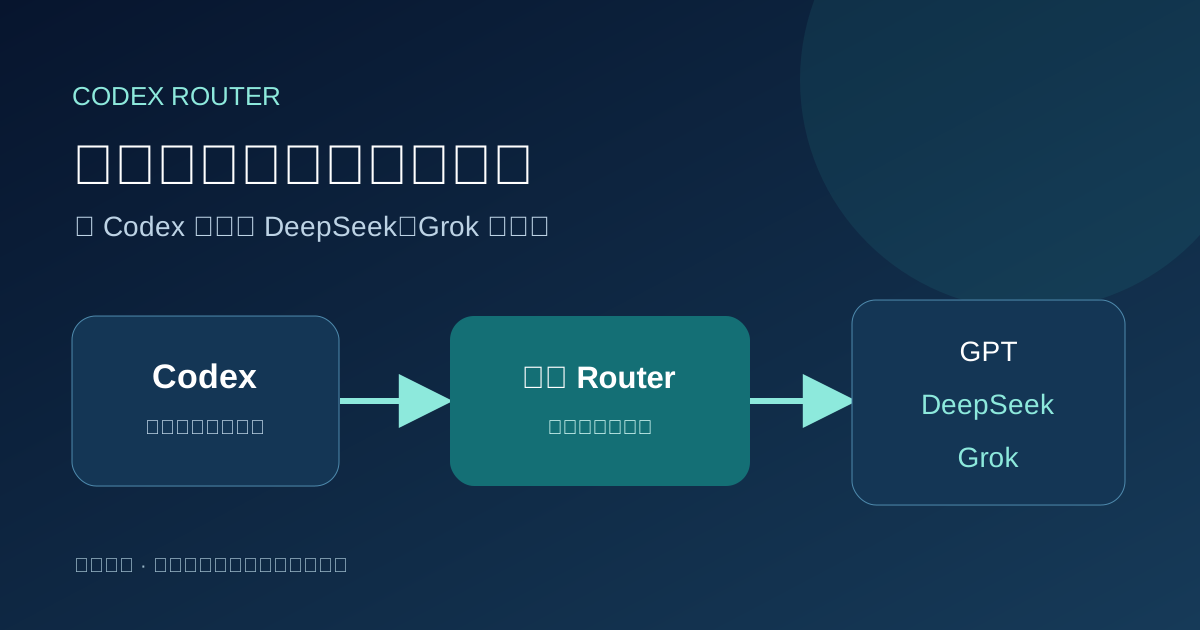
Running low on ChatGPT Codex quota? Switch to DeepSeek or Grok inside Codex
Codex Router lets you keep your Codex workspace while using DeepSeek, Grok, and other external models. A plain-English guide to routing, quotas, and network access.