

AI Data Extractor is a local toolkit that reads your own coding-agent chat stores and writes a normalized JSONL dump. The repo kruzovic7/ai-data-extractor is Python, created 2026-09-11, MIT. On 2026-09-19 GitHub listed 840 stars and 135 forks. 840 stars is a heat signal, not traffic. It is not a hosted product and it does not call a model.
It sits next to ccusage, which scores token cost from local logs. This repo exports the conversations themselves. Hosts it knows how to read include Claude Code, Cursor, Codex CLI, OpenCode, Continue, and Aider.
Key Features
- Ten sources: Claude Code JSONL, Codex CLI rollouts, Cursor SQLite, Windsurf, Trae, Continue, Gemini CLI, OpenCode, Cline/Roo Code task folders, Aider markdown transcripts.
- No extra packages: Python 3.9+ standard library.
python extract.py --listpreviews installs.--all,--sources,--merge, and--search-pathdrive a run. - Normalized JSONL: one conversation per line under
extracted_data/. Reliable fields aremessages,source, andsession_id. Code context, diffs, tool calls, and project paths appear when the host stored them. - Read-only: SQLite opens
mode=ro. One corrupt file does not abort the rest. - OS search: macOS, Linux, and Windows app-data roots without you naming the OS.
Limitation: Cursor, Windsurf, and Trae do not publish a storage schema. The README treats those extractors as heuristics. Windsurf/Trae can find an app dir and still return 0 conversations when keys change. Close a locked editor if a read still fails. Aider has no central store; you must pass --search-path to project roots.
Use Cases
- Backup before an editor wipes
state.vscdbor session JSONL. - Personal analytics or fine-tuning on your own transcripts.
- Skip if you only needed cost charts. Use ccusage. Do not run this against someone else's machine.
Pricing
| Piece | Price | Notes from first-party pages 2026-09-19 |
|---|---|---|
| Toolkit | $0 | MIT. Python 3.9+. About 840 stars. |
| Training extras | Optional | README suggests detect-secrets before sharing dumps. Hugging Face datasets is an example, not a dependency. |
Getting Started
- Clone github.com/kruzovic7/ai-data-extractor.
python extract.py --listthenpython extract.py --all --merge.- Scan
extracted_data/*.jsonlfor secrets before you copy it anywhere. - Keep the dump off public git. The repo already gitignores
extracted_data/.
First-party start: the README.
Frequently Asked Questions
Does it upload chats?
No. It reads local files and writes local JSONL.
Why did Windsurf return zero rows?
The heuristic key match missed the current SQLite keys. --list confirms the folder. Inspect ItemTable keys and extend KEY_HINTS as the README describes.
Can I add another host?
Yes. Copy continue_ext.py, implement find_installations and extract, register it in extract.py.
Alternatives
- ccusage: local token and cost reports, not full transcripts.
- Claude Code: the usual JSONL source under
~/.claude/projects. - Cursor: Composer history in
state.vscdb.
Tips
- Run
--listbefore--allso you know which hosts it found. - Point Aider at real project trees with
--search-path. - Treat
code_contextandtool_useas secret-prone fields.
Conclusion
AI Data Extractor is a small, MIT, stdlib CLI for people who want their own agent transcripts in one JSONL pile. Clone it, list sources, extract, then scan for secrets. It does not replace cost dashboards, and heuristic hosts can go silent when a vendor changes keys.
Comments
No comments yet. Be the first to comment!
Related Tools


Related Insights

Skills + Hooks + Plugins: How Anthropic Redefined AI Coding Tool Extensibility
An in-depth analysis of Claude Code's trinity architecture of Skills, Hooks, and Plugins. Explore why this design is more advanced than GitHub Copilot and Cursor, and how it redefines AI coding tool extensibility through open standards.
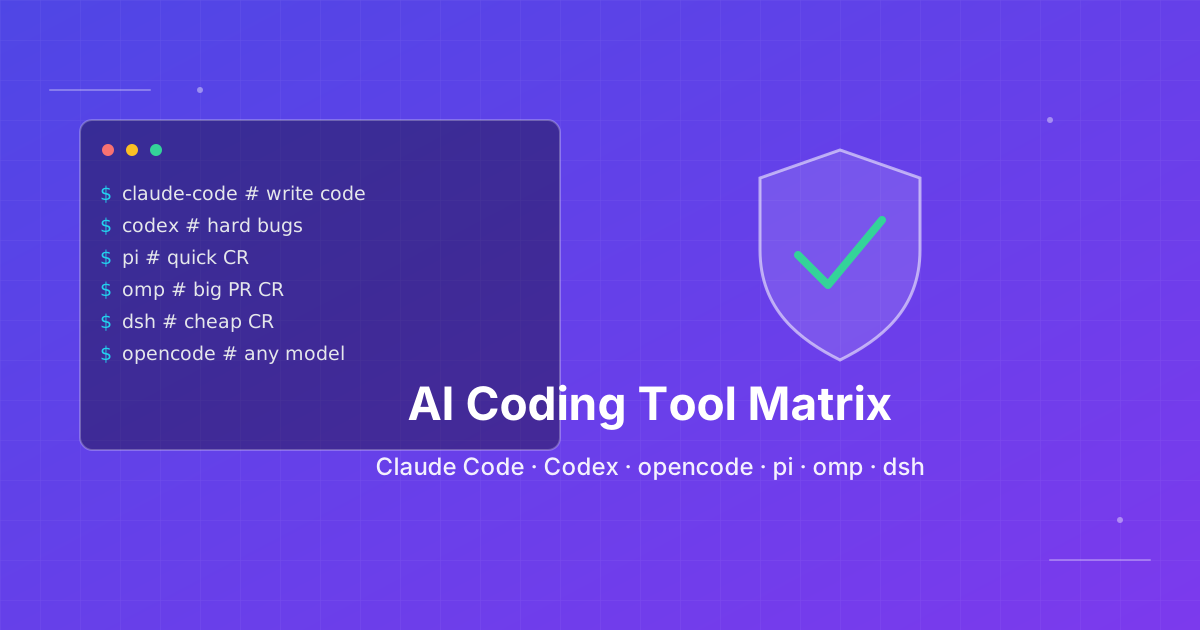
Seven AI Coding CLIs, Six Months: No Matter How Strong the Model, Work Needs Supervision
Claude Code, Codex, opencode, pi, omp and DeepSeek Harness all have personalities. After six months of deep use I run a division of labor: pi for the fastest cheapest reviews, omp for complex PRs, DeepSeek Harness on V4 Flash for high-frequency low-cost review, and Claude Code, Qoder and Cursor for writing. No matter how strong the model, work needs supervision — ideally from an independent third party.
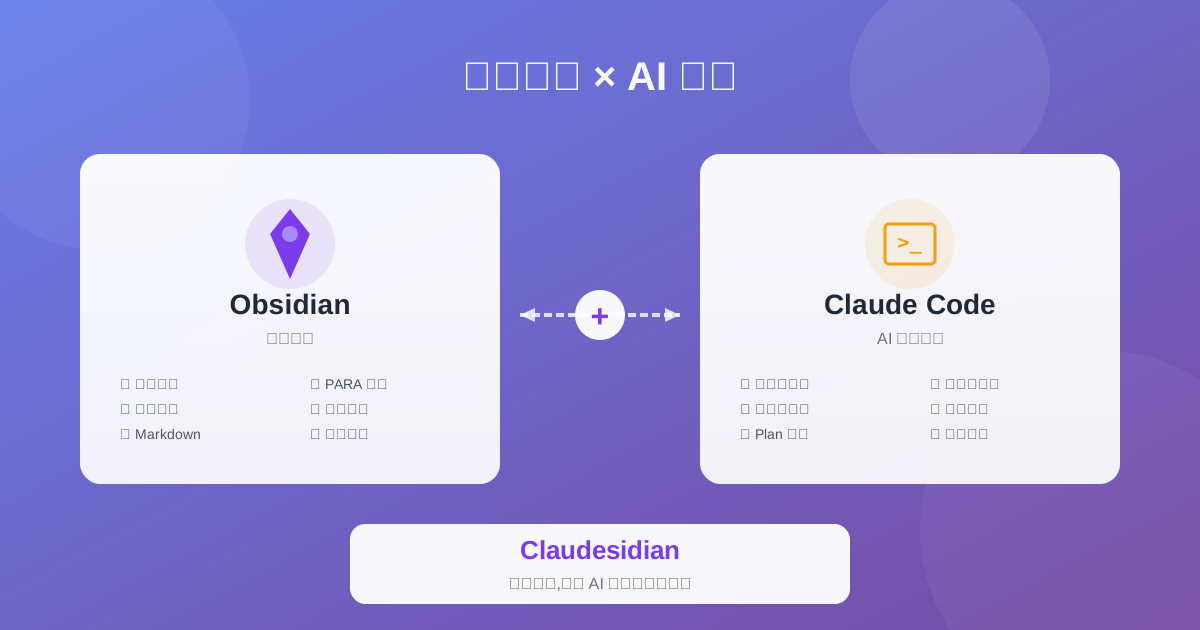
Claudesidian: Transform Obsidian into an AI-Powered Second Brain
Discover Claudesidian, an open-source project that perfectly integrates Obsidian with Claude Code. Built-in PARA method, custom commands, and automated workflows for a complete idea-to-implementation solution.