

sctxx (Session ConTeXt eXtractor) is a local CLI that turns a finished coding-agent session into a warm start for another agent. The repo handyutils/sctxx is Apache-2.0, created 2026-09-10, language Rust. On 2026-09-13 GitHub listed 18 stars and 13 forks. Latest release v0.3.0 on 2026-09-11. crates.io listed version 0.3.0 and 55 downloads the same day. Docs: handyutils.github.io/sctxx. It is not a hosted memory product.
Compare ccusage if you wanted cost reports from the same logs, Claude Code if you needed the host, or OpenCode if you wanted another agent CLI.
Key Features
- Three stores: Claude Code
~/.claude/projects/, Codex CLI~/.codex/sessions/(including.jsonl.zst), Pi~/.pi/agent/sessions/v1 to v3. - Deterministic first: branch resolution, file/command/error ledgers, masking, budgets, and rendering are Rust.
--llm nonewrites a complete artifact and calls no model. - Optional fold:
--llm auto(default),cli:claude/cli:codex/cli:pi, orapi:anthropic/api:openai/api:compat/<model>. README says use an API for a long session; a subscription CLI can time out. - Commands:
sctxx list,find,extract,expand,verify --strict,doctor,handoff last --to claude. - Skill wrapper:
sctxx skill installteaches agents when to call it.
Limitation: 18 stars and 55 crate downloads are early heat, not an audit. The 302 MB to 7.9 KB example is the author's M1 Max synthetic run, not your transcript. CLI backends on a 103,757-event session hit a 600 s timeout in the README; the API path finished in 1 m 37 s. Adding a provider means writing an adapter.
Use Cases
- Context-limit handoffs from Claude Code into Codex or Pi without pasting a 300 MB jsonl.
- People comparing agents who want a verified, provenance-linked artifact instead of a model-written paragraph.
- People who should use ccusage instead if they only needed token cost, not a continuation pack.
Pricing
| Piece | Price | Notes from first-party pages 2026-09-13 |
|---|---|---|
| CLI | $0 | Apache-2.0. crates.io 0.3.0. About 18 stars. |
--llm none | $0 extra | No network. |
| API fold | Your key | Anthropic, OpenAI, or any OpenAI-compatible base URL. |
Getting Started
npm i -g sctxxorcargo install sctxx.sctxx doctorthensctxx skill install.sctxx extract claude:last --out .sctxx/orsctxx extract claude:last --llm none.- Inside the next agent: "use sctxx to extract session 7c1e8f82 from claude code and continue here."
First-party resource: README and docs.
Frequently Asked Questions
Does extract need a model?
No. --llm none is complete. A model is only for semantic judgment.
Can I paste the transcript instead?
That is the problem it claims to avoid. A 302 MB file is neither possible nor useful to paste.
Does it upload logs?
The advertised path reads local stores. Confirm api:* destinations before you fold a private session.
Alternatives
- ccusage: usage and cost from local logs, not a handoff.
- Claude Code: the session store sctxx reads.
- OpenCode: another coding-agent CLI if you wanted to continue there by hand.
Tips
- Run
sctxx extract --dry-runbefore spending an API fold. - Prefer
api:compat/<model>for long sessions. The README timed outcli:codexat 600 s. sctxx verify .sctxx/ --strictbefore you trust a handoff in a new repo.
Conclusion
sctxx is a same-week CLI for moving a coding-agent session across tools without pasting the jsonl. Start at the repo, install, then decide whether --llm none was already enough.
Comments
No comments yet. Be the first to comment!
Related Tools


Related Insights
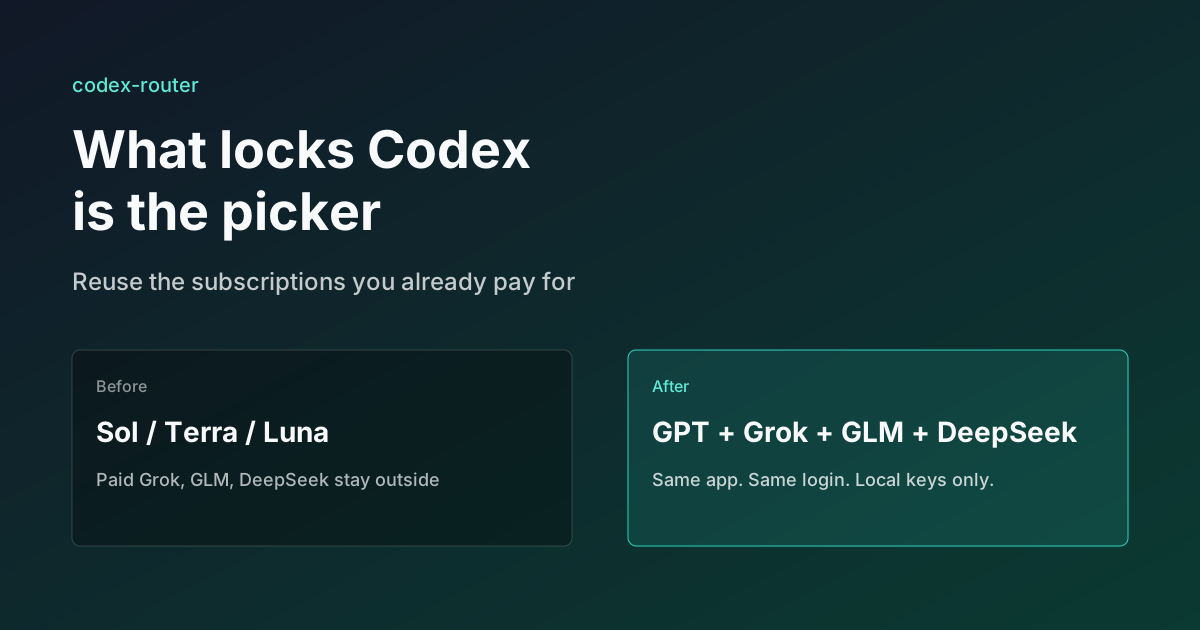
What Locks Codex Is the Picker, Not the Models
You already pay for OpenCode Go, Grok, and Z.ai, but the Codex picker still shows mostly GPT. The community project codex-router does not teach another install ritual. It puts subscriptions you already bought back into the selector, keeps keys on the machine, and leaves native GPT alone.
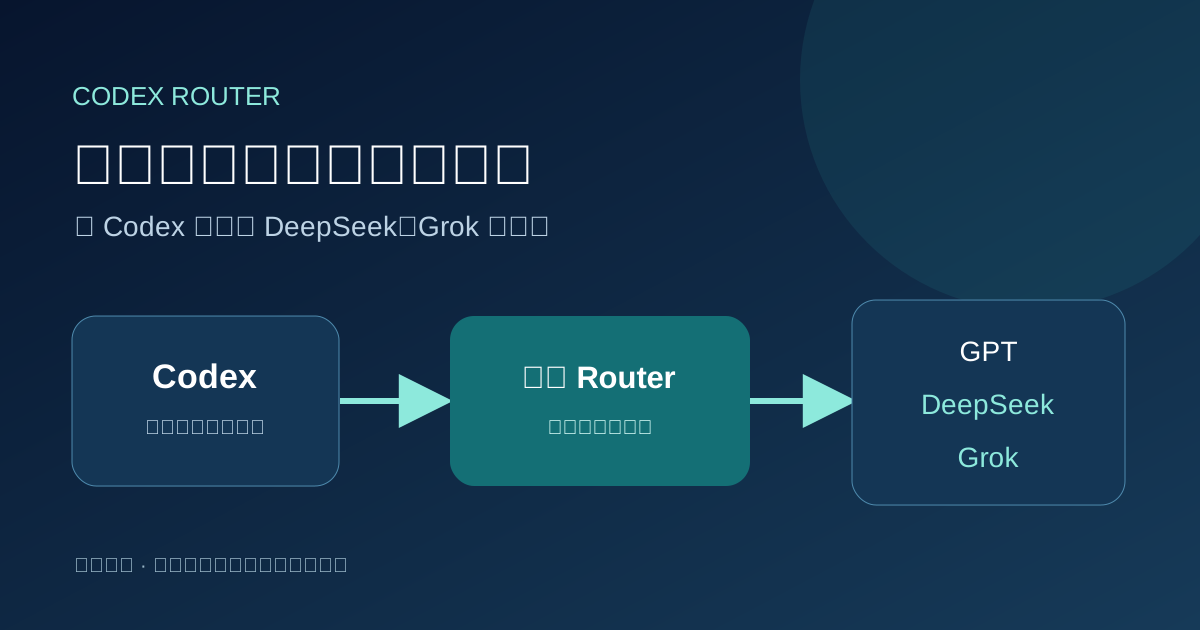
Running low on ChatGPT Codex quota? Switch to DeepSeek or Grok inside Codex
Codex Router lets you keep your Codex workspace while using DeepSeek, Grok, and other external models. A plain-English guide to routing, quotas, and network access.

Skills + Hooks + Plugins: How Anthropic Redefined AI Coding Tool Extensibility
An in-depth analysis of Claude Code's trinity architecture of Skills, Hooks, and Plugins. Explore why this design is more advanced than GitHub Copilot and Cursor, and how it redefines AI coding tool extensibility through open standards.