

GPT Image 2
GPT Image 2 is OpenAI's current flagship image generation model in the API. Official docs call it state of the art for fast, high-quality generation and editing, with flexible sizes and high-fidelity image inputs. The default snapshot is gpt-image-2-2026-04-21. It takes text and image input and returns images through v1/images/generations, v1/images/edits, and Batch. Chat Completions and Responses do not host the model directly; Responses can still call an image generation tool that selects a GPT Image model for you.
Key Features
- Generate and edit: Create images from a prompt, or change an existing image in whole or in part. Supported features include inpainting.
- Flexible sizes: Popular presets include 1024x1024, 1536x1024, 1024x1536, 2048x2048, 2048x1152, 3840x2160, and 2160x3840, plus
auto. Edges must be multiples of 16px, the long-to-short ratio cannot exceed 3:1, and total pixels must stay between 655,360 and 8,294,400. The longest edge is 3840px. - Quality and format:
low,medium,high, orauto. Default output is PNG; JPEG and WebP supportoutput_compressionfrom 0 to 100. JPEG is faster when latency matters. - High-fidelity edits: Edit requests always process reference images at high fidelity, which can raise input-token cost.
- Moderation controls:
moderationcan beauto(default) orlow. Organizations may need API Organization Verification before using GPT Image models. - Not for transparent backgrounds:
background: "transparent"is not supported ongpt-image-2.
Use Cases
- Product and marketing stills: Draft at
quality: "low", then render the keeper atmediumorhigh. - Multi-turn design: Use the Responses image generation tool with GPT-5.6 and newer so a conversation can generate, then edit, the same asset.
- Layout-heavy work: 4K landscape and portrait sizes help posters and slides, but outputs above 2560x1440 (3,686,400 pixels) are labeled experimental.
- Batch production: The Batch endpoint is supported when you need offline volume.
Pricing
OpenAI prices GPT Image 2 per 1M tokens on the API pricing page (accessed 2026-08-17):
| Modality | Input | Cached input | Output |
|---|---|---|---|
| Image | $8.00 | $2.00 | $30.00 |
| Text | $5.00 | $1.25 | - |
Batch rates are half of standard. The image generation guide also lists example per-image output costs at common sizes: about $0.006 / $0.053 / $0.211 for low / medium / high at 1024x1024, and about $0.005 / $0.041 at low / medium for 1024x1536 or 1536x1024. High-resolution and edit jobs still add input tokens. Use the official calculator rather than treating those examples as a complete price list.
ChatGPT Images 2.0 is a consumer-facing sibling, not the same billable surface as the gpt-image-2 API model.
Getting Started
- Complete Organization Verification if the developer console asks for it.
- Call
images.generatewithmodel: "gpt-image-2"and save the returnedb64_json. - Start at
quality: "low"and a modest size, then raise quality only for the final asset. - For conversational edits, use the Responses API image generation tool on GPT-5.6 or newer, and set
actiontogenerateoreditwhen you need to force the behavior. - Handle
image_generation_user_errorby changing the prompt. Do not blindly retry those failures.
Frequently Asked Questions
Is this DALL-E 3 under a new name?
No. GPT Image is a later family. gpt-image-2 is the current API flagship; gpt-image-1.5, gpt-image-1, and gpt-image-1-mini remain available at different prices.
Can I lock a version?
Yes. Pin gpt-image-2-2026-04-21 if you need a stable snapshot.
Why did a request take so long?
Complex prompts can take up to two minutes. Official limitations also still include imperfect text placement, character consistency, and precise layout control.
What are the rate limits?
Default image limits scale by usage tier, from 5 IPM on Tier 1 to 250 IPM on Tier 5, with TPM from 100,000 to 8,000,000.
Alternatives
- OpenAI: dall-e-3: The older OpenAI stills model if a workflow is still pinned to DALL-E.
- Flux.1 Pro: Black Forest Labs commercial stills when you want a non-OpenAI vendor.
- Nano Banana: Google's image product if you already work in Gemini.
Tips
- Draft cheap, then spend. Official guidance is to use
lowfor thumbnails and iteration. - Prefer JPEG when you care about latency; keep PNG for lossless finals.
- Confirm token prices before a large batch. Image output is $30 per 1M tokens on the standard table, and edits add high-fidelity input tokens.
Conclusion
GPT Image 2 is the OpenAI API model to start with for new stills and edits in 2026, especially if you already have GPT-5.6 in the same app. Begin with a low-quality square draft, then read the model page and pricing calculator before you turn on 4K or high-fidelity edits.
Comments
No comments yet. Be the first to comment!
Related Tools


Related Insights
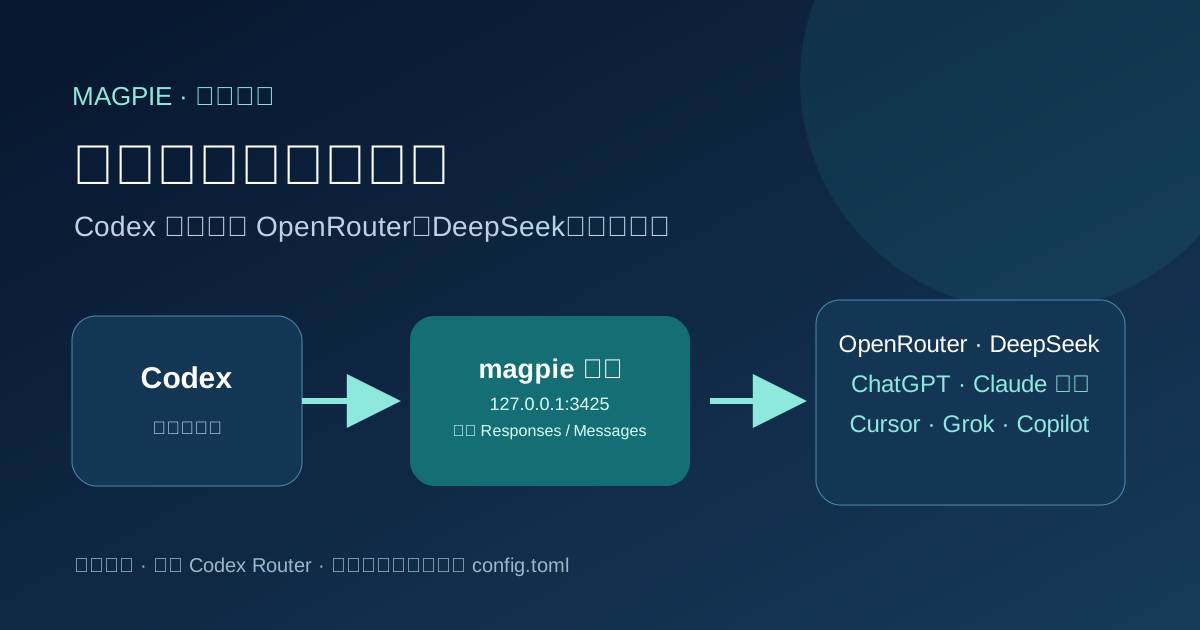
Codex on any model: magpie makes Codex Router unnecessary
magpie is a free, open-source menu bar app that runs a local gateway and puts OpenRouter, DeepSeek and your ChatGPT, Claude, Cursor, Grok and Copilot subscriptions right into Codex's own model picker, with one click and no Codex Router.
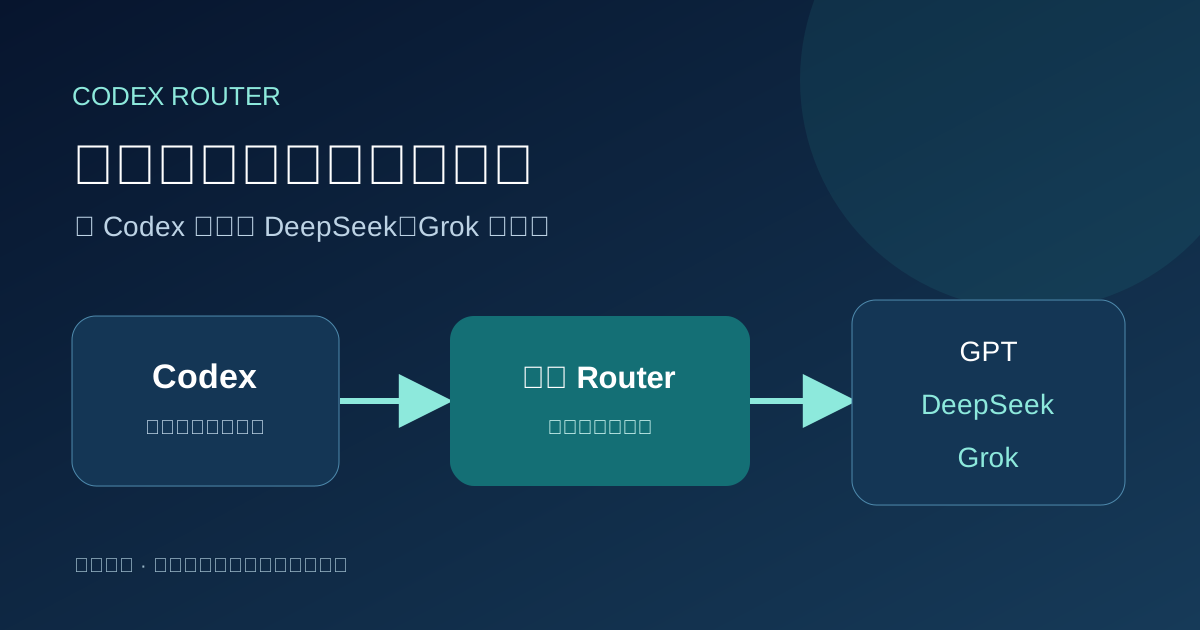
Running low on ChatGPT Codex quota? Switch to DeepSeek or Grok inside Codex
Codex Router lets you keep your Codex workspace while using DeepSeek, Grok, and other external models. A plain-English guide to routing, quotas, and network access.
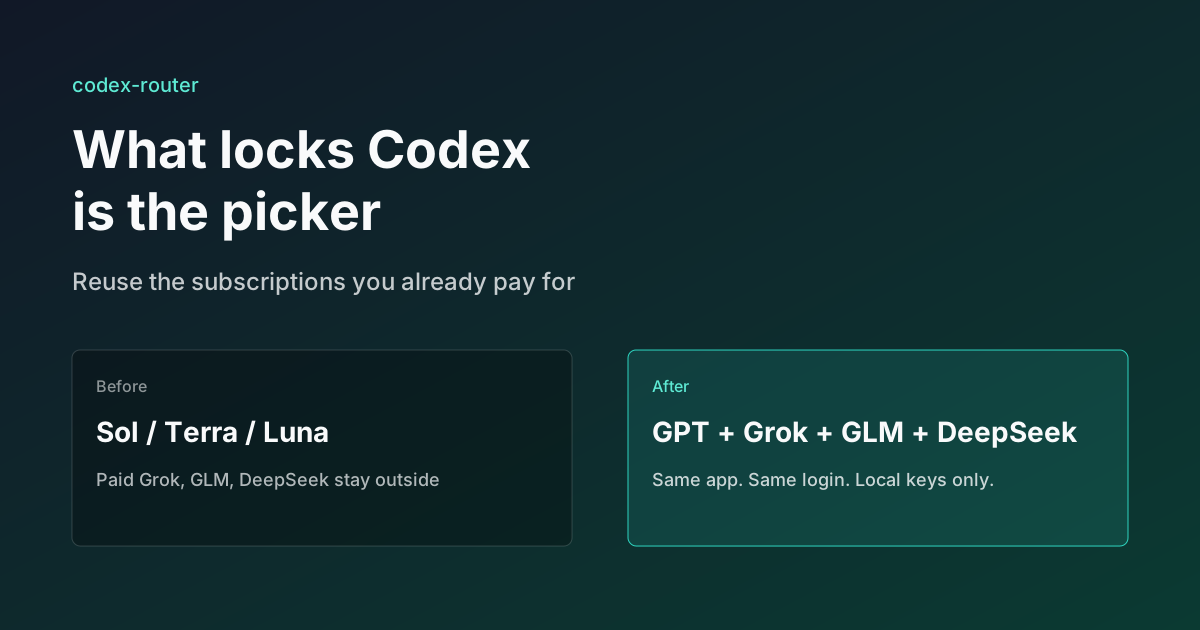
What Locks Codex Is the Picker, Not the Models
You already pay for OpenCode Go, Grok, and Z.ai, but the Codex picker still shows mostly GPT. The community project codex-router does not teach another install ritual. It puts subscriptions you already bought back into the selector, keeps keys on the machine, and leaves native GPT alone.