

MiniMax M3
MiniMax M3 is the company's June 1, 2026 frontier model. The research post says M3 hits frontier-level coding and agent work, introduces MiniMax Sparse Attention (MSA) with a 1M-token context, and is natively multimodal: image and video input plus desktop computer use. MiniMax calls it the only open-weight model in that class at launch. The API models table still lists M3 as a frontier multimodal coding model with a 1M context. You can try it through MiniMax Code, the Token Plan, and the API.
Key Features
- MSA and 1M context: MiniMax says MSA partitions KV more precisely than DSA or MoBA, and that per-token compute at 1M context is about 1/20 of the previous generation, with more than 9x prefilling and 15x decoding speedups in their tests.
- Coding: The post claims large gains over M2 on bugfix, frontend/backend, and performance work, approaching overseas closed models on those slices.
- Agent and office: Search, Office-suite workflows, and early finance tasks are called out as usable.
- Native multimodal + computer use: Image and video in, plus operating a desktop. That is the third "frontier essential" MiniMax says closed models already had.
- Product surfaces: MiniMax Code, Token Plan, and pay-as-you-go API. The models intro also lists newer siblings such as M2.7; M3 remains the 1M-context coding flagship on that page.
Use Cases
- Long-horizon coding agents that need a full repo plus tool traces in one window.
- Office and search agents that mix documents with code.
- Multimodal debugging when the bug is on a screenshot or a recorded UI.
Pricing
Official pay-as-you-go (accessed 2026-08-17), Standard tier with a published permanent 50% off:
| Context | Input | Output | Cache read |
|---|---|---|---|
| M3, ≤ 512k input | $0.30 / M tokens | $1.20 / M tokens | $0.06 / M tokens |
| M3, > 512k input | $0.60 / M tokens | $2.40 / M tokens | $0.12 / M tokens |
Priority is higher ($0.45 / $1.80 / $0.09 at ≤512k after the same 50% off). Struck-through list prices on the page are double those numbers. Confirm the pay-as-you-go table before a large run.
Getting Started
- Read the M3 post.
- Call the model from the MiniMax API models guide or MiniMax Code.
- Keep prompts under 512k unless you need the long-context surcharge.
- If you want weights, confirm the current open-weight package. "Open-weight" in the launch post is a product claim; pin a specific revision before you ship.
Frequently Asked Questions
Is M3 the same as M2.1 on this site?
No. MiniMax M2.1 is the earlier 230B MoE coding model. M3 is the June 2026 1M-context multimodal successor.
Does 1M context cost the same as a short prompt?
No. The API splits price at 512k input tokens.
Can it replace Claude or GPT for coding?
MiniMax says it approaches closed overseas models on some coding slices. Benchmark that claim on your repo. Do not treat vendor copy as a bake-off.
Alternatives
- MiniMax M2.1: Previous MiniMax coding model if a stack is still pinned there.
- GPT-5.6 Sol: OpenAI frontier coding and long context.
- Claude Opus 5: Anthropic's current coding flagship.
Tips
- Turn on prompt caching. Cache reads are a fifth of input on the Standard table.
- Use Priority only when latency matters. It is 50% above Standard after the discount.
- Confirm the models intro. MiniMax has been stacking M2.7 and highspeed SKUs beside M3.
Comments
No comments yet. Be the first to comment!
Related Tools


Related Insights
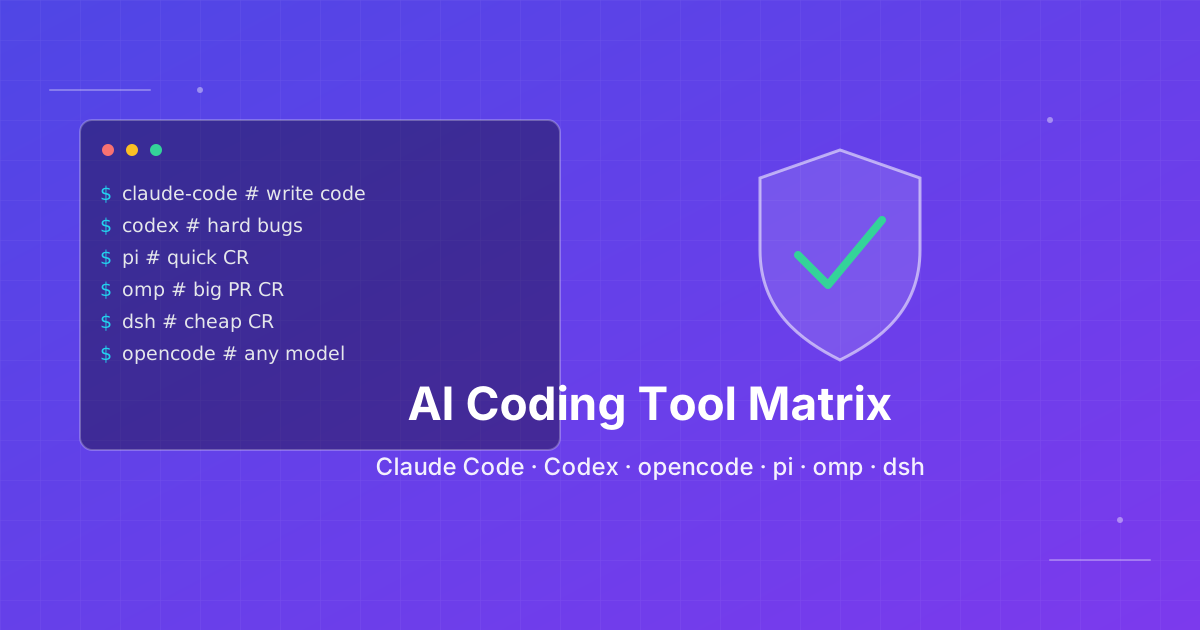
Seven AI Coding CLIs Compared: Tasks, Costs, and Independent Review
Compare Claude Code, Codex CLI, OpenCode, Pi, omp, DeepSeek Harness, and Grok Build with a repeatable task checklist and practical review workflow.

Skills + Hooks + Plugins: How Anthropic Redefined AI Coding Tool Extensibility
An in-depth analysis of Claude Code's trinity architecture of Skills, Hooks, and Plugins. Explore why this design is more advanced than GitHub Copilot and Cursor, and how it redefines AI coding tool extensibility through open standards.
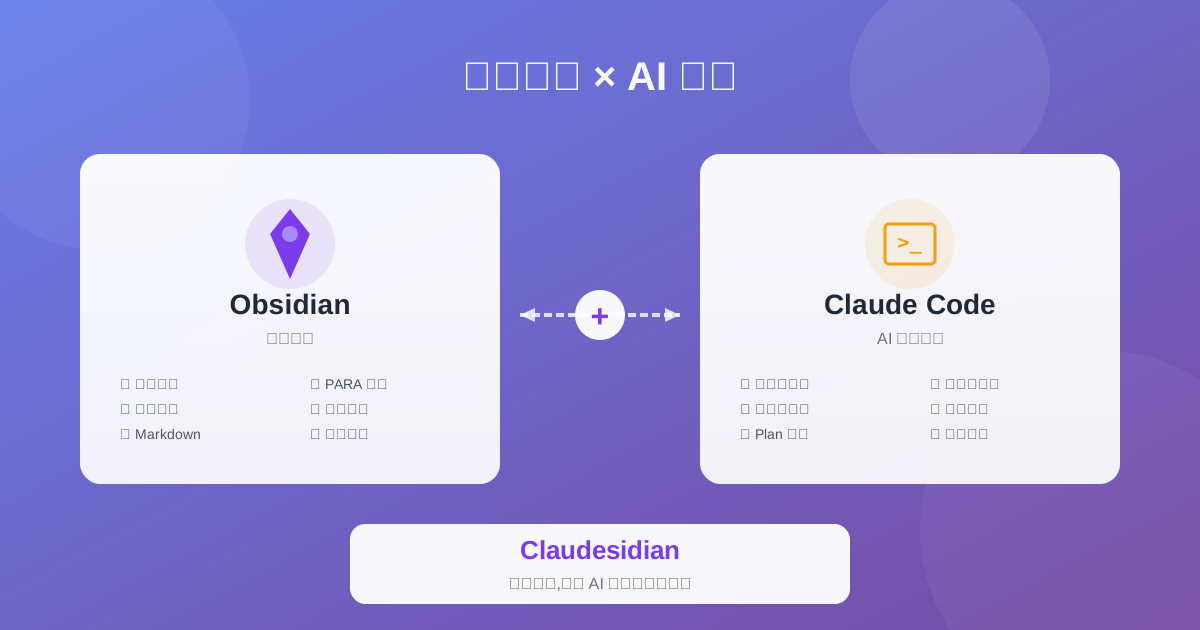
Claudesidian: Transform Obsidian into an AI-Powered Second Brain
Discover Claudesidian, an open-source project that perfectly integrates Obsidian with Claude Code. Built-in PARA method, custom commands, and automated workflows for a complete idea-to-implementation solution.