

Tiel-Coder 35B A3B
Tiel-Coder is a community agentic coding model built on Ornith-1.5-35B-A3B. The card reports 12 of 25 on SWE-bench-Live, level with Opus 4.6 medium and ahead of KAT-Coder and Nail. It is a community refinement, not a lab launch.
Compare KAT-Coder V2.5 if you wanted another agentic coding MoE, Qwen3.8-27B if you wanted the coding lineage, and GLM-5.3 if you wanted a hosted coding plan.
Key Features
- MoE efficiency: 35B total, ~3B active per token, so it runs fast on one modest GPU while keeping coding quality.
- 22GB at 4-bit: fits in a single 24GB GPU (or a Mac with 36GB+ unified memory) via GGUF; MLX variants are also published.
- Agentic coding template: a terse chat template tuned for tool loops and repo-level fixes, with a "think first, answer directly" system prompt.
- Memory-efficient quant: imatrix + dynamic quantization (unsloth-dynamic) to cut size without a big quality drop.
- Multi-format: GGUF for llama.cpp, plus MLX and MTP (multi-token prediction) variants.
Limitation: it is a single community refinement, not an Anthropic or Alibaba release. The "level with Opus 4.6" claim is a self-reported 12/25 on SWE-bench-Live, not an independent benchmark.
Model Specs
| Spec | Value |
|---|---|
| Base model | Ornith-1.5-35B-A3B (Qwen3.6-35B-A3B lineage) |
| Parameters | ~35B total / ~3B active (MoE) |
| Context | As the base; check the card for the exact window |
| 4-bit size | ~22 GB |
| License | MIT |
| Published | 2026-08-19 |
| Formats | GGUF, MLX, MTP |
Use Cases
- Local agentic coding on a single 24GB GPU with llama.cpp or the terse template.
- Repo-level bug fixes where a fast, tool-calling model beats a big general model.
- People who want open weights they can run offline and pin to a local harness.
Pricing
Free to download (MIT).
| Path | Cost |
|---|---|
| Weights (GGUF/MLX) | $0, MIT |
| Local inference | Your GPU or Mac hardware |
Getting Started
- Pull the GGUF from huggingface.co/peculiar-ragdoll/Tiel-Coder-35B-A3B-GGUF.
- Run it with llama.cpp or an Ollama-compatible loader.
- Use the model's terse, tool-calling system prompt to keep agent loops lean.
- Watch VRAM: ~22GB at 4-bit means a 24GB GPU or 36GB+ Mac.
First-party start: the GGUF model card.
Frequently Asked Questions
Is this an official lab model?
No. It is a community re-quant/refinement of Ornith-1.5-35B-A3B by peculiar-ragdoll.
Does it fit on my GPU?
22GB at 4-bit fits a 24GB card or a Mac with 36GB+ unified memory, at the cost of some speed.
Mind to run in a coding agent?
Yes. Its terse, tool-calling template is tuned for agent loops, so keep the system prompt.
Alternatives
- KAT-Coder V2.5: 35B MoE agentic coding model, Apache 2.0.
- GLM-5.3: hosted coding plan, not open weights.
- Qwen3.8-27B: the coding lineage, larger open context.
Tips
- Quote 22GB and the self-reported 12/25, not an audited benchmark.
- For an actual repo fix, keep the terse template enabled.
- Test on your exact GPU before committing local agent workflows.
Conclusion
Tiel-Coder is a ~22GB, MIT agentic coding MoE built on Ornith-1.5-35B-A3B, not a lab release. Start at the GGUF card, run it locally, then decide whether KAT-Coder V2.5 already covers the coding model you want.
Comments
No comments yet. Be the first to comment!
Related Tools


Related Insights
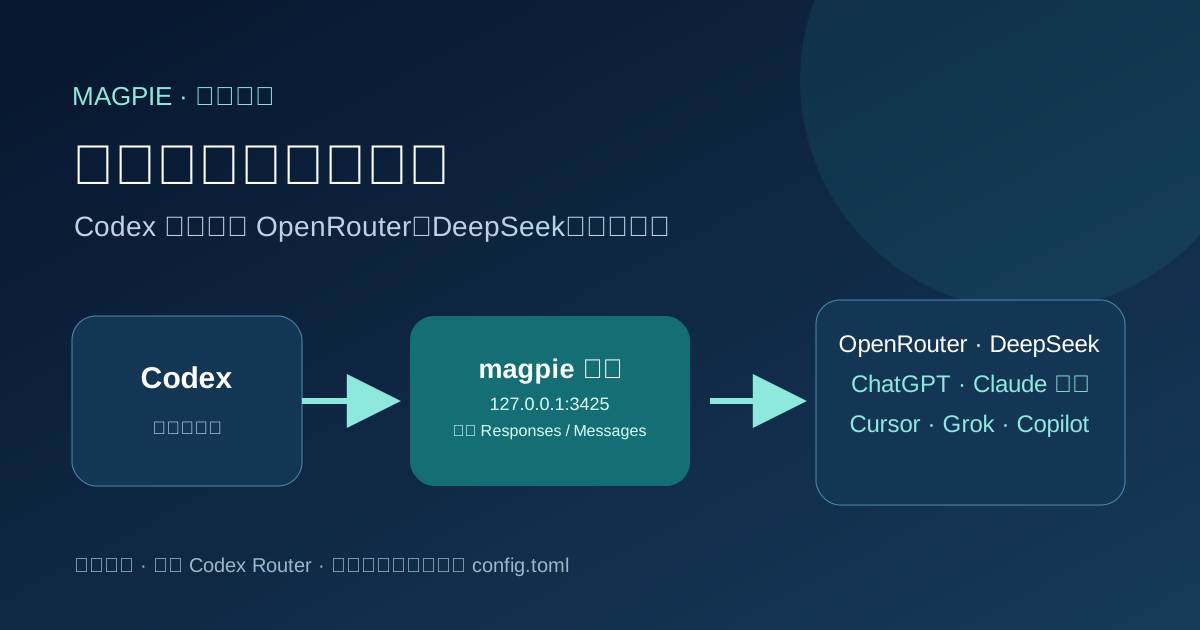
Point Codex at any model with magpie
Install magpie, add a local or signed-in provider, then switch Codex to that model. Rechecked against official magpie docs on 2026-10-06.
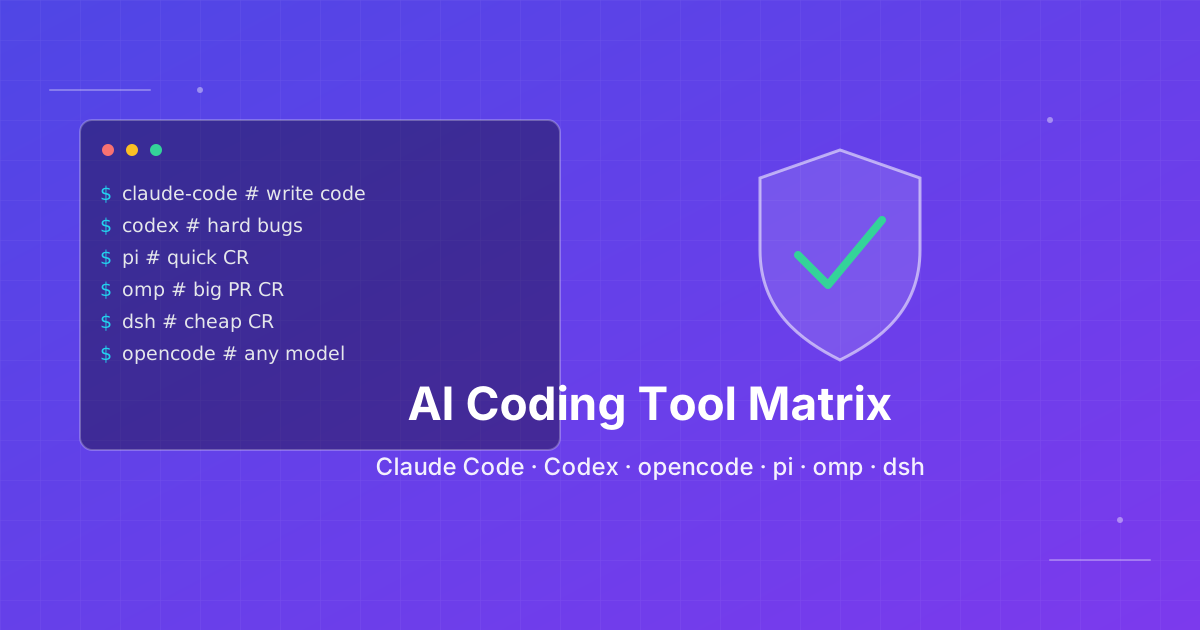
How to pick an AI coding CLI for your repo
Match Claude Code, Codex CLI, OpenCode, Pi, omp, DeepSeek Harness, and Grok Build to the work you actually run. Docs rechecked 2026-10-06.

Skills + Hooks + Plugins: How Anthropic Redefined AI Coding Tool Extensibility
An in-depth analysis of Claude Code's trinity architecture of Skills, Hooks, and Plugins. Explore why this design is more advanced than GitHub Copilot and Cursor, and how it redefines AI coding tool extensibility through open standards.