

CC Switch
CC Switch is a free Rust/Tauri desktop control center for AI coding CLIs. ccswitch.io still lists Claude Code, Codex, Gemini CLI, OpenCode, OpenClaw, and Hermes Agent, plus local routing, MCP, Skills, sessions, and usage stats. The app is $0. Wrapped CLIs keep their own seats.
Compare Claude Code, Codex CLI, and Gemini CLI if you wanted the agents themselves, and Hapi if you wanted remote control of those CLIs instead of a provider switcher.
Key Features
- One window for several CLIs: Site copy covers provider configs, local routing, MCP, Skills, sessions, and usage. Confirm the installed app for the current agent list; do not freeze "eight agents" if the homepage names six.
- Presets, not a payment product: The leftover page talked about 50+ provider presets and hot-swap for Claude Code. Treat that as product UI, not a billed SKU.
- MIT desktop app: Windows, macOS, and Linux.
- Stars move: 127,783 on the check date is not a promise it stays there, and the YouTube short still says 96K.
Use Cases
- People who already run Claude Code and Codex and are tired of editing JSON per tool.
- People comparing CC Switch vs Hapi: one switches providers on the desktop, the other remotes the official CLI.
- People quoting 126,700 stars who need the live GitHub number.
Routing someone else's subscription through another CLI is their ToS problem, not a feature we endorse.
Pricing
github.com/farion1231/cc-switch and ccswitch.io on 2026-08-17.
| Piece | Price | Notes from first-party pages |
|---|---|---|
| CC Switch app | $0 | MIT. 127,783 stars. |
| Wrapped CLIs | Their own seats | Claude Code, Codex, Gemini CLI, and the others listed. |
If a leftover blog still says 126,700 stars as if it were carved in stone, treat this GitHub check as the source.
Getting Started
- Open ccswitch.io or the GitHub releases.
- Point it at the CLIs you already pay for.
- Confirm Hapi if you wanted phone remote instead of provider switching.
- Do not paste 126,700 as a forever census.
Frequently Asked Questions
Is the star count still 126,700?
No. We counted 127,783 on 2026-08-17.
Is CC Switch itself paid?
The app is MIT.
Same as Hapi?
No. Hapi remotes official CLI sessions. CC Switch is a desktop provider/MCP switcher.
Alternatives
- Hapi: Local remote-control shell around official CLIs.
- Claude Code: Anthropic CLI, one of the tools this app manages.
- Gemini CLI: Google terminal agent with public Pro / Ultra seats.
Tips
- Quote 127,783 stars and MIT from the GitHub check.
- Quote $0 for the switcher, not for Claude or Codex.
- Confirm the live agent list before you say "eight" or "six" as law.
Conclusion
CC Switch is a MIT desktop switcher with 127,783 stars, not a frozen 126,700 census and not a paid CLI. Start at github.com/farion1231/cc-switch, then decide whether Hapi or the wrapped CLI already covers the job.
Comments
No comments yet. Be the first to comment!
Related Tools


Related Insights
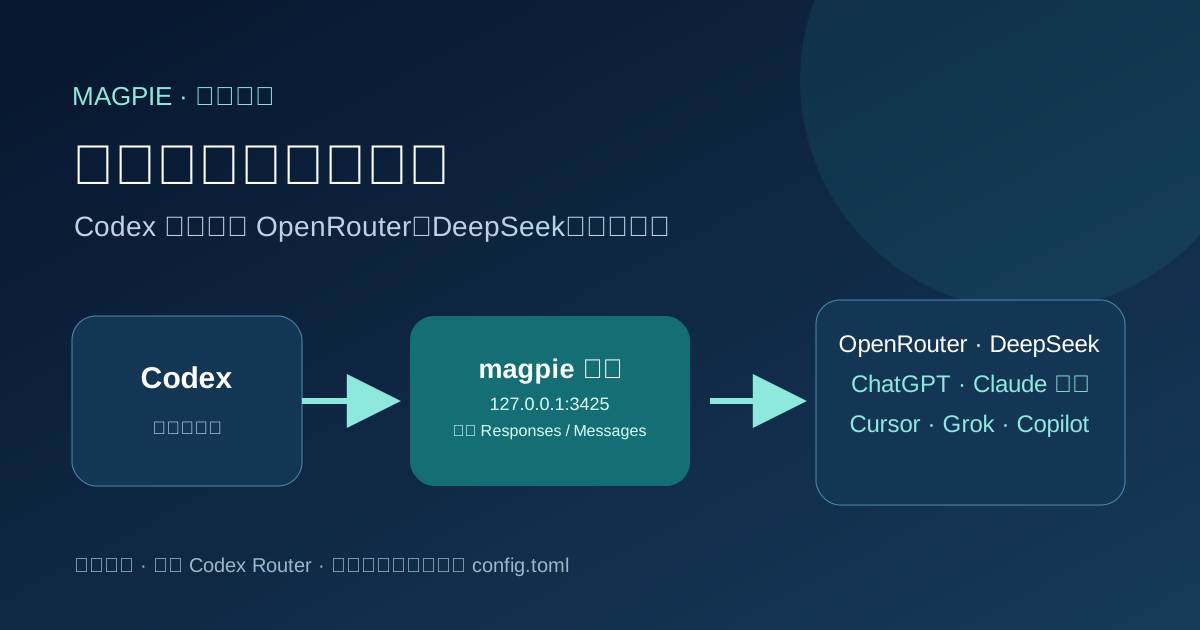
Codex on any model: magpie makes Codex Router unnecessary
magpie is a free, open-source menu bar app that runs a local gateway and puts OpenRouter, DeepSeek and your ChatGPT, Claude, Cursor, Grok and Copilot subscriptions right into Codex's own model picker, with one click and no Codex Router.
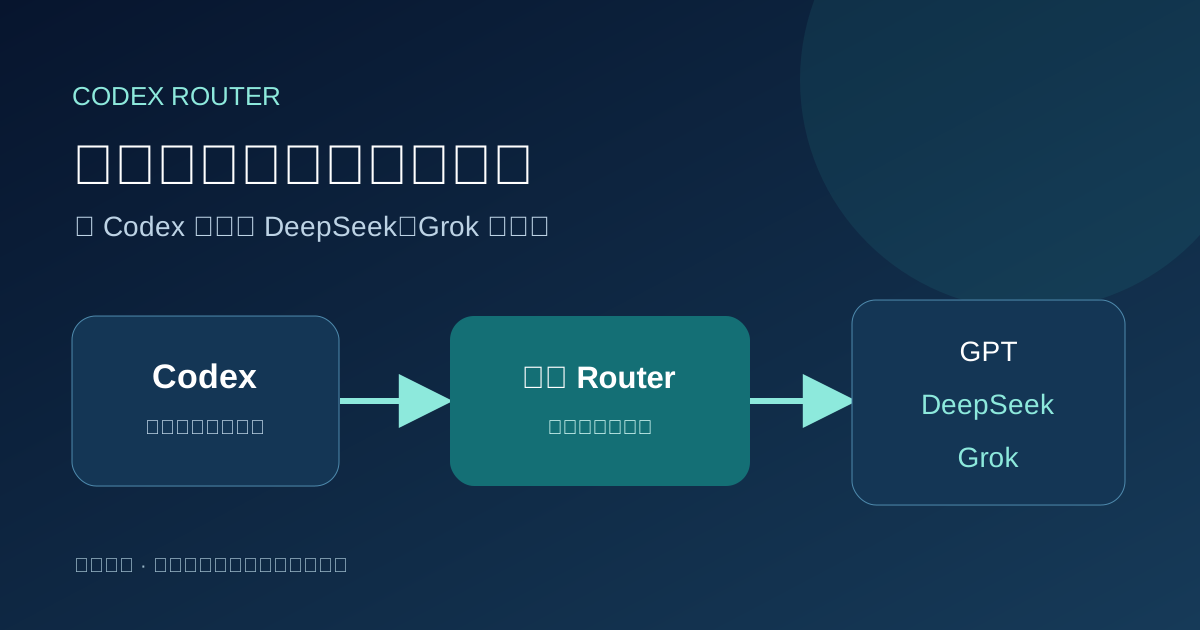
Running low on ChatGPT Codex quota? Switch to DeepSeek or Grok inside Codex
Codex Router lets you keep your Codex workspace while using DeepSeek, Grok, and other external models. A plain-English guide to routing, quotas, and network access.

Skills + Hooks + Plugins: How Anthropic Redefined AI Coding Tool Extensibility
An in-depth analysis of Claude Code's trinity architecture of Skills, Hooks, and Plugins. Explore why this design is more advanced than GitHub Copilot and Cursor, and how it redefines AI coding tool extensibility through open standards.