
Waku is a fast, native macOS desktop app by egoist, the developer behind ChatWise, built for working with local AI coding agents. Written in Rust on top of GPUI, the UI framework from Zed, it gives you a single window for running and supervising agents such as Claude Code, Codex CLI, OpenCode, Amp, Cursor CLI, Grok Build, and Pi. Everything stays on your machine: projects, sessions, and transcripts are stored locally, and there is no Waku account or remote service to sign up for. The project was created in July 2026 and is still very early stage, with around 630 GitHub stars as of August 2026, released under the GPL-3.0 license.
Key Features
- One home for many agents: Run Amp, Claude Code, Codex CLI, Cursor CLI, Grok Build, OpenCode, and Pi side by side. Waku auto-detects the CLIs already installed on your Mac.
- Native structured protocols: Instead of scraping terminal output, Waku talks to each agent through the provider's own structured protocol, preserving session continuity for every tool.
- Shared control surface: Switch models, reasoning effort, and access modes from one interface, regardless of which agent is running.
- Steering and message queues: Queue follow-up messages or steer an agent mid-task while it keeps working, instead of waiting for it to finish.
- Conversation-aware rewind: Rewind Git-backed tasks with checkpoints that understand the conversation, so you can roll back both code and context.
- Local-first state: Projects, sessions, and transcripts live on your disk. No Waku account, no remote service.
- Native performance: Rust plus GPUI keeps the app fast and light, with a built-in browser based on WKWebView.
Use Cases
Who Should Use This Tool?
- Multi-agent developers on macOS: People who run several coding CLIs every day and want one window instead of a pile of terminal tabs.
- Claude Code and Codex switchers: Developers who hop between agents depending on the task and want a consistent interface for all of them.
- Privacy-conscious users: Anyone who wants sessions and transcripts to stay local with no third-party account.
Problems It Solves
- Terminal tab chaos: Each agent CLI lives in its own tab with its own keybindings; Waku unifies projects and independent sessions in one app.
- Inconsistent controls: Every CLI exposes models and modes differently; Waku normalizes model, reasoning effort, and access mode switching.
- Interrupted flow: Waiting for an agent to finish before sending the next instruction wastes time; queues and steering keep work moving.
Pricing
| Plan | Price | Features |
|---|---|---|
| Open Source | $0 | Full app under GPL-3.0. You authenticate your own agent CLIs; model usage is billed by your providers. |
Waku is free and open source. There is no paid tier and no Waku account. Costs come only from the AI providers behind the CLIs you already use.
Advantages & Unique Selling Points
Compared to Competitors:
- Native, not Electron: Built in Rust with GPUI, the framework behind Zed, so it feels like a real Mac app instead of a bundled web page.
- Structured protocols over scraping: Each supported agent is driven through its native structured protocol with session continuity, which holds up better than parsing terminal output.
- Local first with no account: All state stays on your machine; there is nothing to sign up for and nothing leaving your disk.
What Makes It Stand Out:
- Pedigree: built by egoist, known for the polished ChatWise app.
- Broad agent coverage: seven agents including Grok Build and Pi, auto-detected on install.
- Conversation-aware Git rewind, a rare feature even among commercial agent managers.
- Very young but moving fast: created July 2026, about 630 GitHub stars as of August 2026.
User Reviews
Waku launched in July 2026, so there is not yet a large body of formal reviews or ratings to quote. Early discussion on X (Twitter), including recommendations in Chinese developer circles, has praised the idea of a "Mac harness" from the ChatWise author that drives most installed coding CLIs through structured protocols, in a role similar to T3 Code, and highlighted the Rust + GPUI stack inherited from Zed. As an early-stage project, expect rapid change and the occasional rough edge.
Getting Started
Quick Start Guide
- Get the app: Download Waku from waku.sh or build it from the GitHub source. Development requires macOS, Rust 1.96 or newer, and Bun.
- Install your agents: Set up the CLIs you use (Claude Code, Codex CLI, OpenCode, and friends) and authenticate them as usual.
- Open Waku: It auto-detects installed CLIs; create a project and start a session with any of them.
- Work: Switch models or reasoning effort from the shared interface, queue follow-ups, and create rewind checkpoints before risky changes.
Frequently Asked Questions
Is Waku free?
Yes. Waku is free and open source under GPL-3.0. You pay only your model providers, through the agent CLIs you authenticate yourself.
Which platforms are supported?
macOS only. It is a native Mac app, and the development toolchain (Rust 1.96+, Bun) targets the Mac.
Does Waku replace my agent CLIs?
No. Waku orchestrates the CLIs already installed on your machine through their native protocols; you still install and authenticate each agent yourself.
Where is my data stored?
Locally. Projects, sessions, and transcripts stay on your machine; there is no Waku account or remote service.
Alternatives
If Waku is not the right fit, consider these alternatives:
- cmux: A Ghostty-based macOS terminal with vertical tabs and agent notifications.
- VelaTerm: An open-source terminal and agent manager with a session tree and remote takeover.
- Superset: Run a fleet of CLI agents in isolated worktrees.
- Emdash: A desktop development environment that isolates parallel agents in Git worktrees.
Tips & Best Practices
- Authenticate every CLI first: Waku drives your installed CLIs, so sign in to each agent before expecting sessions to start.
- Use queues for long tasks: Line up follow-up messages while an agent works instead of babysitting the session.
- Checkpoint before big edits: Create a rewind point before large refactors so you can roll back code and conversation together.
- Keep agents updated: Waku leans on each provider's native protocol, so current CLIs give the smoothest experience.
Comments
No comments yet. Be the first to comment!
Related Tools


Related Insights
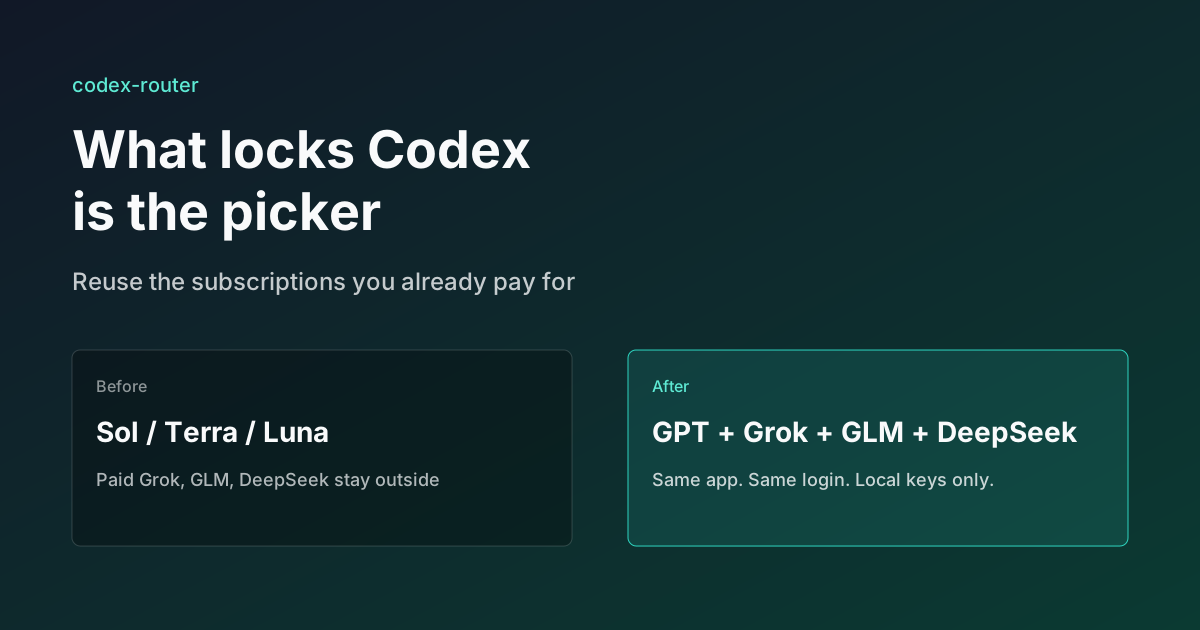
What Locks Codex Is the Picker, Not the Models
You already pay for OpenCode Go, Grok, and Z.ai, but the Codex picker still shows mostly GPT. The community project codex-router does not teach another install ritual. It puts subscriptions you already bought back into the selector, keeps keys on the machine, and leaves native GPT alone.
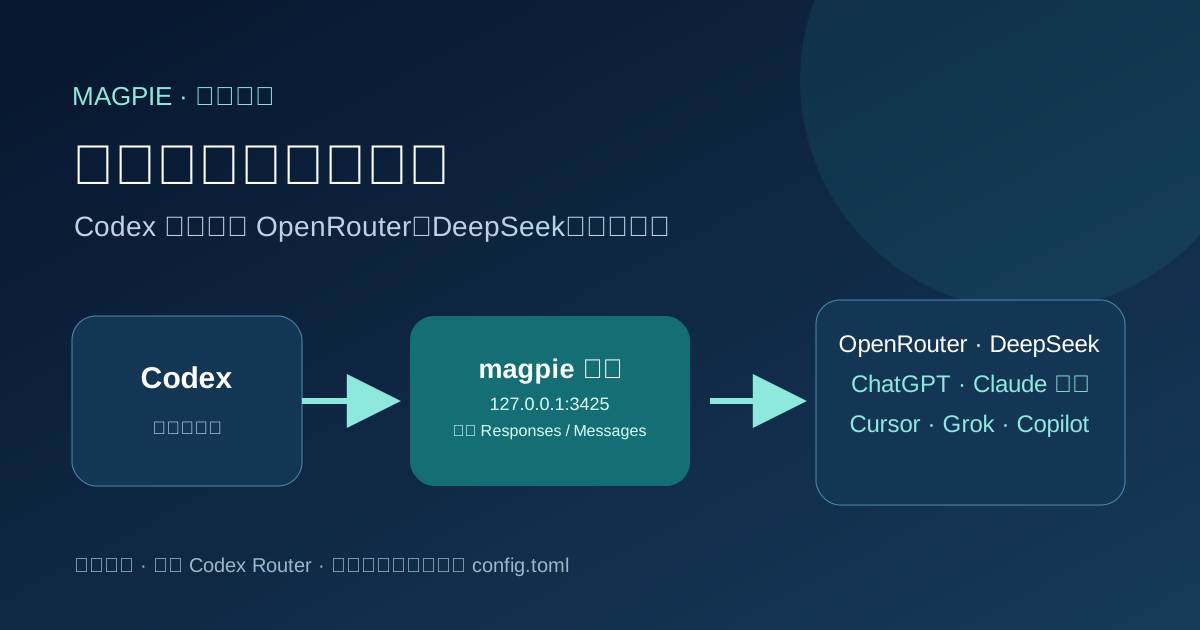
Codex on any model: magpie makes Codex Router unnecessary
magpie is a free, open-source menu bar app that runs a local gateway and puts OpenRouter, DeepSeek and your ChatGPT, Claude, Cursor, Grok and Copilot subscriptions right into Codex's own model picker, with one click and no Codex Router.
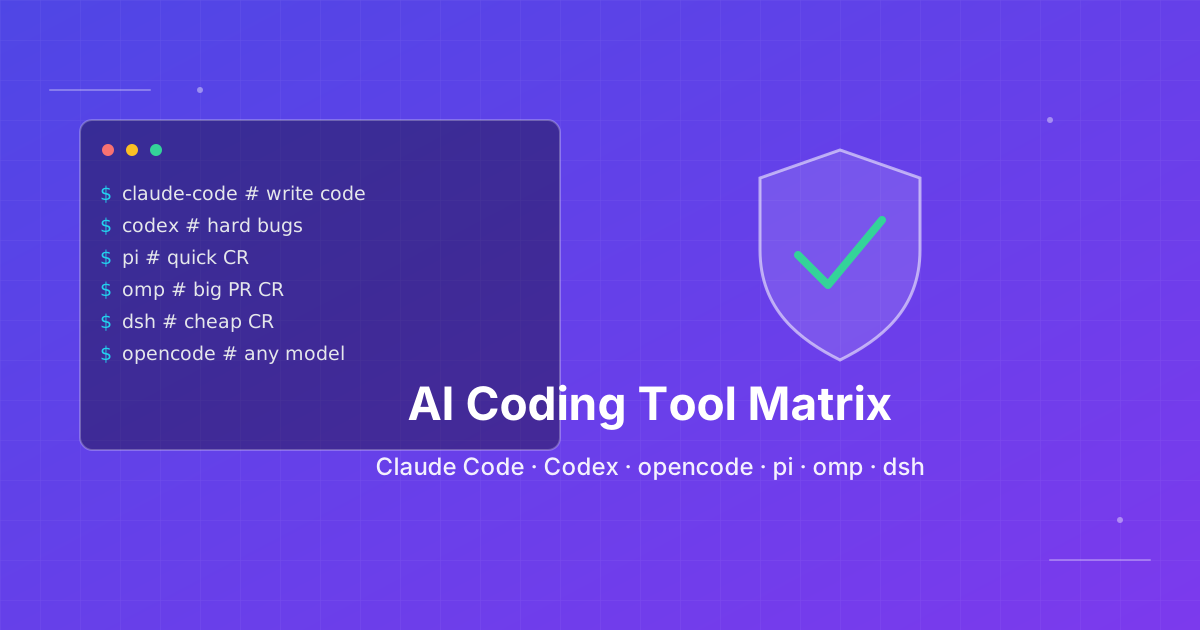
Seven AI Coding CLIs Compared: Tasks, Costs, and Independent Review
Compare Claude Code, Codex CLI, OpenCode, Pi, omp, DeepSeek Harness, and Grok Build with a repeatable task checklist and practical review workflow.