

Origin (by Cursor)
Origin is Cursor's Git forge and code-hosting platform, built so that code lives next to the agents working on it. Announced August 17, 2026 in early beta on all paid Cursor plans, it adds a Codebase tab where you host repos, open pull requests, browse and search code, and sync with GitHub, with coding agents embedded in every repo. It is a GitHub/GitLab-style host designed for agent-scale workflows, not a standalone IDE or an open-source Cursor clone.
The underlying storage engine is called Continuity, a WAL-first, S3-backed, linearly-consistent Git store that Cursor describes as built to scale for agent-driven repositories: monorepos alongside millions of small throwaway agent repos. The engineering post "Git at any scale" went live on the Cursor blog on August 18, 2026.
Key Features
- Origin repos: create a repo from the Codebase tab, then clone or push with the Origin CLI. Your code is hosted at cursor.com/codebase/
your-org. - GitHub sync: connect your GitHub org and choose repos to mirror into Origin. Synced repos update in real time; pushes keep going to GitHub, which stays the source of truth.
- Pull requests: every repo has PRs with timeline, commits, checks, and file diffs. On synced repos, comments sync both ways between Cursor and GitHub.
- Agents in every repo: ask Cursor questions about code you are browsing; it can answer, make changes, update PRs, or push a branch in place.
- App extensions: connect Vercel, Depot, or Buildkite from a repo's Apps tab for preview deployments and CI.
Use Cases
Origin targets developers and teams who want version control close to their agents:
- Agent-heavy teams that want a host tuned for agent scale instead of a traditional forge.
- Cursor users who want PRs, code review, and CI next to their coding agent.
- GitHub users who want to try Cursor's hosting while keeping GitHub as the source of truth through sync.
Pricing
| Plan | Price | Origin access |
|---|---|---|
| Free | $0/month | Not included (Origin is in early beta on paid plans) |
| Pro | Paid | Early beta access |
| Ultra | Paid | Early beta access |
| Enterprise | Custom | Early beta, admins can opt out |
Pricing above reflects Cursor's published plan tiers; Origin began rolling out to paid plan users in early beta on August 17, 2026.
Advantages
- Agent-native: unlike GitHub or GitLab, Origin is designed from the start for agents that open PRs, fix CI, and push branches at scale.
- Deep Cursor integration: repos, PRs, and agents live in the same surface.
- GitHub sync: you do not have to migrate away from GitHub to try it.
Getting Started
- Update to a current Cursor build on a paid plan.
- Open the Codebase tab and create your first repo.
- Install the Origin CLI and clone or push your project.
- Connect GitHub to sync existing repos, or connect Vercel/Depot/Buildkite for previews and CI.
See the Origin docs.
Frequently Asked Questions
Is Origin open source?
No. Origin is proprietary and built into Cursor.
Do I need to leave GitHub?
No. You can sync GitHub repos into Origin while GitHub stays the source of truth.
Is Origin a separate product I can buy?
It is included with paid Cursor plans during the early beta; it is not a standalone subscription.
Alternatives
- Cursor: the IDE this platform is built into.
- GitHub: the most widely used forge; Origin can sync with it (for GitHub's own AI suite see GitHub Copilot).
- Claude Code: an agent that works with any Git host, including Origin.
Tips
- Name your codebase well on the first repo; it becomes part of every repo URL.
- Use GitHub sync to evaluate Origin without migrating.
- Confirm the changelog; agent-native features ship quickly.
Comments
No comments yet. Be the first to comment!
Related Tools


Related Insights

Skills + Hooks + Plugins: How Anthropic Redefined AI Coding Tool Extensibility
An in-depth analysis of Claude Code's trinity architecture of Skills, Hooks, and Plugins. Explore why this design is more advanced than GitHub Copilot and Cursor, and how it redefines AI coding tool extensibility through open standards.
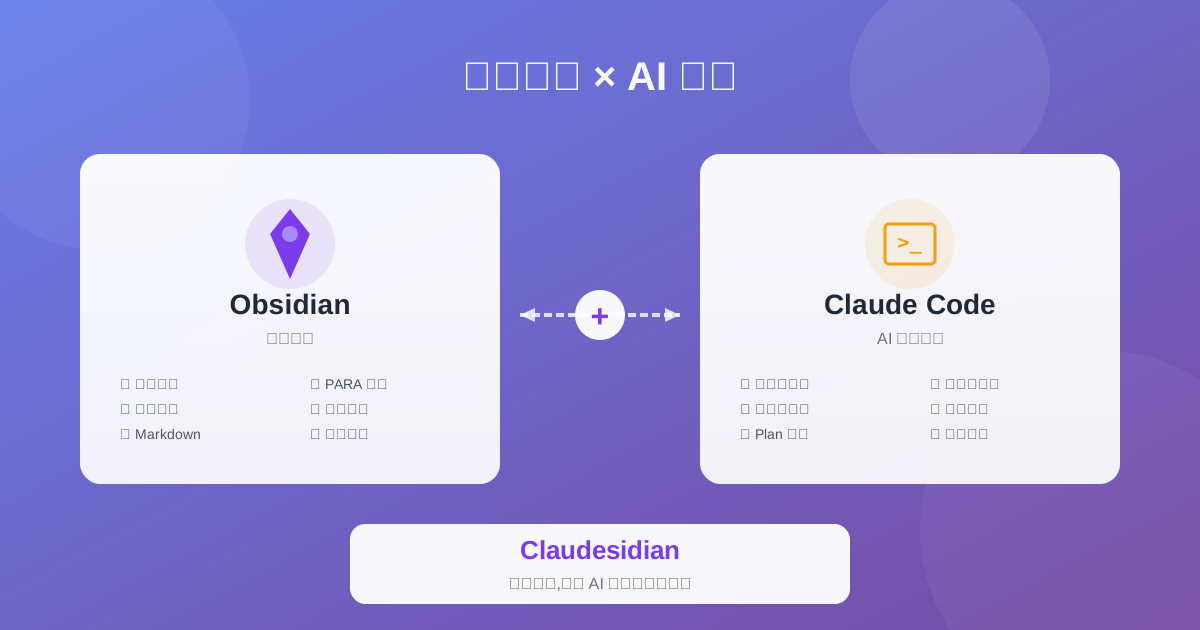
Claudesidian: Transform Obsidian into an AI-Powered Second Brain
Discover Claudesidian, an open-source project that perfectly integrates Obsidian with Claude Code. Built-in PARA method, custom commands, and automated workflows for a complete idea-to-implementation solution.
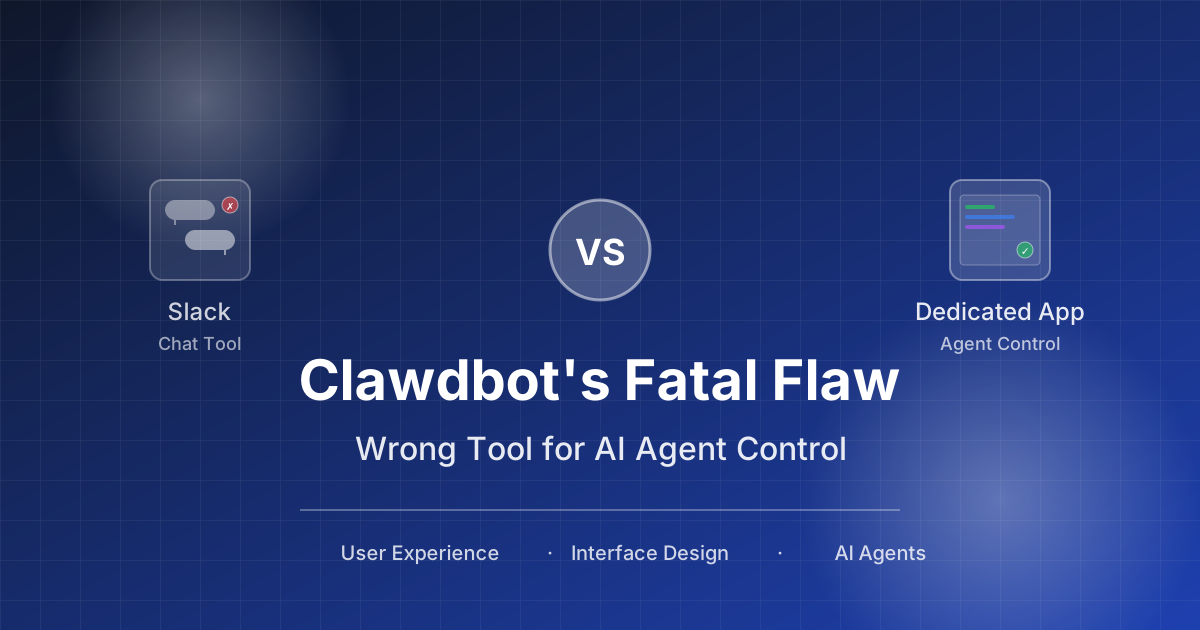
Stop Cramming AI Assistants into Chat Boxes: Clawdbot Picked the Wrong Battlefield
Clawdbot is convenient, but putting it inside Slack or Discord was the wrong design choice from day one. Chat tools are not for operating tasks, and AI isn't for chatting.