

Moshi
Moshi is a remote terminal and coding-agent interface for iOS, Android and desktop. It connects to a Mac, Linux computer, WSL host or VPS over SSH. Your existing agent and repository run on that machine; Moshi gives you a way to check progress and continue work from another device. The optional Moshi Hook integration adds a structured interface around supported agents.
Key features
- Remote sessions: SSH connects to your development host. A terminal multiplexer such as tmux, herdr or Zellij can keep work available between connections.
- Agent interaction: Optional hooks expose chat, agent status, permission requests, code diffs, files and development-server previews. Integration coverage varies by agent and setup.
- Voice input: Dictation offers on-device engines and cloud options. Choose the engine deliberately when working with sensitive instructions.
- Credentials and sync: The security guide documents secure credential storage, biometric controls and optional iCloud synchronization. Credential synchronization has a separate toggle.
- Recent improvements: The iOS 3.15.5 release notes dated October 4, 2026 list creating herdr worktrees from the sidebar, renaming agents and keyboard-interactive SSH authentication.
A practical workflow
Start with one host and a dedicated SSH key. Confirm that the account has access only to the repositories you intend to operate. Connect in Moshi and launch an existing coding agent in a persistent terminal session. Ask it to inspect a small issue before allowing edits, then reconnect to confirm that the session remains available.
Install Moshi Hook only if you need the structured chat and review interface, following the official setup guide for your chosen agent. Test one permission request and inspect a small diff before delegating a longer job. Preview a development server only after checking which service and port the session exposes. These steps help you verify the connection and review behavior on your own machine.
Pricing and limitations
As checked on October 5, 2026, the official pricing page lists free SSH sessions, notifications, agent usage information, biometric unlock and on-device dictation. Pro is advertised at US$9.99 monthly or US$89.99 yearly; a US$199 lifetime offer is also listed. Store prices and regional availability can differ, and offers can change. Your agent subscription, model charges and host compute remain separate.
A basic SSH connection does not require a Moshi host daemon, but richer features depend on hooks and supported integrations. Direct terminal, file, diff and preview connections go to your machine; inbox notifications and usage snapshots can involve Moshi services. Optional cloud dictation and credential sync also have their own data paths. Do not infer that every feature stays entirely on the host.
FAQ and alternatives
Does Moshi run a coding model on my phone? The documented workflow controls agents running on your development host.
Will disconnecting keep a job alive? Use a persistent session manager and verify reconnection; SSH alone is not a guarantee that a process survives.
Compare Hapi, Happy and Lody, or browse development tools. Consult the official documentation, security guide and pricing before configuring a remote host.
Comments
No comments yet. Be the first to comment!
Related Tools


Related Insights

Skills + Hooks + Plugins: How Anthropic Redefined AI Coding Tool Extensibility
An in-depth analysis of Claude Code's trinity architecture of Skills, Hooks, and Plugins. Explore why this design is more advanced than GitHub Copilot and Cursor, and how it redefines AI coding tool extensibility through open standards.
Claudesidian: Transform Obsidian into an AI-Powered Second Brain
Discover Claudesidian, an open-source project that perfectly integrates Obsidian with Claude Code. Built-in PARA method, custom commands, and automated workflows for a complete idea-to-implementation solution.
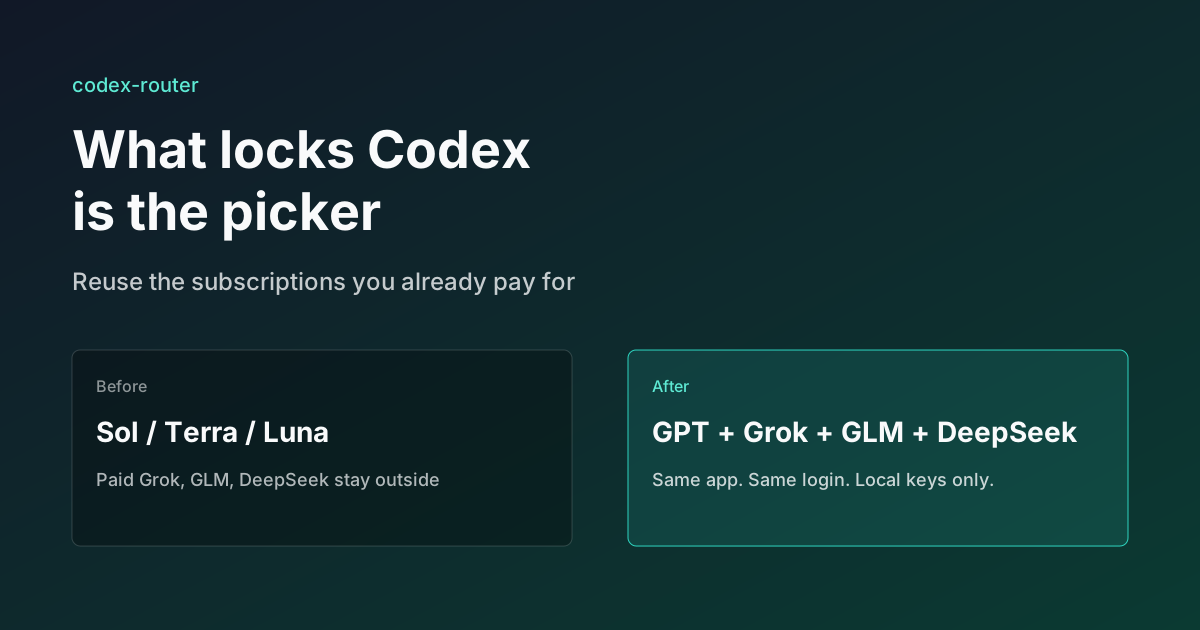
What Locks Codex Is the Picker, Not the Models
You already pay for OpenCode Go, Grok, and Z.ai, but the Codex picker still shows mostly GPT. The community project codex-router does not teach another install ritual. It puts subscriptions you already bought back into the selector, keeps keys on the machine, and leaves native GPT alone.