

Tortie is a macOS app that puts every coding-agent session you run in one calm window, without making you learn tmux. If you drive Claude Code, Codex, or other agent CLIs inside VS Code or Cursor terminals and find yourself cmd-backticking between windows or losing running agents whenever a window restarts, Tortie is built for that exact pain. It is an open-source, agent multiplexer rather than an "agent super app": it stays out of the way, treats sessions as first-class durable units, and gives you the familiar panes you expect from an IDE so you are still in control.
Key Features
- One window for every project: all your open projects live in a single pane with a project explorer, search, and source-control sidebar.
- Agent sessions as first-class objects: sessions run in tmux by default, tracked and backed up, so closing the app or a project does not kill a running agent.
- Durable restored conversations: agent sessions and history persist across restarts, so a long run survives a reboot.
- Split terminals: manage multiple terminals next to each other in the same project view.
- No tmux knowledge required: the app chrome handles multiplexing for you; you keep your mental model, not tmux's.
- macOS native: an Apple-silicon app that feels at home in the dock rather than a terminal wrapper.
Use Cases
Who Should Use This Tool?
- Developers juggling concurrent projects who get lost in a cloud of terminal windows.
- Cursor or VS Code users tired of losing agent processes when the IDE crashes or reloads.
- Agent-heavy builders who want sessions to be durable, searchable, and restorable rather than ephemeral.
- People who dislike tmux, but still want multiplexing and persistence.
Problems It Solves
- Lost sessions: closing a window or crashing the IDE kills a running agent. Tortie decouples the app chrome from the server-side processes.
- Window sprawl: too many project windows leads to task-switching friction. One pane, one view, many projects.
- Learning curve: raw tmux is powerful but opaque. Tortie exposes its value without the configuration burden.
Pricing
| Plan | Price | Features |
|---|---|---|
| Open Source | $0 | All features, Apache-2.0, self-hosted, runs on your Mac |
Advantages & Unique Selling Points
- Session durability as the core promise: tmux-backed sessions mean a running agent survives window close, app quit, or IDE crash.
- Familiar IDE ergonomics: project explorer, search, and source-control panes on top of the agent sessions.
- Open source and local: everything runs on your machine; no account, no hosted middleman.
- Not an agent super app: it does not try to own your agents, just organize them.
What Makes It Stand Out: the split between the app chrome (a view onto the server) and the durable processes underneath is exactly what keeps long agent runs safe.
Getting Started
Quick Start Guide
- Download the macOS app from the Tortie.sh releases page.
- Open it on Apple silicon and add your projects.
- Start an agent session: Tortie runs it in tmux automatically.
- Switch projects freely: close the window or a project without killing the work.
- Restore later: reopen and the session and history are still there.
Integration
Integrates with the agent CLIs you already use:
- Claude Code
- Codex
- Any coding agent that runs in a terminal and can be hosted in tmux
Frequently Asked Questions
Does Tortie support Windows or Linux?
Currently it is macOS only, built for Apple silicon. The author explicitly plans to keep it macOS-native for now.
Do I have to learn tmux?
No. Tortie manages tmux under the hood while you keep your own mental model of projects and sessions.
Is it free?
Yes. It is open source under Apache-2.0 and runs entirely on your machine.
Alternatives
If Tortie is not the right fit, consider these alternatives:
- Agent orchestrators such as Conductor or Orca, if you want more automation and delegation rather than a calm pane.
- herdr (Hermes Agent): a different multiplexer with its own approach to organizing agent sessions.
- Warp: a faster terminal, if your need is terminal speed rather than agent session management.
Tips & Best Practices
- Keep one project per session group: the single-pane project view is easiest to scan when projects map cleanly to agent sessions.
- Let sessions run to completion: with tmux backing, a long agent job can keep going while you switch context.
- Use the compare page before committing: the author catalogued 160+ products across IDE, multiplexer, orchestrator, and harness categories, so browse Tortie.sh/compare before you decide.
Conclusion
Tortie solves the unglamorous but real problem of keeping coding-agent work alive and organized on macOS. For developers who run several agents across simultaneous projects, it converts a brittle, window-stack workflow into one durable, familiar workspace.
Comments
No comments yet. Be the first to comment!
Related Tools


Related Insights

Skills + Hooks + Plugins: How Anthropic Redefined AI Coding Tool Extensibility
An in-depth analysis of Claude Code's trinity architecture of Skills, Hooks, and Plugins. Explore why this design is more advanced than GitHub Copilot and Cursor, and how it redefines AI coding tool extensibility through open standards.
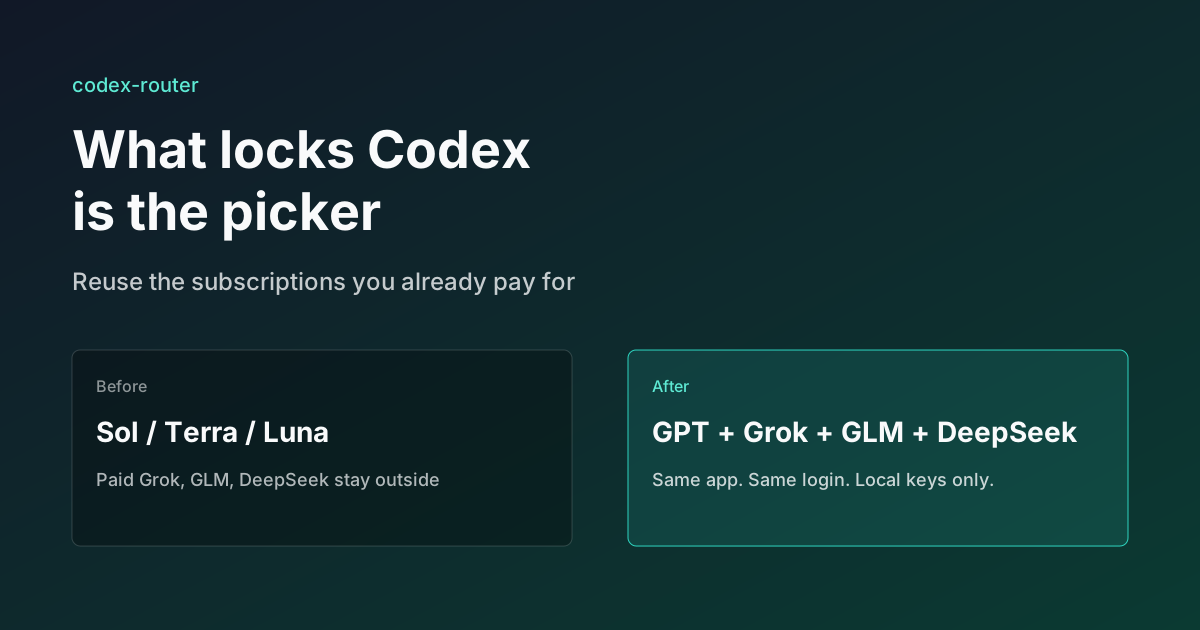
What Locks Codex Is the Picker, Not the Models
You already pay for OpenCode Go, Grok, and Z.ai, but the Codex picker still shows mostly GPT. The community project codex-router does not teach another install ritual. It puts subscriptions you already bought back into the selector, keeps keys on the machine, and leaves native GPT alone.
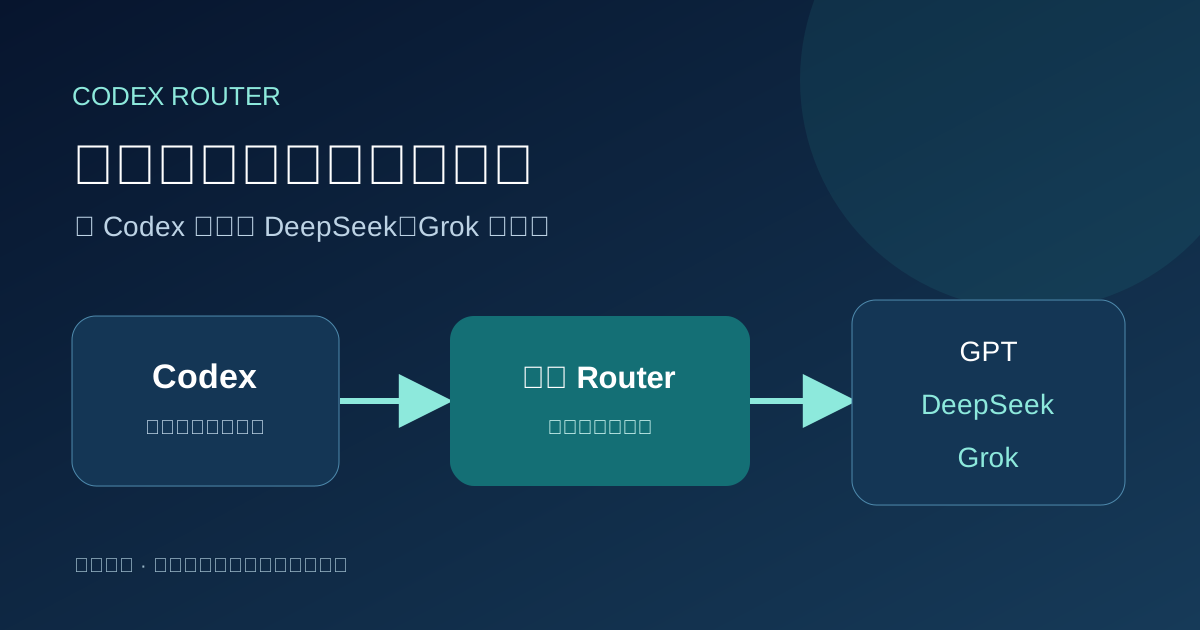
Running low on ChatGPT Codex quota? Switch to DeepSeek or Grok inside Codex
Codex Router lets you keep your Codex workspace while using DeepSeek, Grok, and other external models. A plain-English guide to routing, quotas, and network access.