

TiboTattle
TiboTattle is an open-source macOS menu bar app that monitors how much your OpenAI Codex subscription quota is actually worth. It reads the session logs Codex already stores locally on your Mac, reconstructs your usage at standard API prices, and compares it with the quota movement your provider reports. The community rapidly adopted it as a way to verify whether weekly Codex limits were degrading, and within weeks over 500 users were sharing anonymized stats through the app.
Key Features
- Quota value tracking: Converts token usage from local Codex session logs into equivalent API spend, so you see what your allowance is worth in dollars.
- Cache drop detection: Highlights when your cache was invalidated by switching models, changing reasoning settings, or cache timeouts.
- Community stats pooling: Opt-in sharing of metadata such as timestamps, token counts, quota percentages and models used, pooled across users to triangulate billing behavior.
- Privacy-first by design: Everything is parsed from local session metadata; no code or conversation content is uploaded.
- Simple install: Download the signed Mac app from the website or
brew install --cask adamallcock/tap/tibotattle.
Use Cases
Who Should Use This Tool?
- Codex subscribers: Anyone on the Codex plan who wants to confirm the quota they see matches what they actually used.
- Multi-tool users: Developers running Codex alongside Claude Code or other agents who want a single local usage picture.
- Cache-sensitive teams: Users switching models frequently who want to know how often their cache is being discarded.
- Community researchers: Power users who want to help pool data about how providers bill allowance.
Problems It Solves
- Trust gap: Instead of relying on provider-reported percentages, you see your usage reconstructed from your own logs.
- Hidden cache loss: Cache is a large part of Codex value, and TiboTattle surfaces exactly when it drops.
- Cross-user comparison: Opt-in data sharing turns individual impressions into a community-level view of quota behavior.
Pricing
TiboTattle is free and open source under the MIT license. There is no paid tier; it is a local utility that reads data already on your machine.
Advantages & Unique Selling Points
- Local reconstruction: It uses the same session metadata Codex writes, which makes the analysis auditable rather than provider-reported.
- API-price equivalent: Quota is expressed in standard API spend, giving a concrete dollar view of allowance movement.
- Community opt-in model: Aggregated, anonymized stats give a collective answer to questions no single user can answer alone.
What Makes It Stand Out: TiboTattle treats subscription quota as data to verify, not a number to trust. Its local-first design and opt-in pooling turned a personal tool into a community instrument.
Getting Started
Quick Start Guide
- Install: Download the signed Mac app from tibotattle.com, or run
brew install --cask adamallcock/tap/tibotattle. - Requirements: macOS 14 or later on Apple silicon, with the OpenAI Codex CLI or desktop app configured for local sessions.
- Launch: Open the menu bar app and let it scan your Codex session logs.
- Share stats (optional): Turn on community contributions to pool anonymized quota metadata.
Frequently Asked Questions
What data does TiboTattle read?
Local Codex session metadata: timestamps, token counts, model and reasoning settings. It does not read or upload your prompts or code.
Does it work on Windows or Linux?
The macOS app is the current release. Windows and Linux support were announced as coming next.
How is quota converted to API spend?
It uses the same backend pricing engine used at the developer's enterprise (npm runcost), applying standard API prices to the local usage logs.
Is TiboTattle official OpenAI software?
No. It is an independent community tool, MIT-licensed, built by a Codex user to verify how allowance behaves.
Alternatives
If TiboTattle is not the right fit, consider these alternatives:
- ccusage: Open-source CLI that reports token usage and cost across Claude Code, Codex, OpenCode and more.
- Codex CLI: OpenAI's official coding agent CLI, whose local logs TiboTattle reads.
- Langfuse: Full observability platform when you need server-side LLM tracing and analytics.
Tips & Best Practices
- Watch cache drops: If you switch models or reasoning often, expect cache hits to drop; TiboTattle makes that cost visible.
- Check quota before heavy sessions: A quick look at your equivalent spend tells you whether a big task fits in this week's allowance.
- Contribute stats: Opt-in data pooling helps the community understand how quotas and pricing actually behave.
Comments
No comments yet. Be the first to comment!
Related Tools


Related Insights

Skills + Hooks + Plugins: How Anthropic Redefined AI Coding Tool Extensibility
An in-depth analysis of Claude Code's trinity architecture of Skills, Hooks, and Plugins. Explore why this design is more advanced than GitHub Copilot and Cursor, and how it redefines AI coding tool extensibility through open standards.
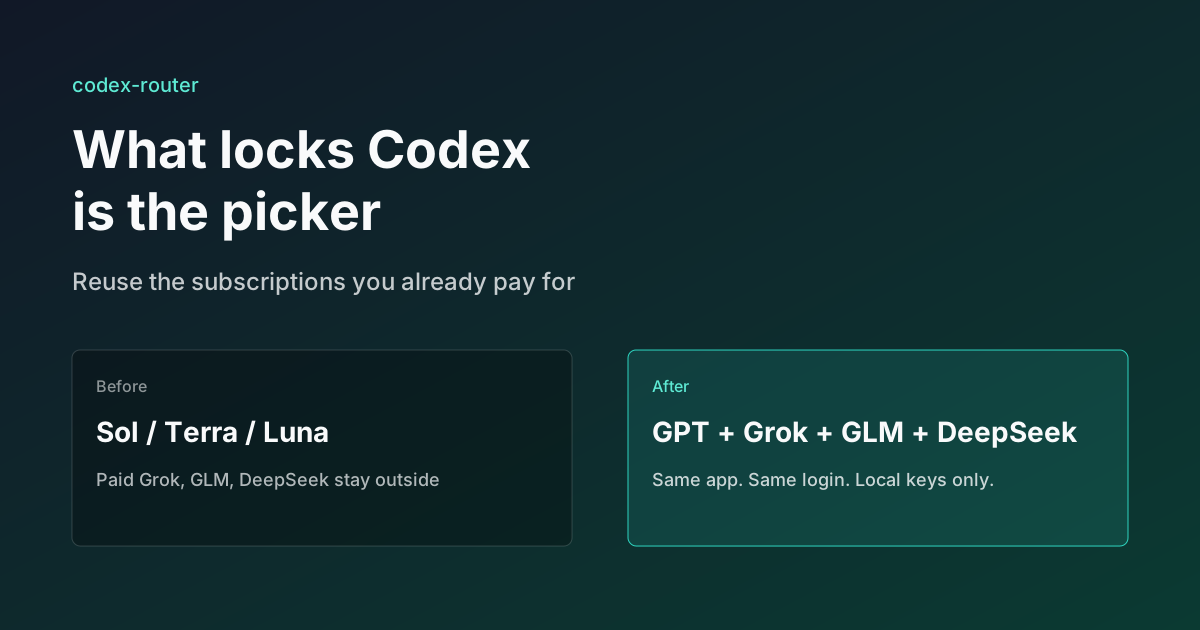
What Locks Codex Is the Picker, Not the Models
You already pay for OpenCode Go, Grok, and Z.ai, but the Codex picker still shows mostly GPT. The community project codex-router does not teach another install ritual. It puts subscriptions you already bought back into the selector, keeps keys on the machine, and leaves native GPT alone.
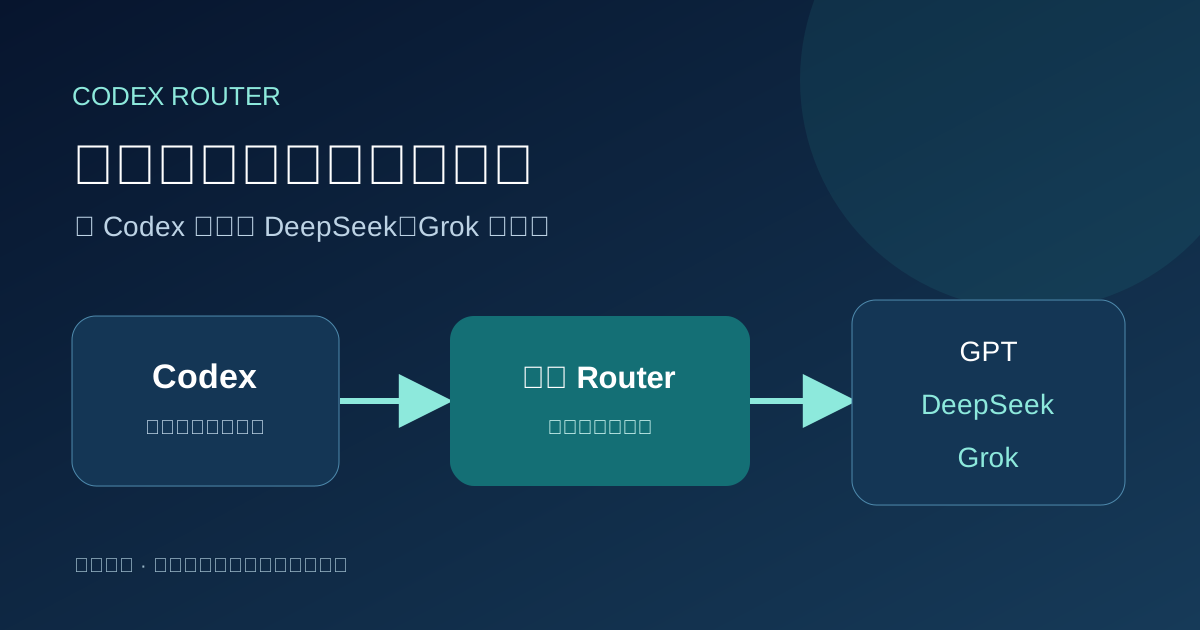
Running low on ChatGPT Codex quota? Switch to DeepSeek or Grok inside Codex
Codex Router lets you keep your Codex workspace while using DeepSeek, Grok, and other external models. A plain-English guide to routing, quotas, and network access.