

Skillsync is a YC W26 product that treats an agent session as something you can keep, search, and continue on another harness. The open-source core is skillsynchq/txcript, a Rust library, CLI, and WASM translator created 2026-06-25 under Apache-2.0. On 2026-09-18 GitHub listed 104 stars and 9 forks. The product site is skillsync.com. 104 stars is a heat signal, not traffic. The Mac app download on that day was Skillsync 0.19.1.
Most coding agents store transcripts in incompatible on-disk formats. Skillsync maps conversation, reasoning, and tool history so you can leave Claude Code mid-task and pick up in Codex CLI, Cursor, or OpenCode. The homepage lists Claude Code, Codex, Hermes, OpenClaw, Grok, Grok Bot, Antigravity, pi, OpenCode, and Cursor. Sessions and translation run on your machine. The thing that leaves is what you explicitly share into a team workspace.
Compare OpenChamber if you wanted an OpenCode workspace rather than a translator, or Claude Code if you only needed one host.
Key Features
- Continue on another agent: move the whole thread, including tool calls, so the next harness does not start from a summary.
- One searchable inbox: collect sessions that used to live in scattered folders, and see which loaded skills the agent actually used.
- Skills and memory as markdown: portable files you own, exposed to agents over MCP for search and selective retrieval.
- CLI + MCP + Mac app:
curl -fsSL https://install.skillsync.com/install.sh | shfor Linux and macOS. Windows has a separate installer. Intel Macs have a dedicated DMG. - Shared workspaces (paid): teammates can read, search, and continue a session you shared. Skills and workspace notes can load into Codex and Claude Code at session start.
Limitation: the desktop app is macOS. Linux users get the CLI. Pro pricing is "pay for shared workspaces" with a calendar link; the public pricing page on 2026-09-18 did not list a dollar amount. Archived Codex chats may need an unarchive plus app restart before they appear (a user filed this on Launch HN; the team merged a related txcript fix the same day).
Use Cases
- Hit a usage limit on one host and keep going on another without re-explaining the task.
- Think in a phone chat, then hand the thread to Claude Code or Codex on a laptop.
- Share a research session with a teammate whose agent should see the decisions, not a recap.
Skip it if you only ever use one agent and never reopen old transcripts. A markdown work journal is enough for that.
Pricing
| Plan | Price | Notes from first-party pages 2026-09-18 |
|---|---|---|
| Free | $0 for individuals | Local sessions, continue on any listed agent, personal skill library, analytics, CLI + MCP. |
| Pro | Pay for teams | Shared workspaces, cloud sync, self-improvement, up to 10 seats. No public dollar price that day. Book via Cal.com. |
| Custom | Enterprise | Unlimited users and workspaces, custom harness integrations, 24x7 priority support. |
| txcript | $0 | Apache-2.0 engine on GitHub. About 104 stars. |
Getting Started
- Download the Mac app from skillsync.com, or install the CLI with the first-party install script.
- Let it index local sessions from Claude Code, Codex, Cursor, or OpenCode.
- Open a session and continue it on another listed agent.
- Share into a workspace only if you want that transcript off this machine.
First-party start: the product site, pricing, and txcript README.
Frequently Asked Questions
Does this replace Claude Code?
No. It translates sessions. You still pay each host.
Does everything stay local?
The site says sessions and translation run locally. Workspace share is the exception you opt into.
Is the Mac app open source?
The translator is Apache-2.0. Treat the desktop app as a product unless the repo says otherwise.
Alternatives
- Claude Code: one host. No cross-harness continue.
- OpenCode: MIT TUI agent. Skillsync can move sessions into it.
- OpenChamber: OpenCode workspace with goals and phone relay, not a format translator.
- Cursor: editor host. Skillsync is how you leave it without losing the thread.
Tips
- Continue from the raw transcript when the next agent needs tool results, not a journal.
- Confirm archived Codex sessions show up before you rely on them.
- Keep secrets out of anything you share to a workspace.
Conclusion
Skillsync is the pandoc for agent chats: local index, continue on another harness, share only when you mean to. Try it if you already bounce between Claude Code, Codex, and Cursor. Stay on one host if you never reopen yesterday's session.
Comments
No comments yet. Be the first to comment!
Related Tools


Related Insights

Skills + Hooks + Plugins: How Anthropic Redefined AI Coding Tool Extensibility
An in-depth analysis of Claude Code's trinity architecture of Skills, Hooks, and Plugins. Explore why this design is more advanced than GitHub Copilot and Cursor, and how it redefines AI coding tool extensibility through open standards.
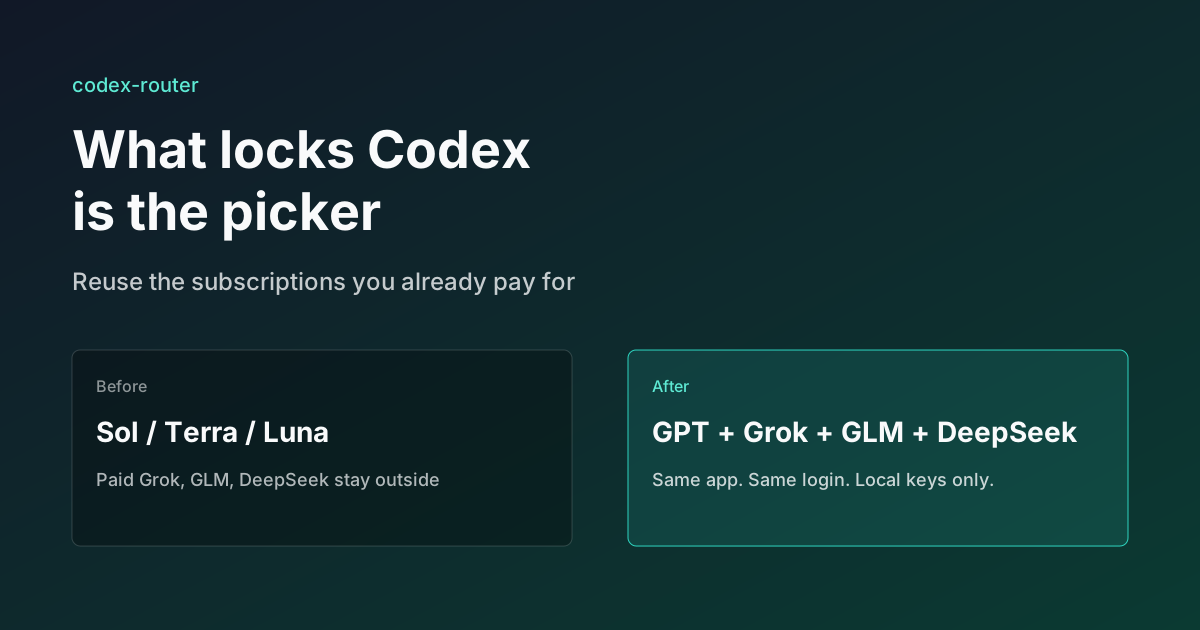
What Locks Codex Is the Picker, Not the Models
You already pay for OpenCode Go, Grok, and Z.ai, but the Codex picker still shows mostly GPT. The community project codex-router does not teach another install ritual. It puts subscriptions you already bought back into the selector, keeps keys on the machine, and leaves native GPT alone.
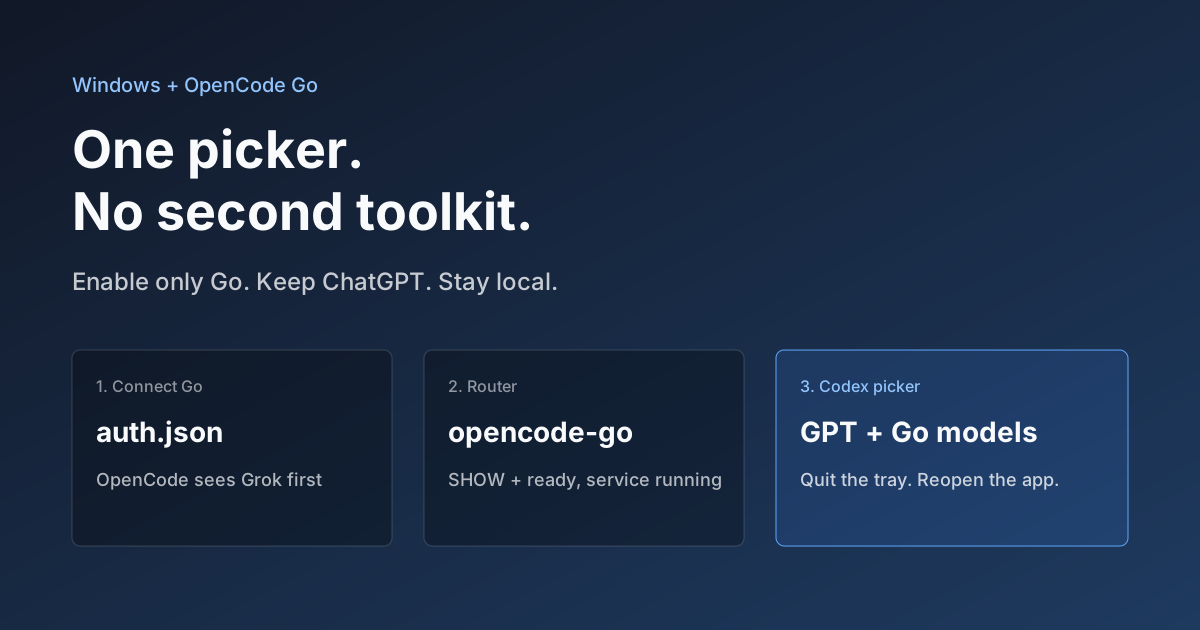
Hook OpenCode Go into Codex on Windows. Do Not Open a Second Toolkit.
A ChatGPT-signed Codex desktop app still shows mostly GPT in the picker. On Windows, enable only OpenCode Go and the Grok, GLM, Kimi, DeepSeek, and MiniMax models you already pay for appear in the same selector. Keys stay local. Native GPT stays put.