
Orca ADE
Orca is an open-source Agent Development Environment (ADE) built for running a fleet of coding agents. Instead of opening one agent in one terminal, it runs Claude Code, Codex, OpenCode, Gemini CLI, Cursor CLI, Grok and other agents side by side, each in its own isolated worktree, with a Ghostty-inspired terminal, a built-in file editor, and git tracking keeping every branch moving. It ships Projects, Tasks, and Automations in addition to live session overview.
Key Features
- Parallel agents in isolated worktrees: Launch multiple coding agents on different branches or tickets at once without their changes colliding.
- Session overview: See the live status of every agent session, which branch it is on, how long it has been running, and what it is doing.
- Built-in editor and terminal: Ghostty-inspired terminals plus a file editor, so you can review and fix agent output without leaving Orca.
- Remote and mobile: Sync all sessions from multiple machines into one place, with official desktop apps for macOS, Windows, Linux and mobile companions for iOS and Android.
- Tasks and automations: Schedule agent runs, automate repeated workflows, and track results from an observability dashboard.
Use Cases
Who Should Use This Tool?
- Professional developers: Run parallel agents on separate tickets or feature branches and review each output in a shared workspace.
- Agent-heavy teams: Keep every in-flight session visible instead of juggling a dozen terminal tabs.
- Multi-machine users: Alternate between a laptop, desktop or VPS and keep all sessions in one place through the remote server.
- Automation builders: Use Orca Tasks and automations to turn recurring agent work into scheduled runs.
Problems It Solves
- Agent sprawl: Multiple terminal windows for Claude Code, Codex and OpenCode are replaced by one dashboard.
- Worktree collisions: Isolated worktrees mean parallel agents never fight over the same files.
- Context switching: A single overview of branch, status and task makes it easy to pick up where an agent left off.
Pricing
Orca is free and open source under the MIT license. macOS, Windows, Linux" and "Bring your own Agent / Subscription."** The core app runs locally on desktop and mobile with no hosted lock-in, and an Enterprise tier is offered for larger teams. Costs are effectively your own subscription or API fees for the coding agents you already pay for.
Advantages & Unique Selling Points
- Worktree isolation by default: Parallel agents are safe to run because each one operates in its own git worktree.
- Cross-agent support: One environment handles Claude Code, Codex, OpenCode, Gemini CLI, Cursor CLI and more, instead of one tool per agent.
- Desktop plus mobile: The mobile companion is rare in this category and lets you monitor sessions from a phone.
What Makes It Stand Out: Orca treats running many agents as the normal case, not an afterthought. Its combination of worktrees, remote sync, tasks and built-in editing makes it closer to an "agent IDE" than a terminal multiplexer.
Getting Started
Quick Start Guide
- Download: Install the desktop app from the Orca website for macOS, Windows or Linux, or build from the GitHub repository.
- Connect an agent: Point Orca at an installed coding agent CLI such as Claude Code or Codex.
- Launch sessions: Start agents in isolated worktrees and follow their live output in the overview.
- Scale up: Add more agents, use the mobile companion, or configure tasks and automations.
Frequently Asked Questions
Which agents does Orca support?
Claude Code, Codex, OpenCode, Gemini CLI, Cursor CLI, Grok and other CLI-based coding agents. Any agent you can run in a terminal can be run inside Orca.
Do I need an Orca subscription?
No. The core is free and open source. You still need your own subscriptions or API keys for the coding agents themselves.
How does Orca compare to a terminal multiplexer like tmux or cmux?
Multiplexers keep terminals organized but know nothing about agents. Orca understands sessions, worktrees, branches and tasks, so it can show status, isolate changes and automate work instead of just stacking panes.
Alternatives
If Orca is not the right fit, consider these alternatives:
- cmux: Terminal multiplexer focused on managing Claude Code sessions.
- OpenCode: Open-source coding agent CLI with a strong terminal workflow.
- Claude Code: Anthropic's official coding agent, which Orca can run alongside others.
Tips & Best Practices
- One worktree per task: Give each agent its own branch and ticket so parallel runs stay independent.
- Use the remote server: If you work on two machines, keeping sessions in one place saves you from closing and reopening agents.
- Automate the boring loops: Move recurring cleanup, test or review steps into Orca Tasks so they run on schedule.
Comments
No comments yet. Be the first to comment!
Related Tools


Related Insights

Skills + Hooks + Plugins: How Anthropic Redefined AI Coding Tool Extensibility
An in-depth analysis of Claude Code's trinity architecture of Skills, Hooks, and Plugins. Explore why this design is more advanced than GitHub Copilot and Cursor, and how it redefines AI coding tool extensibility through open standards.
What Locks Codex Is the Picker, Not the Models
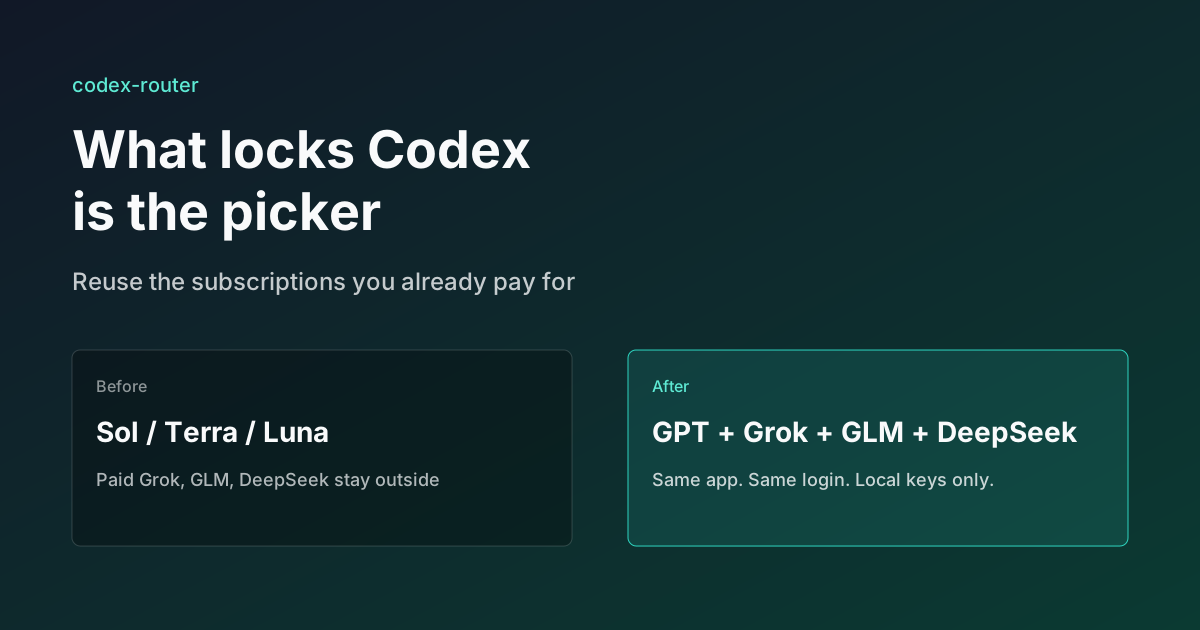
You already pay for OpenCode Go, Grok, and Z.ai, but the Codex picker still shows mostly GPT. The community project codex-router does not teach another install ritual. It puts subscriptions you already bought back into the selector, keeps keys on the machine, and leaves native GPT alone.
Running low on ChatGPT Codex quota? Switch to DeepSeek or Grok inside Codex
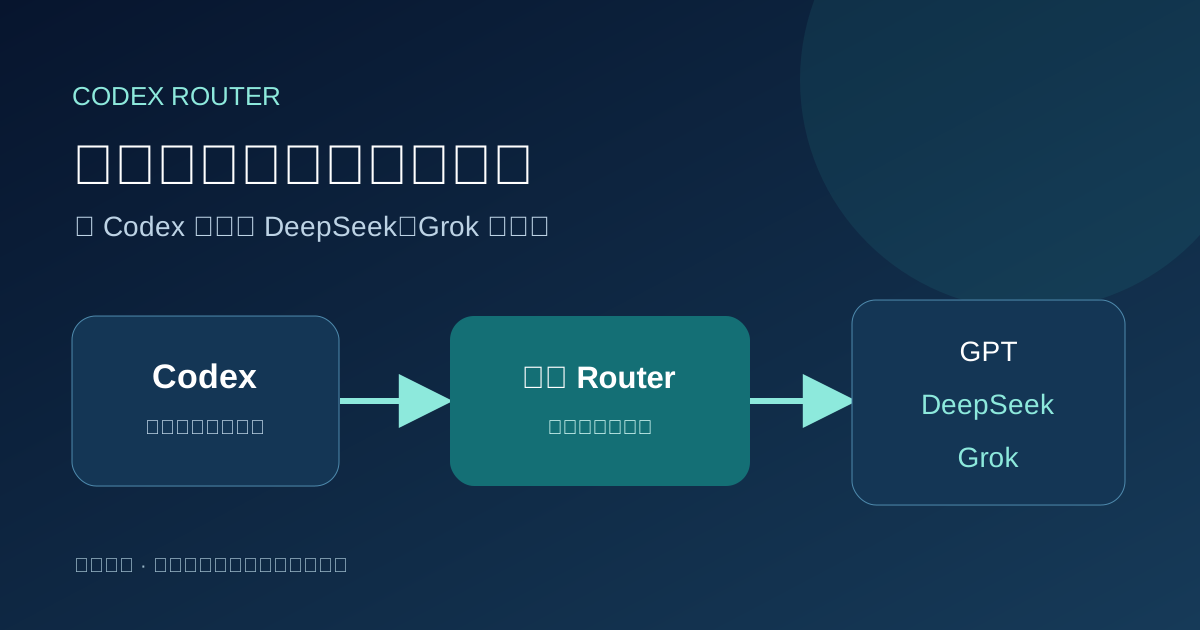
Codex Router lets you keep your Codex workspace while using DeepSeek, Grok, and other external models. A plain-English guide to routing, quotas, and network access.