

Dream-1
Dream-1 is Dream Labs' hosted World Action Model for robot control. The company presents it as a public API for compatible bimanual, parallel-gripper robots: send the model the robot's observations, then request an action. Dream Labs says the model can attempt tasks, environments, and robot embodiments not included in its deployment-specific data. Treat that as a vendor claim to validate on your own hardware.
What is available
- A hosted action API: The official quick start shows a
DreamClient, adreamlabs/dream-1checkpoint name, an observation setter, and an action request. It is an integration surface, not a downloadable model-weight release. - A robotics-specific scope: Dream Labs documents tests across bimanual robots with parallel grippers, including both simulation and real-robot demonstrations. It does not claim universal support for every morphology, end effector, or safety-critical task.
- Zero-shot deployment claims: The launch post describes demonstrations on unseen robots, tasks, and environments. It also says deployments do not require machine-learning expertise, but integration still needs calibrated sensors, controls, and safety procedures.
- Published demos and documentation: The release page includes a launch video and task rollouts, while the platform documentation is the appropriate source for account, API, and current availability details.
A practical evaluation workflow
Start in simulation or on a low-risk workcell with an emergency stop and a human supervisor. Connect one supported robot, capture a small set of repeatable tasks, and record success rate, time to completion, intervention rate, and failure mode separately. Test changes in lighting, object placement, camera angle, and latency rather than assuming a launch demo transfers to a production floor. Keep the robot's motion limits and collision safeguards outside the model call.
Use a non-destructive task first, such as moving a soft object between marked bins. Compare Dream-1 with a scripted baseline under the same cameras and control loop. If it is useful, extend the test one variable at a time and retain video plus action logs for incident review. The API's availability does not establish a safety case for people, fragile objects, or regulated work.
Limits, pricing, and alternatives
Dream Labs says deployments can start from $3 per hour, but the launch page does not establish a complete public pricing schedule, quota, region list, or service-level agreement. Confirm those terms directly with Dream Labs before budgeting a fleet. Its reported rollouts and hardware coverage are first-party demonstrations, not independent reliability measurements.
For open research and local experimentation, compare the deployment model with projects that publish their weights and hardware adapters. Those options may offer more control over data and runtime but require more integration work. Read Dream Labs' Dream-1 release and API getting-started guide before connecting a robot.
Comments
No comments yet. Be the first to comment!
Related Tools


Related Insights

Anthropic Subagent: The Multi-Agent Architecture Revolution
Deep dive into Anthropic multi-agent architecture design. Learn how Subagents break through context window limitations, achieve 90% performance improvements, and real-world applications in Claude Code.
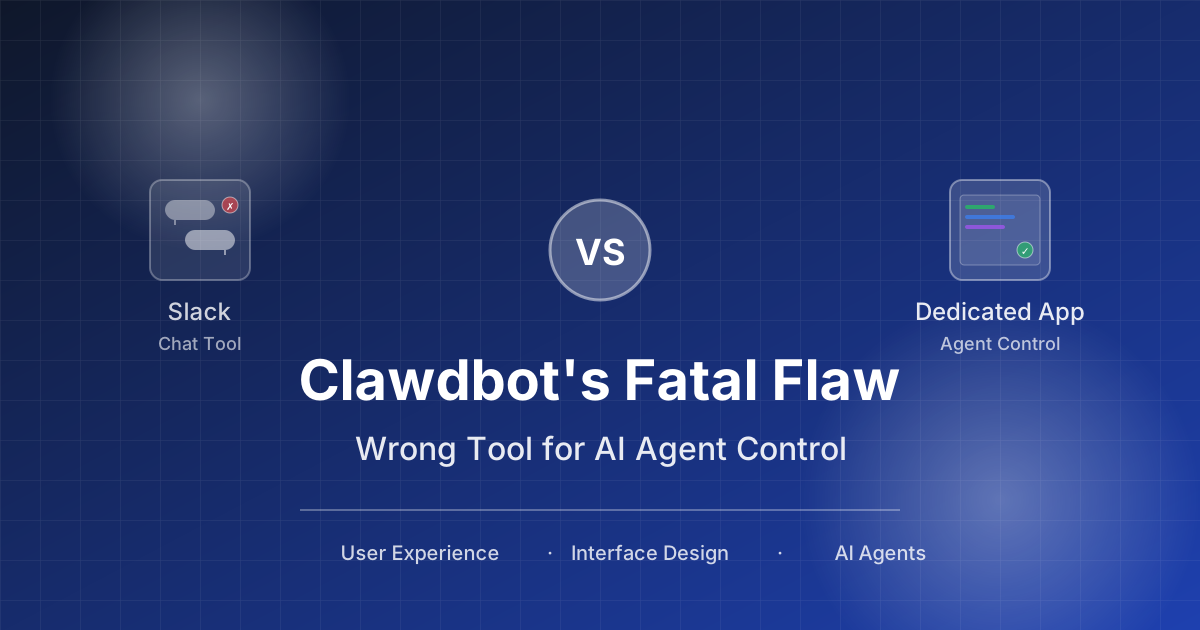
Stop Cramming AI Assistants into Chat Boxes: Clawdbot Picked the Wrong Battlefield
Clawdbot is convenient, but putting it inside Slack or Discord was the wrong design choice from day one. Chat tools are not for operating tasks, and AI isn't for chatting.

Grok Bot and Hermes Bot: one person finally gets a think tank and a secretariat
Grok Bot now ships with Cursor Pro+. Hermes Bot runs on a VPS. They are not smarter chat boxes. The think tank advises, the secretariat executes, and you still make the call.