
Claude Code Bridge (CCB for short) is a real-time multi-AI collaboration system. Through a split-screen terminal interface, it lets Claude Code, Codex, Gemini, OpenCode, and other AI agents work together in parallel. CCB provides persistent context, low token overhead, and a what-you-see-is-what-you-get collaboration experience, building a true team of AI experts.
Key Features
Split-Screen Terminal Interface: Run multiple AI models side by side in a split-screen CLI. A WYSIWYG, fully controllable collaboration environment. Integrates directly with WezTerm (recommended) or tmux, with no complex server setup required.
Persistent Context: Each AI agent maintains its own memory and context. Sessions can be closed and resumed at any time with the -r flag. Solves the limitation of traditional MCP calls, where AI acts as a stateless executor.
Low Token Overhead: Sends lightweight prompts instead of full file histories. Significantly reduces API call costs. An efficient context management mechanism.
True Parallel Execution: Submit multiple tasks to Codex, Gemini, or OpenCode at the same time. New daemons (caskd, gaskd, oaskd) automatically queue and run tasks serially. Avoids task conflicts and guarantees execution order.
Cross-AI Orchestration: Claude and Codex can both drive OpenCode agents. A unified daemon layer arbitrates all requests. Enables complex multi-AI collaboration workflows.
Smart Daemon Architecture: A revolutionary architectural improvement introduced in v3.0. Daemons start automatically on the first request. They shut down after 60 seconds of inactivity to save resources.
Enterprise-Grade Stability: Self-managed daemons keep the system stable. Fault-tolerance mechanisms handle exceptional situations. Suitable for production use.
How It Works
Persistent Channels: Establishes persistent communication channels between AI agents. Each AI maintains its own context and state. Avoids repeatedly transferring the full context.
Lightweight Prompts: Only the necessary prompt information is transmitted. Greatly reduces token consumption. Improves response speed and lowers costs.
Daemon Management: Smart daemons automatically manage the lifecycle of AI agents. Start on demand and shut down when idle. Unified request arbitration and task scheduling.
WYSIWYG: The split-screen interface shows the working status of every AI in real time. Intuitive visual feedback. Full control and transparency.
Use Cases
Multi-Model Collaborative Development: Combine the strengths of different AI models. Claude handles architecture design while Codex handles implementation. Avoids the cognitive blind spots and biases of a single model.
Complex Task Decomposition: Break large tasks into smaller subtasks. Different AI agents process subtasks in parallel. Improves overall development efficiency.
Code Review and Optimization: One AI writes code while another reviews and optimizes it. Multi-angle code quality assurance. Surfaces potential issues and improvement opportunities.
Comparing Technical Approaches: Different AIs propose different technical solutions. Compare and evaluate them in real time. Choose the most suitable implementation.
Continuous Collaboration Sessions: Maintain a persistent AI collaboration environment across long-term projects. Resume previous work states at any time. Keep context continuity.
Technical Advantages
Beyond MCP Limitations: Traditional MCP approaches treat AI as a stateless executor. CCB builds persistent channels so each AI maintains its own context. A more natural collaboration experience.
Cost Efficiency: Lightweight prompts drastically cut token consumption. Saves substantial API costs compared with traditional methods. Suitable for long-term and frequent use.
Cross-Platform Support: Works on Windows (PowerShell), macOS, and Linux/WSL. A consistent experience. Flexible deployment options.
Terminal Native: Deep integration with WezTerm and tmux. Fits the developer's terminal workflow. No extra GUI tools needed.
Open and Transparent: Fully open source, with code hosted on GitHub. The community can contribute and improve it. Users can customize and extend it.
Usage
Start AI agents:
ccb up codex      # Start Codex
ccb up gemini     # Start Gemini
ccb up opencode   # Start OpenCode
Start a multi-agent layout:
ccb-layout # Start a 2x2 layout running multiple agents
Resume a session:
ccb up codex -r # Resume the previous Codex session
Version History
v3.0 - Smart Daemon Architecture: Introduced the revolutionary daemon architecture. Enables true parallel execution and cross-AI orchestration. Enterprise-grade stability and automatic resource management.
v4.1.3 - Soth: The latest stable release, delivering a silky-smooth collaboration experience. Continuous performance and stability optimizations.
The Value of Claude Code Bridge
Claude Code Bridge effectively avoids the bias, cognitive blind spots, and context limits of a single model through real-time multi-AI collaboration. Different AI models complement each other, forming a true team of AI experts.
Persistent context and low token overhead make long-term collaboration feasible. Developers can maintain a continuous AI collaboration environment and resume work at any time without worrying about high API costs.
The split-screen terminal interface provides a WYSIWYG collaboration experience. Developers can monitor every AI's status in real time and stay in full control of the process. This level of transparency and control is something traditional API-call approaches cannot offer.
The smart daemon architecture ensures system stability and resource efficiency. AI agents start on demand and shut down automatically, making it suitable for production use.
For developers and teams who need multi-AI collaboration, long-term project maintenance, or lower AI usage costs, Claude Code Bridge offers an innovative and practical solution.
Sources:
Comments
No comments yet. Be the first to comment!
Related Tools


Related Insights
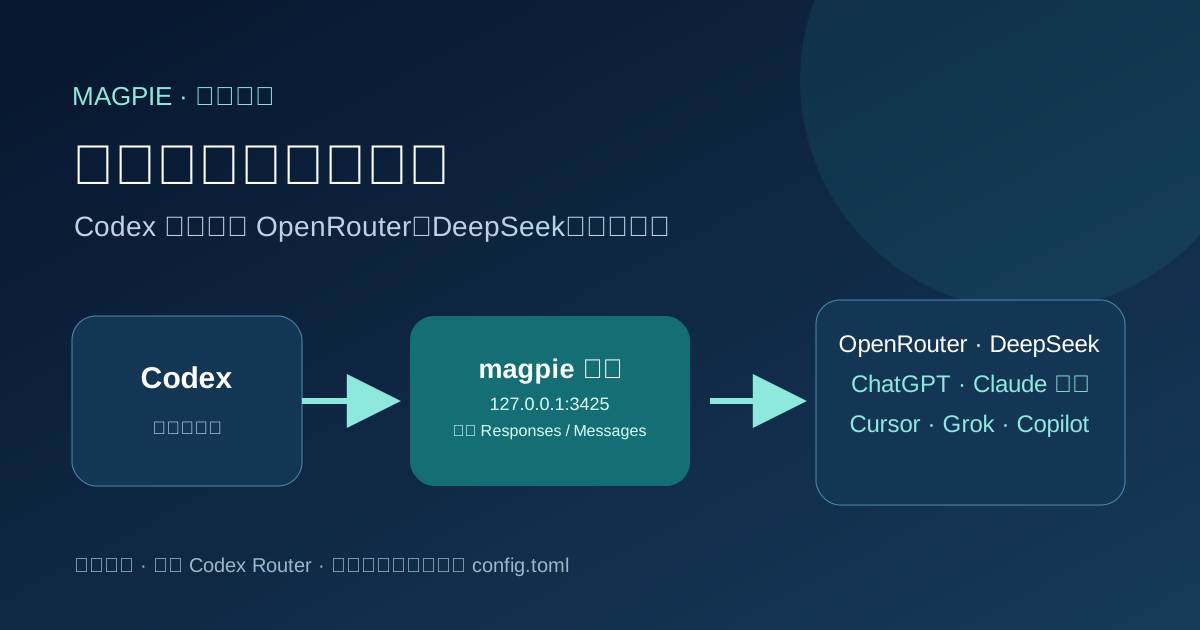
Codex on any model: magpie makes Codex Router unnecessary
magpie is a free, open-source menu bar app that runs a local gateway and puts OpenRouter, DeepSeek and your ChatGPT, Claude, Cursor, Grok and Copilot subscriptions right into Codex's own model picker, with one click and no Codex Router.
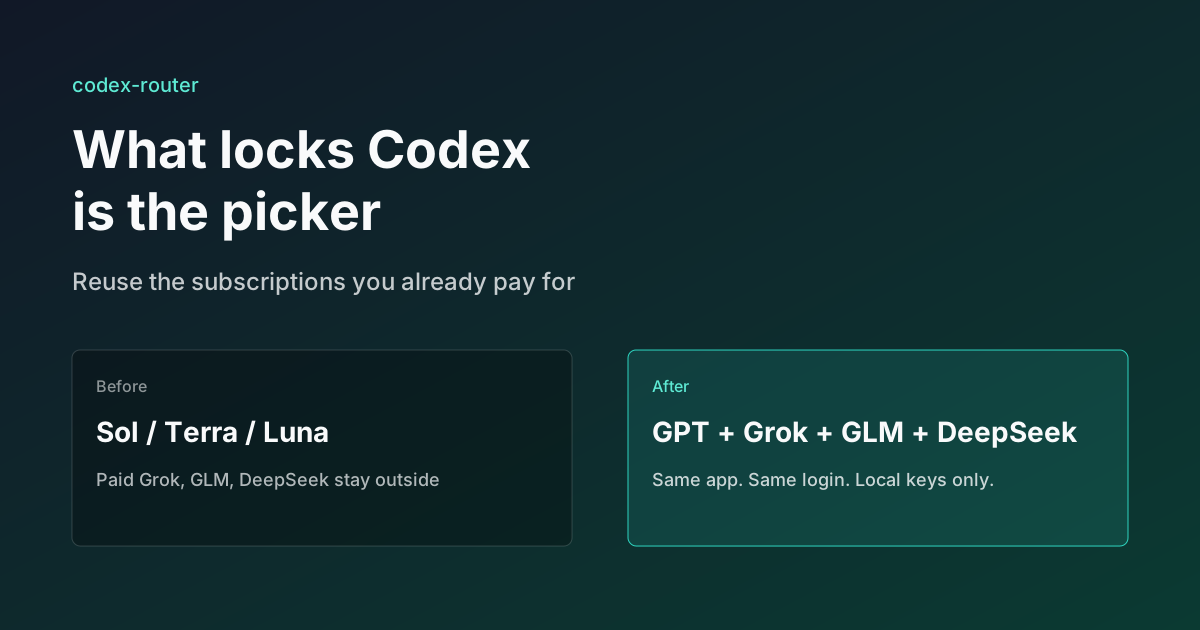
What Locks Codex Is the Picker, Not the Models
You already pay for OpenCode Go, Grok, and Z.ai, but the Codex picker still shows mostly GPT. The community project codex-router does not teach another install ritual. It puts subscriptions you already bought back into the selector, keeps keys on the machine, and leaves native GPT alone.
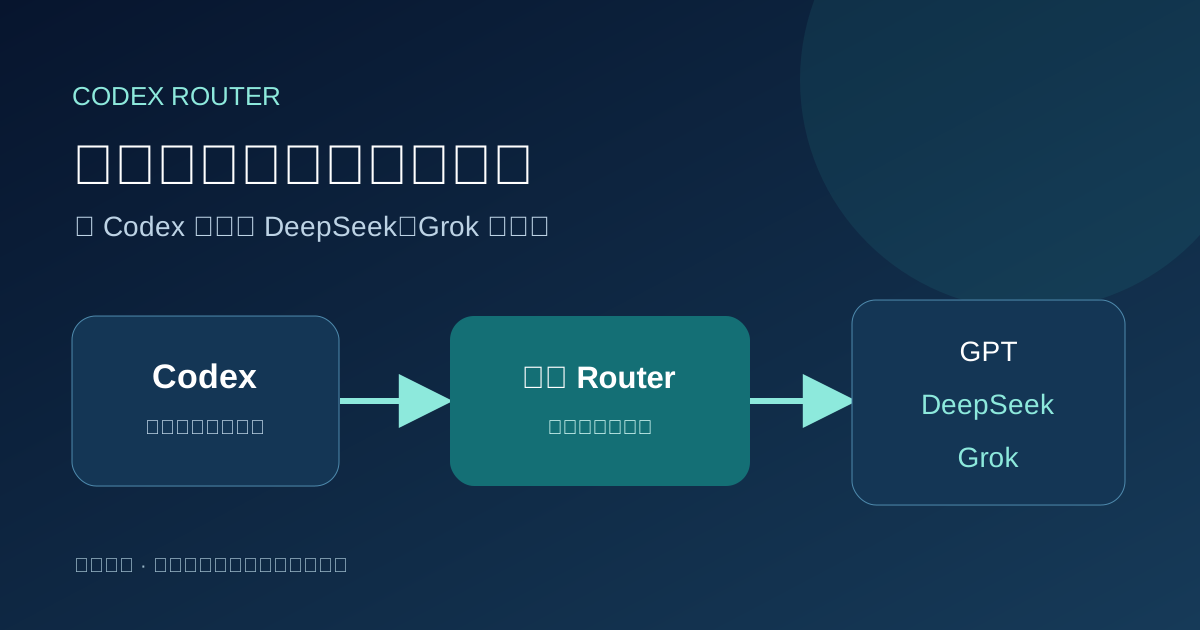
Running low on ChatGPT Codex quota? Switch to DeepSeek or Grok inside Codex
Codex Router lets you keep your Codex workspace while using DeepSeek, Grok, and other external models. A plain-English guide to routing, quotas, and network access.