
T3 Code
T3 Code is an open-source "agent harness control surface" built by the T3 tools team. It lets you control the coding agents on your machine, including Claude Code, Codex, Cursor, Grok Build, and OpenCode, from an Electron desktop app, a web app, or native iOS and Android apps. The project is MIT licensed, intentionally open, and designed so you can fork it if the product ever moves in a direction you dislike.
Key Features
- Multi-agent control: Manage sessions across Claude Code, Codex, Cursor, Grok Build, and OpenCode without switching terminals.
- Remote-ready apps: Native mobile apps, a web app, and a desktop app can connect to the local server running on your machine.
- Permission modes: Fine-grained controls over what each agent may do before an action is approved.
- Source control integration: Built-in support for source-control workflows and project context.
- Project icons and keybindings: Customize project-level presentation and keyboard shortcuts for fast switching.
- Simple server model:
npx t3@latestlaunches the backend and local web app with no paid account.
Use Cases
- Agent-heavy developers: Developers who run multiple coding agents and want one surface to start, pause, and review sessions.
- Remote work: People who want to check or continue an agent session from a phone while away from the desk.
- Open-source advocates: Teams that want a transparent, forkable alternative to closed agent desktop apps.
- Subscription users: Users who already pay for Claude, ChatGPT, or another agent subscription and want to drive those agents from a consistent UI.
Pricing
T3 Code is free and open source under the MIT license. You still pay for the underlying agent subscriptions you connect, such as Claude Code, Codex, Cursor, Grok Build, or OpenCode.
Getting Started
- Install and authenticate at least one supported agent CLI, for example
codex login,claude auth login, oropencode auth login. - Run
npx t3@latestfrom a terminal with Node.js 22.16+, 23.11+, or 24.10+. - Open the local web app, or install the desktop or mobile app.
- Connect your agent session and start controlling it remotely.
Frequently Asked Questions
Does T3 Code sell my data?
No. The project states it was built for the best possible agent development experience, it is open source, and sessions run through your local server.
What is the main risk?
The project is early and explicitly says to expect bugs. It also routes consumer agent subscriptions through third-party harnesses, which may violate a provider's terms, so check your provider agreement before relying on it.
Which agents are supported?
Claude Code, Codex, Cursor, Grok Build, and OpenCode are supported at launch, with documentation for multiple accounts per provider.
Alternatives
- Claude Code: Anthropic's terminal coding agent with first-party harness capabilities.
- Codex CLI: OpenAI's open-source coding agent CLI.
- OpenCode: An open-source coding agent for multiple model providers.
- Conductor: Another agent orchestration surface for coding workflows.
Tips & Best Practices
- Start with one provider: Authenticate one agent first, verify the local server, then add more.
- Review permission modes: Configure approval levels before delegating long-running tasks.
- Keep the server updated: Sync the desktop or mobile app with the local server version to avoid stale connections.
Comments
No comments yet. Be the first to comment!
Related Tools


Related Insights

Skills + Hooks + Plugins: How Anthropic Redefined AI Coding Tool Extensibility
An in-depth analysis of Claude Code's trinity architecture of Skills, Hooks, and Plugins. Explore why this design is more advanced than GitHub Copilot and Cursor, and how it redefines AI coding tool extensibility through open standards.
What Locks Codex Is the Picker, Not the Models
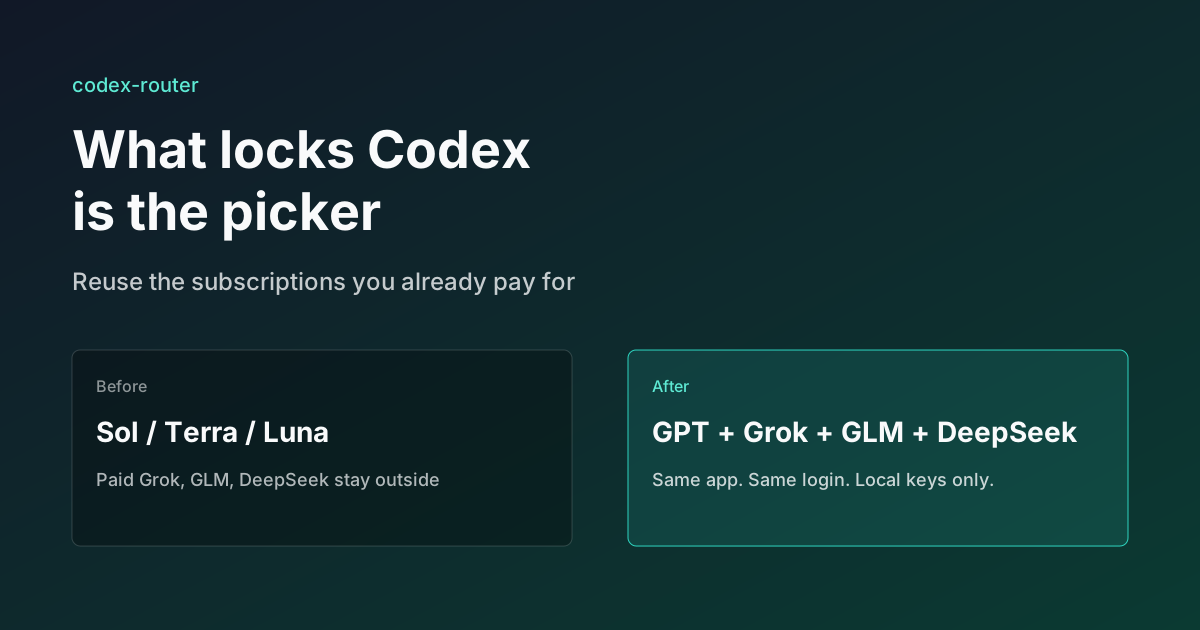
You already pay for OpenCode Go, Grok, and Z.ai, but the Codex picker still shows mostly GPT. The community project codex-router does not teach another install ritual. It puts subscriptions you already bought back into the selector, keeps keys on the machine, and leaves native GPT alone.
Running low on ChatGPT Codex quota? Switch to DeepSeek or Grok inside Codex
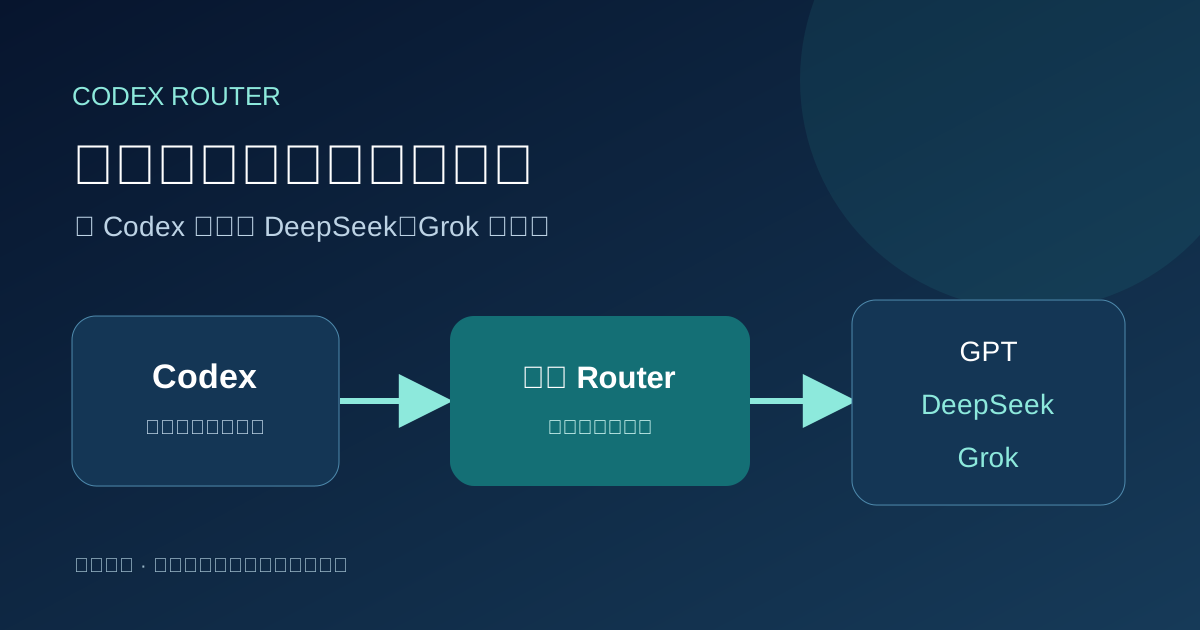
Codex Router lets you keep your Codex workspace while using DeepSeek, Grok, and other external models. A plain-English guide to routing, quotas, and network access.