
CLI-Anything
CLI-Anything is an open-source project from HKUDS that turns ordinary software into agent-native command-line tools. The pitch is simple: today's software is built for humans clicking through GUIs, while tomorrow's users are agents that need a typed, inspectable interface. The project ships a public registry called CLI-Hub, plus generated CLIs and SKILL.md packages that OpenClaw, Claude Code, Codex, Cursor, nanobot, and other skill-compatible agents can install in one command. The GitHub repository is Apache-2.0 licensed, created on March 8, 2026, and has grown to about 47.6K stars.
Key Features
- CLI-Hub registry:
pip install cli-anything-hubgives youcli-hub list,search,info,install,update,uninstall, andlaunchfor community CLIs. - Agent-native packaging: Each harness can be installed as a SKILL with
npx skills add HKUDS/CLI-Anything --skill cli-hub-meta-skill -g -y. - Generated CLIs for real software: The hub covers desktop apps, developer tools, cloud services, SaaS APIs, and creative suites. Demos include FreeCAD, Blender, QGIS, Calibre, Rekordbox, MiniMax, and Unreal workflows.
- JSON plus human output: Commands are designed so an agent can parse structured results instead of scraping a GUI.
- Tested harnesses: The README reports 2,461 passing tests and a public contributing path, including a wishlist issue template.
- Research backing: The team published a technical report at arXiv:2606.03854.
Use Cases
- Agent operators: Give OpenClaw or Claude Code a one-command way to find and run software that never had an official CLI.
- Creative and CAD work: Let an agent assemble a FreeCAD rover, grow a Blender hard-surface model, or drive QGIS without sitting at the GUI.
- Internal tooling: Wrap a company SaaS API or desktop app as a typed CLI, then let coding agents call it the same way they call git.
- Contributors: Submit a new harness through the PR template and have it appear in CLI-Hub after review.
Pricing
CLI-Anything and CLI-Hub are free and open source under Apache-2.0. You pay only for the underlying applications, cloud APIs, or model providers that a given CLI talks to.
Getting Started
- Install the hub with
pip install cli-anything-hub. - Browse the registry with
cli-hub listorcli-hub search image. - Install one tool, for example
cli-hub install gimp, then inspect it withcli-hub info gimp. - Launch it with
cli-hub launch gimpor feed the matching SKILL.md to your agent. - For agent auto-discovery, run
npx skills add HKUDS/CLI-Anything --skill cli-hub-meta-skill -g -y.
Frequently Asked Questions
Does this replace the original GUI app?
No. It wraps the app or API so an agent can operate it. You still need a license or install for software such as FreeCAD, Blender, or a paid SaaS.
Which agents work with it?
The project documents OpenClaw, nanobot, Claude Code, Codex, Antigravity, Cursor, and other SKILL-compatible agents.
Is every CLI generated automatically?
No. Some harnesses are community-contributed and reviewed. Quality varies by software, so read cli-hub info and the test notes before trusting a new tool in production.
Alternatives
- OpenClaw: a self-hosted assistant gateway that can consume CLI-Anything skills.
- Claude Code: a terminal coding agent that can install the CLI-Hub meta-skill.
- Hermes Agent: a self-improving agent runtime that already has a proposed CLI-Anything orchestration skill.
Tips & Best Practices
- Start from the hub, not a random clone:
cli-hub installkeeps updates and uninstalls consistent. - Prefer JSON output in agent prompts: ask the CLI for machine-readable results so the agent does not scrape banners.
- Check the wishlist before writing a wrapper: someone may already be building the software you need.
Comments
No comments yet. Be the first to comment!
Related Tools


Related Insights

Skills + Hooks + Plugins: How Anthropic Redefined AI Coding Tool Extensibility
An in-depth analysis of Claude Code's trinity architecture of Skills, Hooks, and Plugins. Explore why this design is more advanced than GitHub Copilot and Cursor, and how it redefines AI coding tool extensibility through open standards.
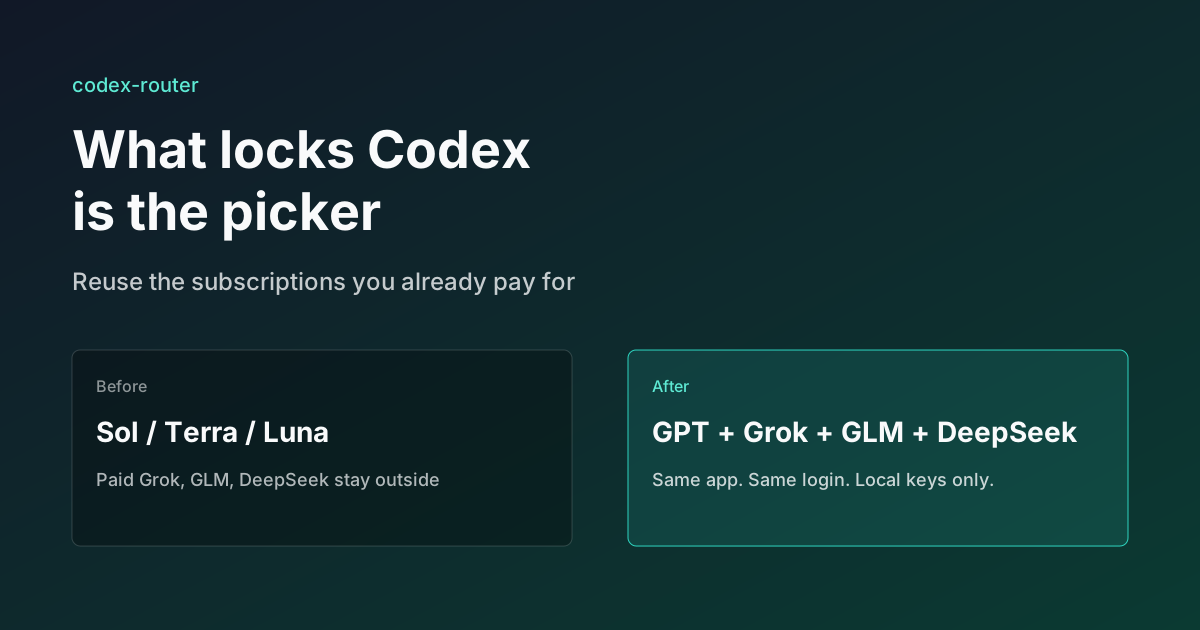
What Locks Codex Is the Picker, Not the Models
You already pay for OpenCode Go, Grok, and Z.ai, but the Codex picker still shows mostly GPT. The community project codex-router does not teach another install ritual. It puts subscriptions you already bought back into the selector, keeps keys on the machine, and leaves native GPT alone.
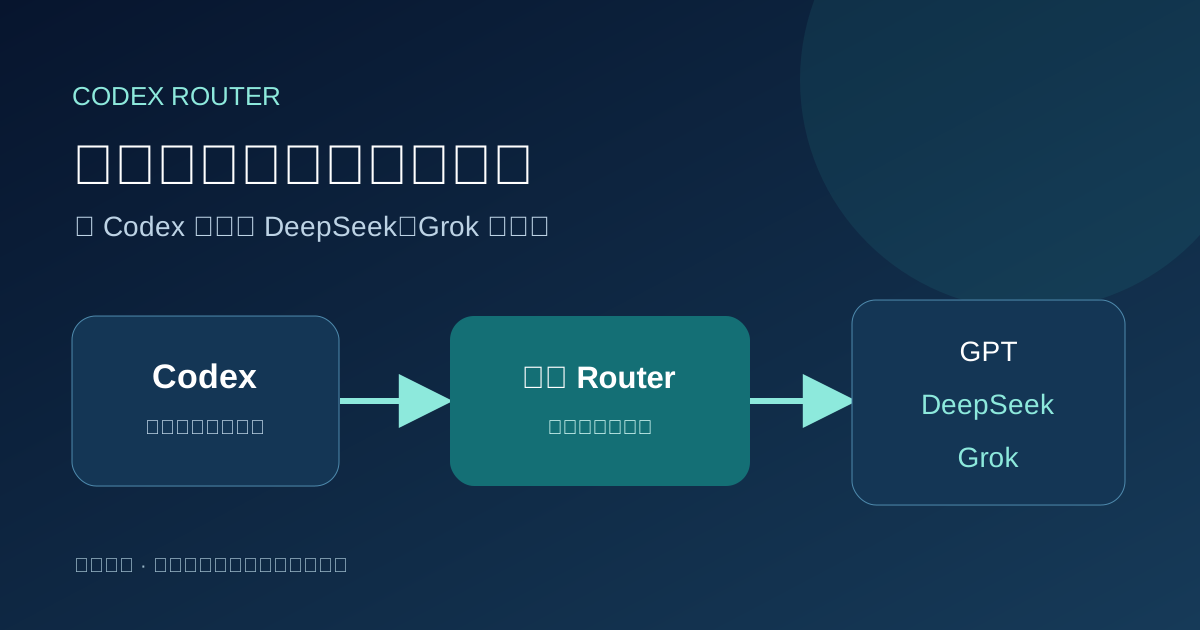
Running low on ChatGPT Codex quota? Switch to DeepSeek or Grok inside Codex
Codex Router lets you keep your Codex workspace while using DeepSeek, Grok, and other external models. A plain-English guide to routing, quotas, and network access.